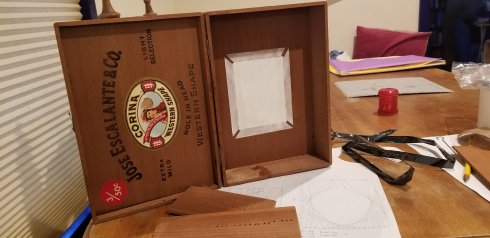
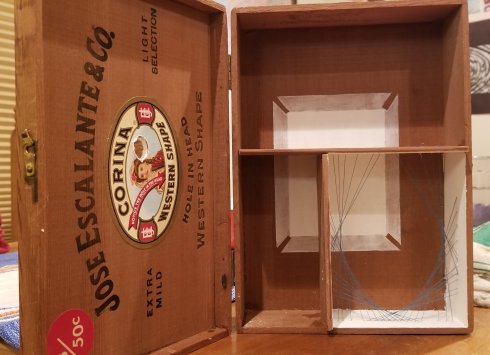
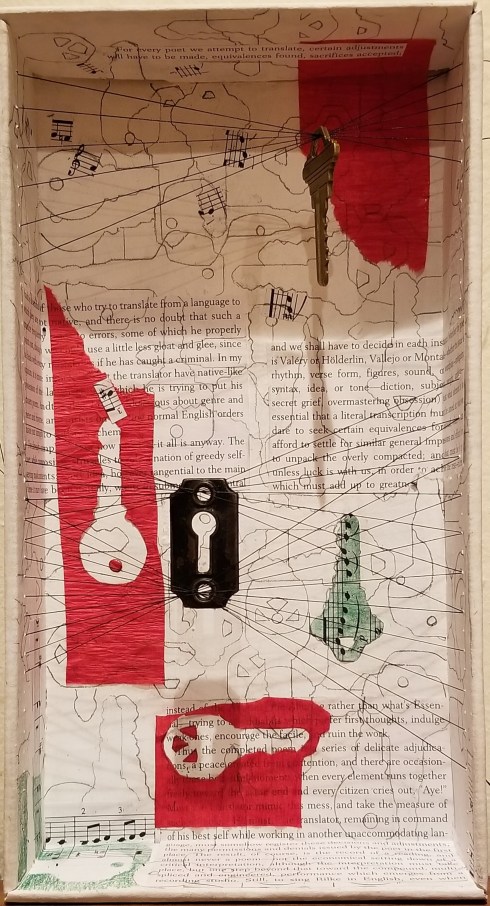
I just realized I never posted a photo of this, though I finished it in early November.

20191106_195930

Problems in Translation. Mixed media, 15x28x5 cm. (c) 2019 Amy Zucker Morgenstern

I got onto Craigslist yesterday and found someone selling some small wooden boxes, used, so I’m excited about continuing my explorations in this vein.


20191229_2133532751888740609834732-e1577720561107.jpg

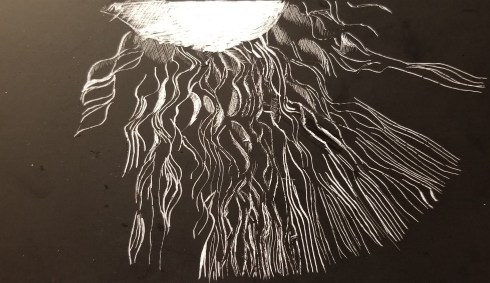
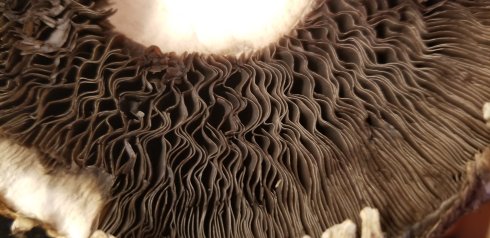
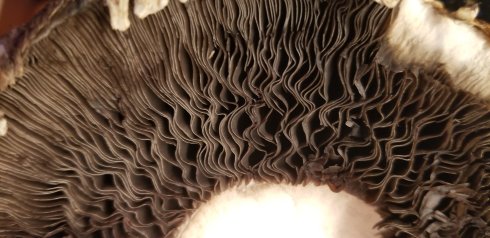
Here on Day 70 of #100days of making art: the drawing in progress (above) and the model (below).

Portobello. And now I know sonething I’ll draw with the scratchboard and knife my daughter gave me this morning.

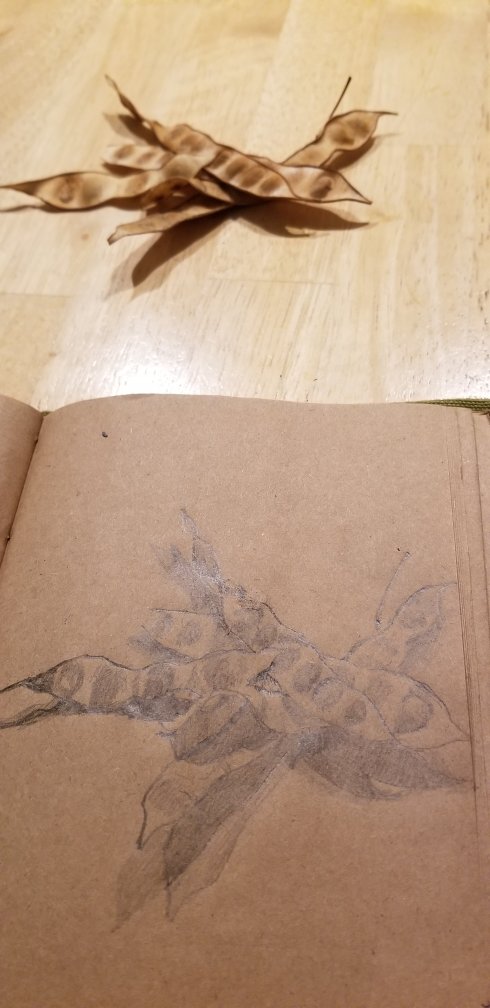
My wife got into the car on Sunday and passed me a handful of seed pods she had picked up on the sidewalk: different than the kind I drew in Sacramento over Thanksgiving, smaller and darker, though again I don’t know the species. “Here,” she said. “I know you like this kind of thing.” It’s so good to be known.

I put them in the well of the driver’s side door, and there they have been getting drier and rattling around. They’ve also given me an idea for the linocut workshop we’ll be taking from Katie Gilmartin at SOMArts in February. I want to have drawings ready when I go in, or I won’t get far on the print. I’m going to make a series (triptych, maybe) of these pods in various states, from fresh to freshly fallen to dried up. It’ll be a further exploration of something that’s interested me for a long time: the ambiguous nature of decay. “Decay” sounds like a judgment, as does “progress,” though one could use either word for what is happening. “Change” is a more neutral descriptor. That’s what fascinates me. Since they are growing more wrinkled and fragile, we would probably say that they are decaying, yet their beauty is not diminished. It is only different, and to some eyes, increased.

I don’t know how much they have really changed over the last five days. They might only rattle more now because they were damp when Joy picked them up, and now they’re dry. I have the impression that they’re more wizened and bent, but I can’t be certain because I didn’t look very closely at them on Sunday. I’ll know better when I go get some more and draw them at intervals.

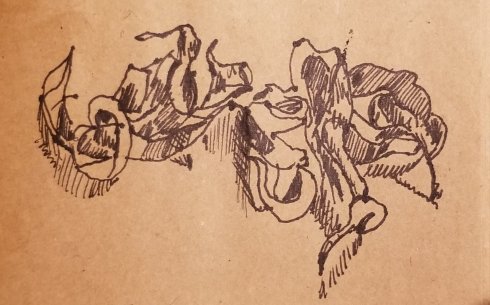
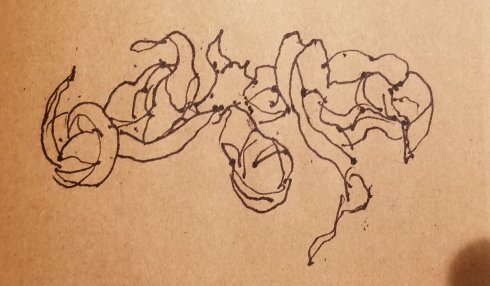
For tonight, I just drew them as they are now, twice, quickly, in ink pen, as a first stage of getting to know them.

#100days

It’s been fifty days of making art every day. I missed two. It’s making me very happy, especially when art is one of the first things I do in the morning. That seems to be when I have the most energy for creativity, and whatever I do then stays wiyh me the whole day.

In the meantime, Joy has completed the drawings for our new art room, and will take them to the city permit office tomorrow, so that the builder can get going. It won’t be large, but we’ll be able to have a table for us all to work at, the way we did in Oaxaca three years ago, and enough shelves for all the art supplies.

We’re setting aside a little time, reserving a little space, for something that’s important to all three of us.

#100days

On the way to work this morning, three things in particular made me grateful for this life. (1) In the shopping center where I stopped on an errand, there is a restaurant called Hella Halal. (My daughter would say Hecka Halal, but I like the rich consonance of the original.) (2) Just now, as I turned into the church’s street, a fire engine was coming my way with its siren and lights whirling, so I pulled over next to a preschool, and thus enjoyed the lovely sight of the children running toward the fence, hands over their ears, faces alight, to watch it go by.

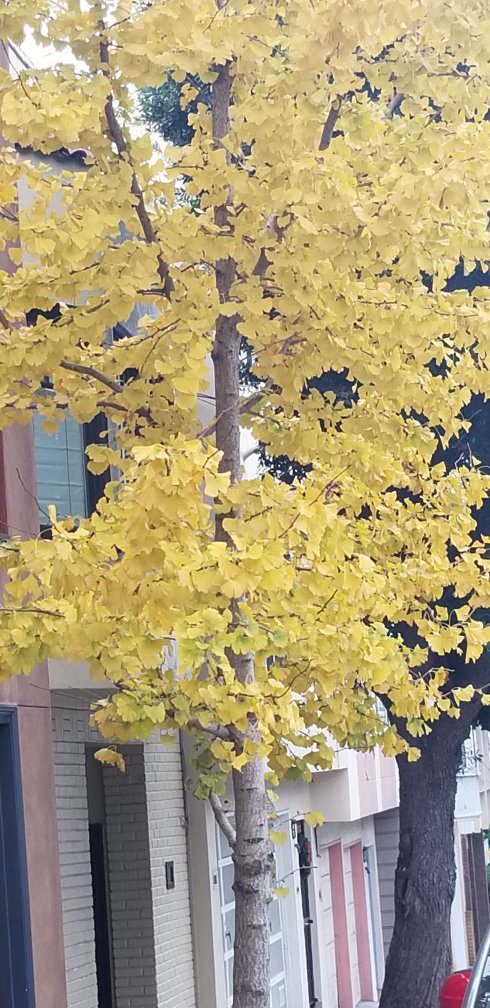
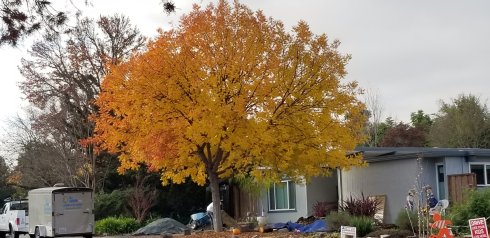
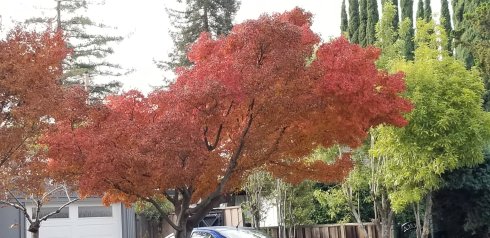
And (3) all along the route there have been trees in their autumn glory.

These are all over the yard at my relatives’ house. I knew as soon as I saw them that they would be today’s subject.

It’s a quick drawing because I am tired from every cell in my body’s being concentrated on digestion. I don’t set out to overeat at Thanksgiving, but I have to try a little of everything.

I’d like to draw these again, more slowly, and larger, in sepia conté crayon. Their beauty is something for which I am very thankful. I’ll bring them home.

#100days of art

“Or,” ink and colored pencil on a page of The Penguin Atlas of the Ancient World, 21 x 17 cm

More about this piece here.

#100days

Eh, I said in my last entry that I’d post a photo of my next piece about ancient and current empires when it was finished, but why wait? Here it is in progress. Source text: The Penguin Atlas of the Ancient World.

#100days

I’ve now been making art every day for over a month. I fell into my current series of projects by accident, as is so often the way, and am now happily spelunking in the caves of altered books, maps, U.S. politics, and white supremacy.

It started when I wanted to find a book to (photocopy and) alter. I poked around on our nonfiction shelves and came upon The Penguin Atlas of Ancient History, which I hadn’t even known we had. One of the benefits of living with a partner is that they spent decades accumulating books too, and even after 15 years together, I’m still discovering some. It is full of maps, and I love maps, so I pulled it out, found a couple of intriguing words on one of the text pages, and got to work.

The first word I noticed was “administration,” and another was “Nineveh,” which reminded me of a phrase about our future fate being like that of “Nineveh and Tyre” in some poem or other. Yeats, maybe.

The poem kept echoing in my head, until I had to look it up (ah, bless the internet) and re-discover it: not Yeats, but Rudyard Kipling, who had such a strange talent for reminding empire of its limitations even while proclaiming its glories.

Far-called, our navies melt away;
On dune and headland sinks the fire:
Lo, all our pomp of yesterday
Is one with Nineveh and Tyre! (“Recessional”)

Reading about these ancient cultures, and seeing all the maps showing the dominance of peoples whose names I’d never even heard of, like the Scythians, is like coming across the colossus of Ozymandias (Rameses II) in the desert–another poem that’s rattling around in my head. Some of these nations lasted for millennia. Ours hasn’t made it to its 250th birthday yet, and I’m wondering what shape it will be in when it gets there. So the words I’m highlighting as I draw my maps are about the collapse of our democracy from hostile forces, foreign and domestic.

I’ve also always been moved by the story of Nineveh in the book of Jonah. If an ancient city, one of the great ones of its time, could summon that kind of repentance and return to its ideals, can’t we?

Another theme that emerges without the author’s having intended it is the narrowness of his assumption that the “ancient world” consists of the Mediterranean, with forays as far as England to the north, western India to the east, and Ethiopia to the south: basically, the trading partners of the empires of the Mediterranean. The book was published in 1967. I showed it to my daughter as an example of the kinds of things I was taught in school, where our books were published around that time. It was a quiet, background kind of white supremacy, a constant hum informing us that nothing worth knowing about happened in sub-Saharan Africa, Oceania, the Americas, or most of Asia until Europeans got there.

I saw with some excitement that there is a New Penguin Atlas of Ancient History: Revised Edition, published in 2002, but alas, it still only covers the same region. A grand opportunity wasted to, if not expand the book, then at least make the title accurate.

I’ll post a picture when I’m done with my new piece.

#100days

Enter your e-mail address to receive e-mail notifications of new posts on Sermons in Stones

Links I like