Two developments at this year’s General Assembly make me wonder about our movement’s commitment to children and their teachers and families. The General Assembly Planning Committee, which has had an increasing say over exactly which programs have happened at GA in recent years, has decided not to include the Sophia Lyon Fahs lecture, which usually has an outstanding speaker and attracts hundreds of attendees, nor any program by the Liberal Religious Educators’ Association (LREDA). LREDA submitted the request as usual and were stunned to have it turned down. I have not seen any response from the General Assembly Planning Committee, whose last-published minutes are from 2011. I hope they give a good explanation before thousands of people come to GA wearing “Where’s Sophia?” buttons.

Also, programming for children has been curtailed. In previous years, there was a UU camp for kids 1st grade and up and I heard great things about it. Now it is only for kids entering 5th grade or older. I was thinking that my daughter would be able to go to UU camp next summer at GA, but apparently she will have only the same kind of programming that she had as a toddler. Not appealing.

If there are logistical or funding problems with LREDA’s programs or camp for younger children, I hope the GA Planning  Committee will say so. If LREDA’s proposed speaker wasn’t good and the committee wants them to suggest someone better, I hope they’ll say so. Taking away these programs without explanation or comment tells us that children don’t count. And in ten years, we will be wondering why those teenagers are drifting away.

Correction: I originally wrote that camp kids have to be in fourth grade. I was wrong; they have to have completed fourth grade. That’s five more years before there will be any programming for my child. She can stay home, going to a secular day camp while my wife solo-parents, but I’d hoped she would accompany me to GA now and then and have a great camp experience with other UU kids from around the country.

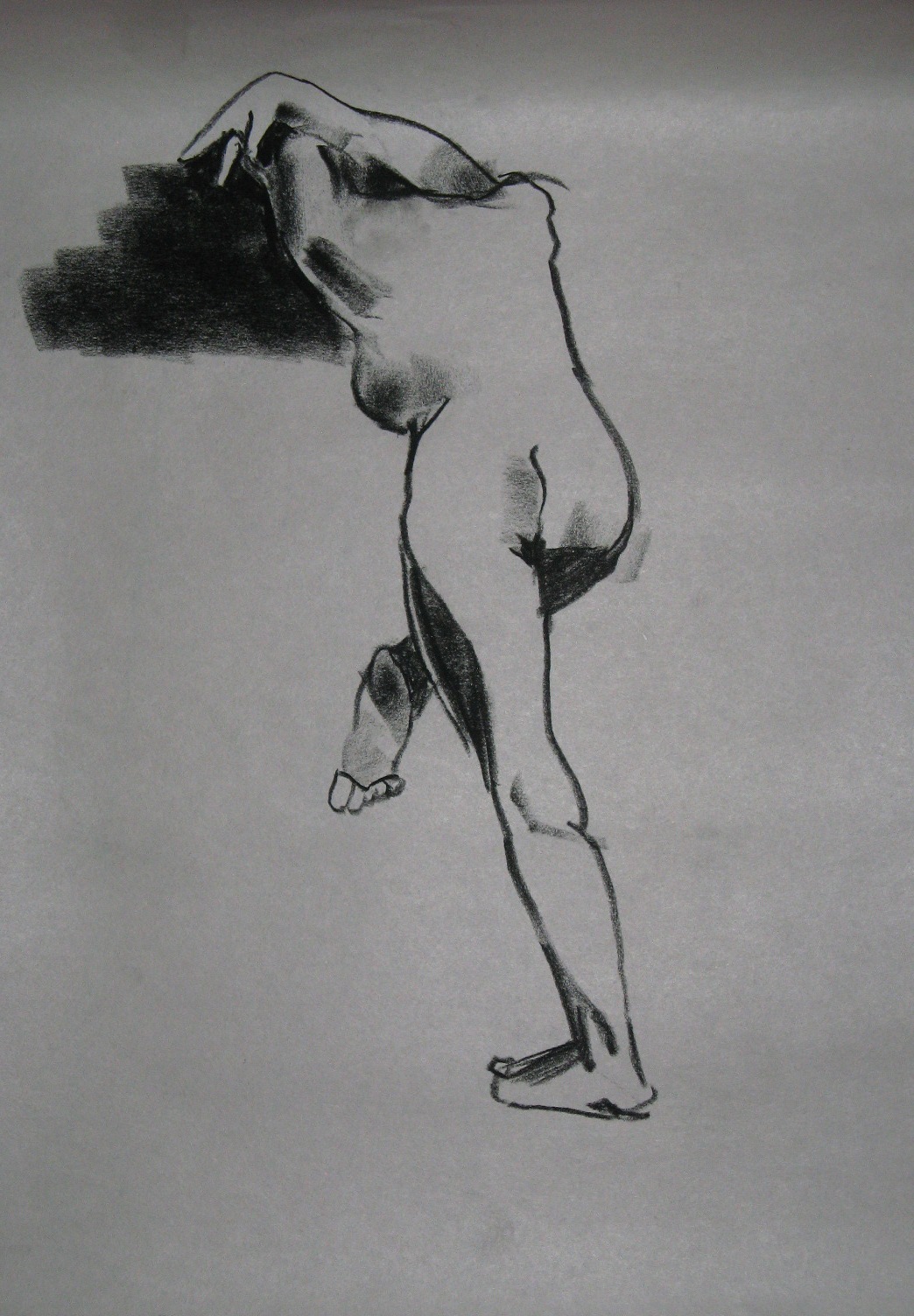
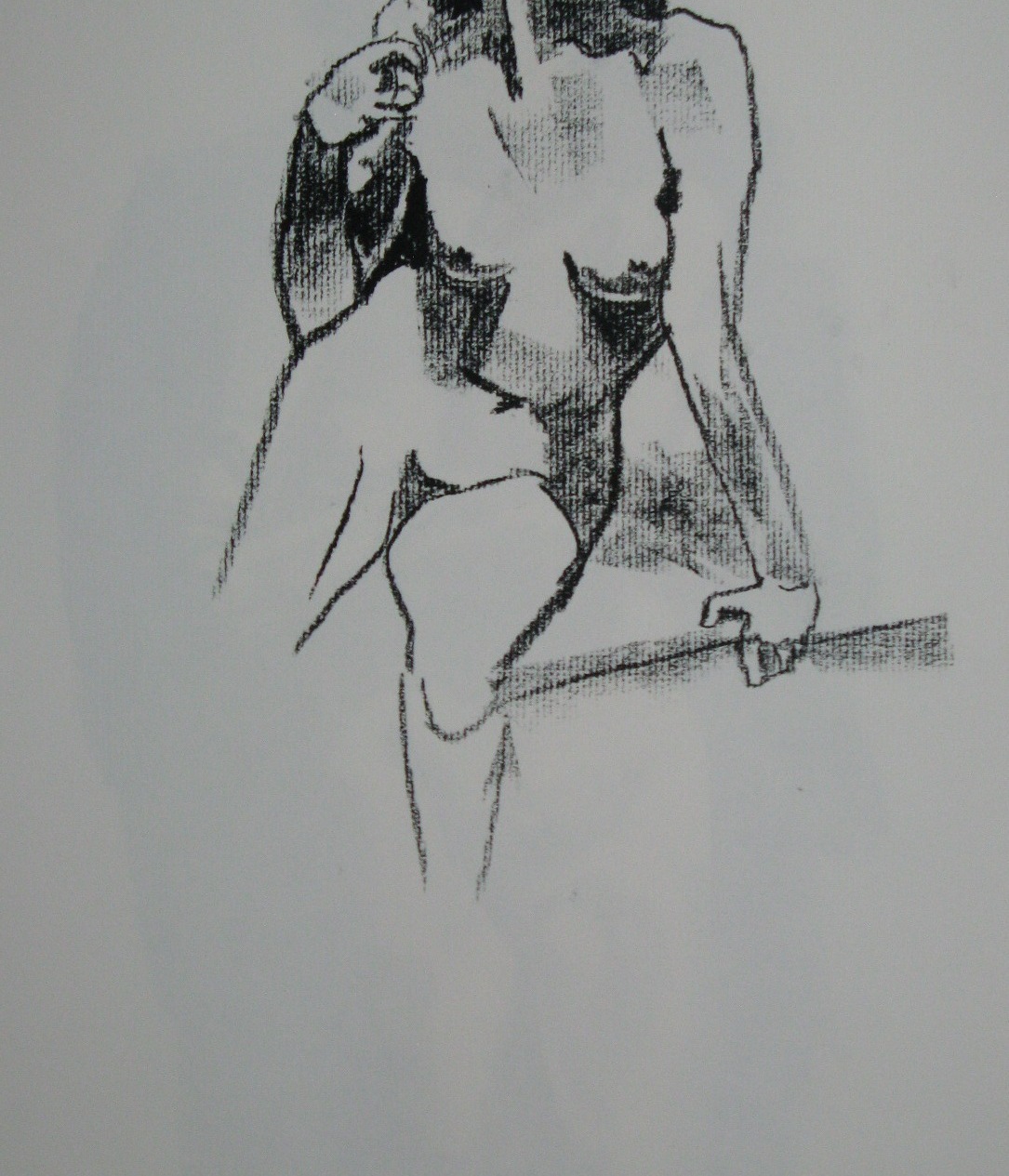
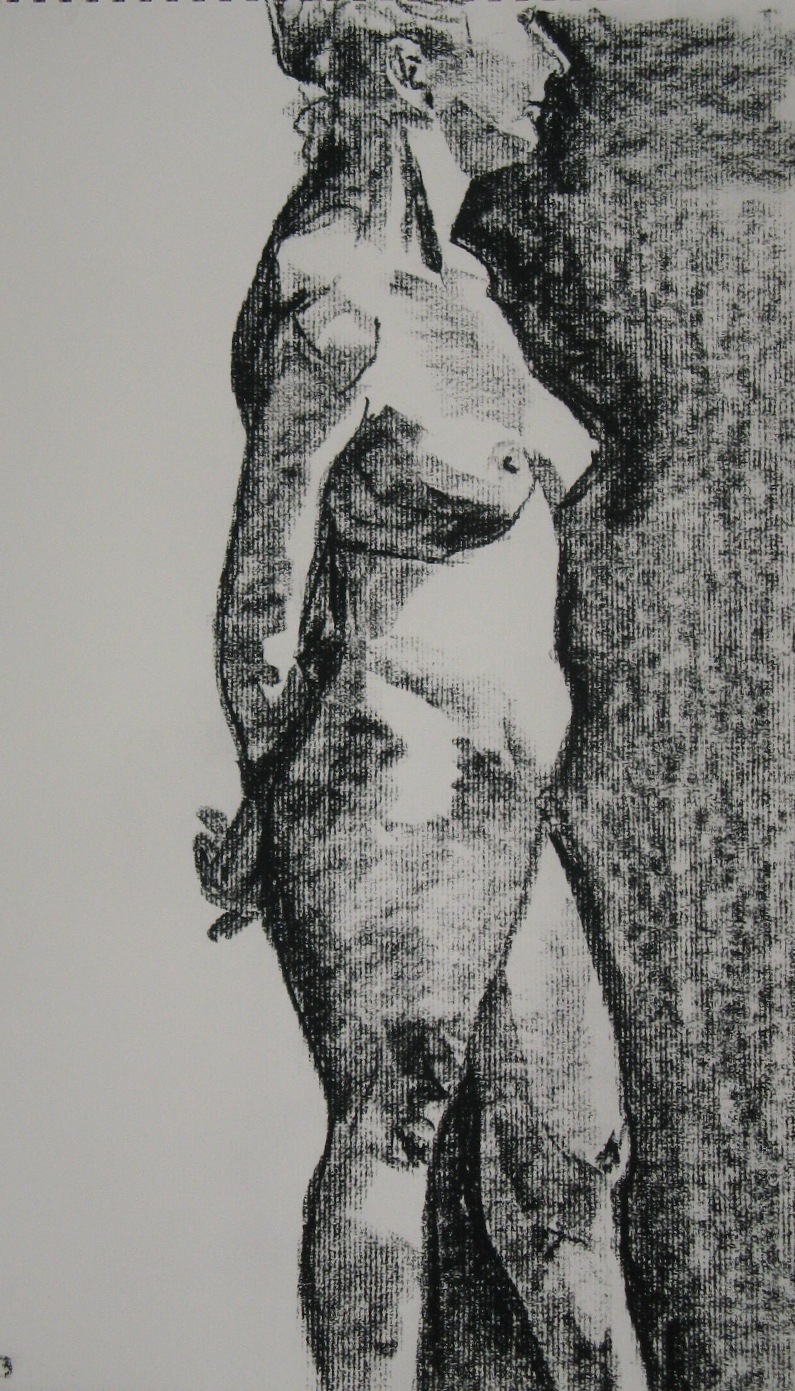
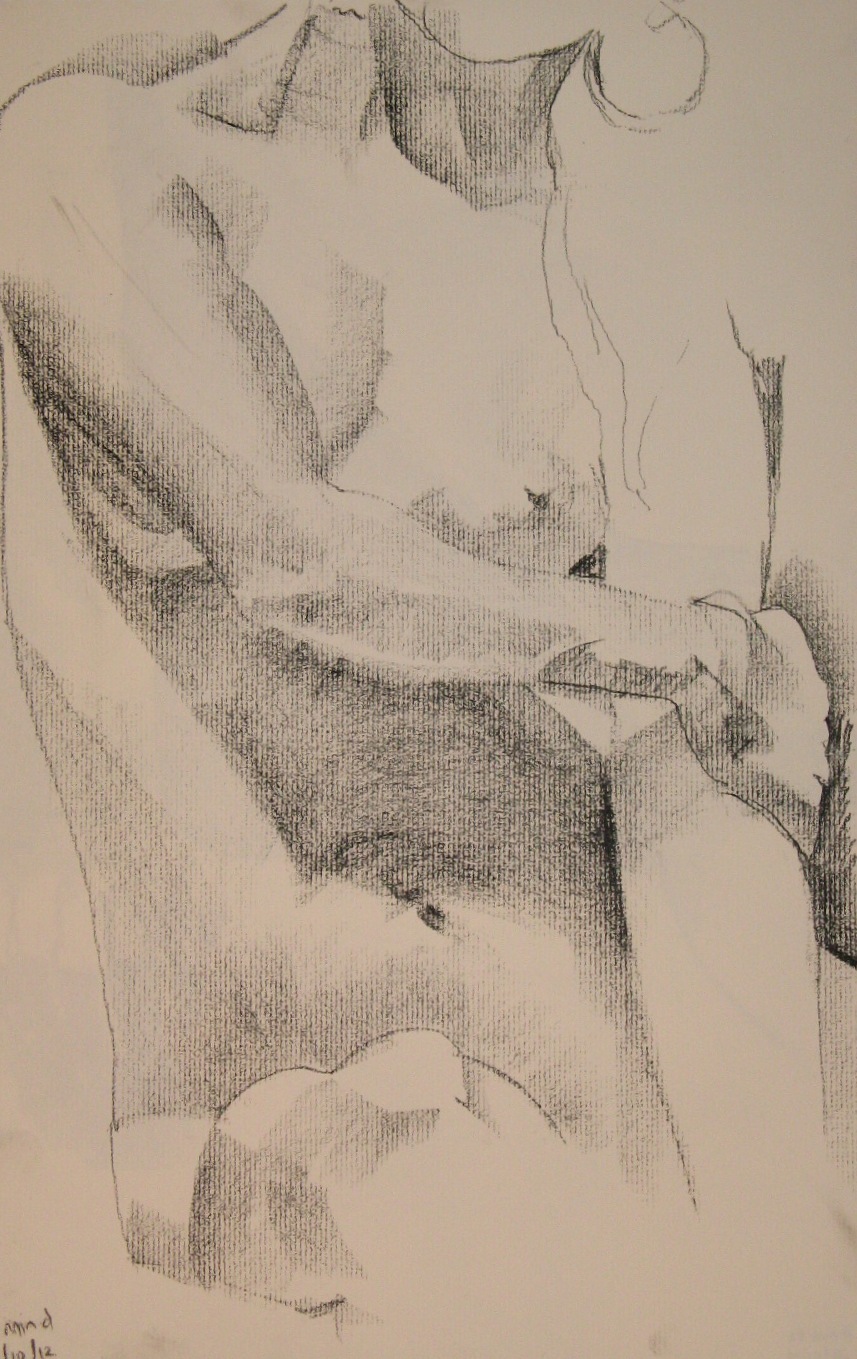
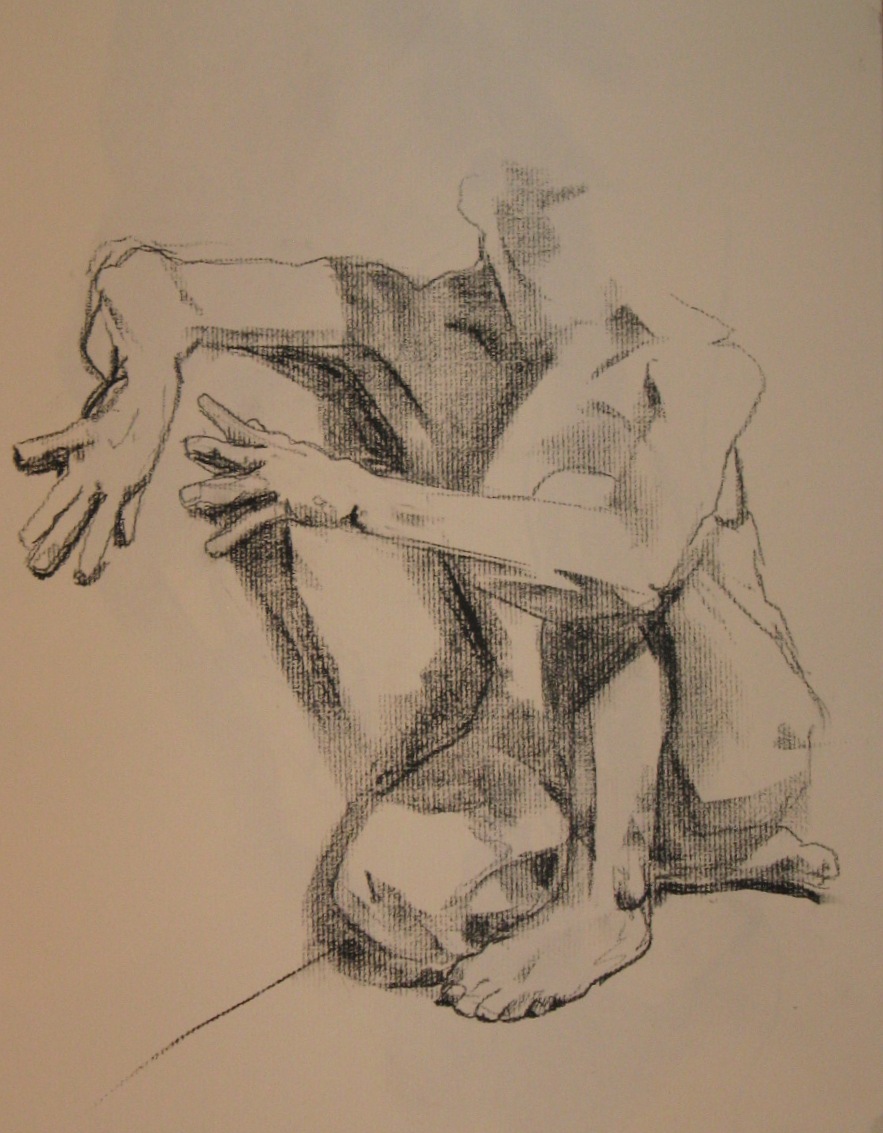
Ooh was I having fun today. Here are the drawings I like best.

Something I’ve been trying to do is cut down on the range of tones. I can get lost in the jungle of an infinite variety of shades, fussing so much to get each one right that I lose the big picture and the passion. So I’ve been trying to go darker and leave white in places that do have subtle gradations of light and shadow.

2013 04 08 c 7 min2013 04 08 e 10 min detail

On the other hand, when I use a broader range of grays, I can convey more about the light. With the longer poses I have time to do that. The light was so interesting in this one, but the drawing came out kind of messy and indefinite.

2013 04 08 g 20 min

I like the light in this one best, which is probably why it’s my favorite for the day.

           2013 04 08 f 20 min

Faces are so tricky. This one was looking quite a bit like the model until I made just a couple more strokes. Now it doesn’t look like her at all:

2013 04 08 h 30 min

I’ve posted my Easter sermon here on this blog, and also on UUCPA’s blog. It will soon be up at the church website.

In personal news, I did not keep to my Lenten practice of drawing at all. I drew on Monday mornings as usual, and besides that I did only a handful of drawings. I think I should just acknowledge that I’m at my limit for daily practices, between reading my Dickinson poem (today is #220, and next week’s sermon is on the journey so far) and exercising and following the various necessary family routines.

I took a deep breath, took a big step and tossed a dozen or more Mondays’ worth of drawings into the recycling. I like taking photos of them for the record, but I don’t always keep up, and the backlog had become a pile. At some point even a somewhat obsessive-compulsive person has to ask whether the time invested in such a project is worthwhile. I felt a pang as I tossed them into the big blue bin, knowing that there were some lovely bits in there along with a lot of mediocre, brave attempts, but I was resolutely Buddhist and closed the lid.

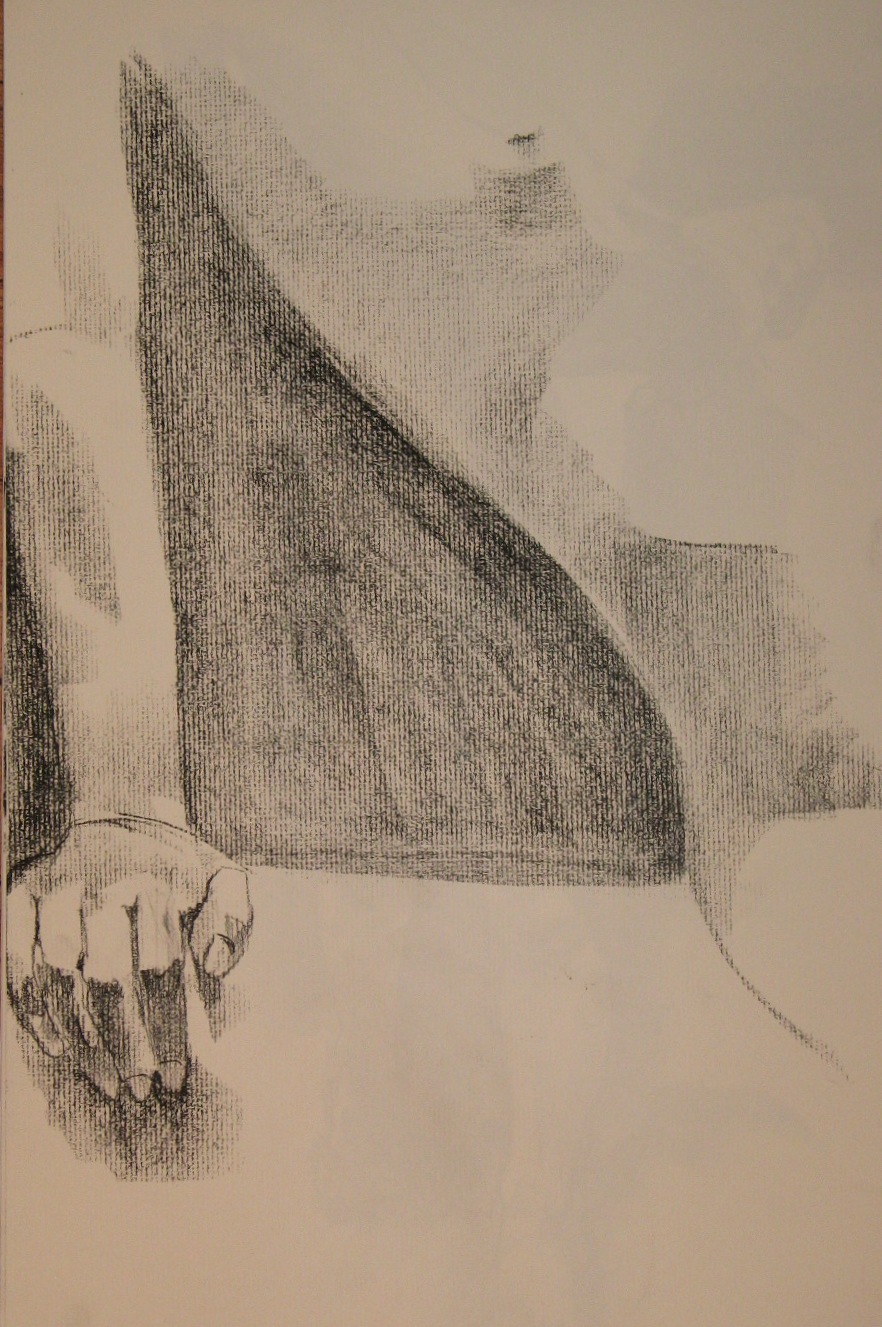
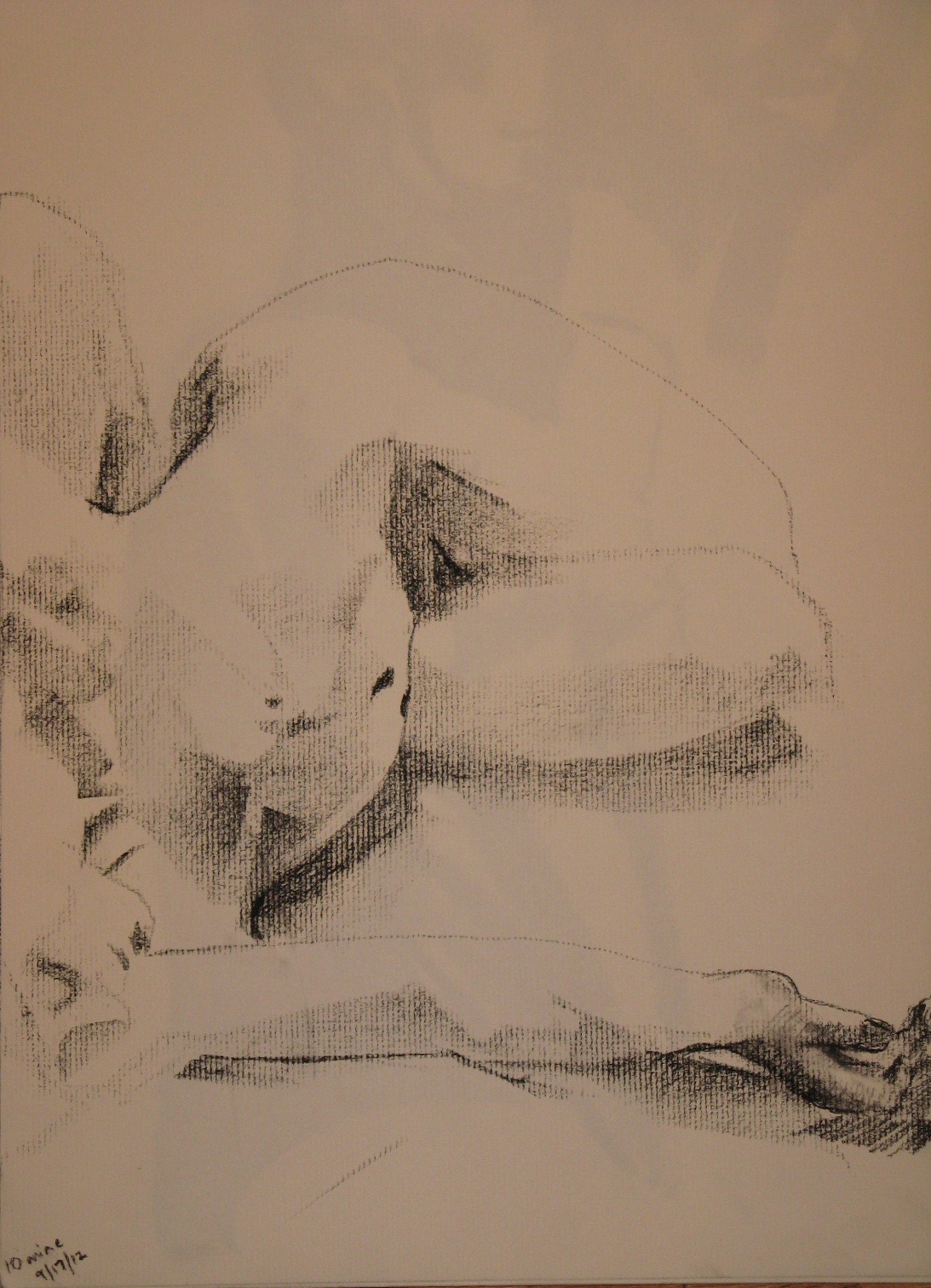
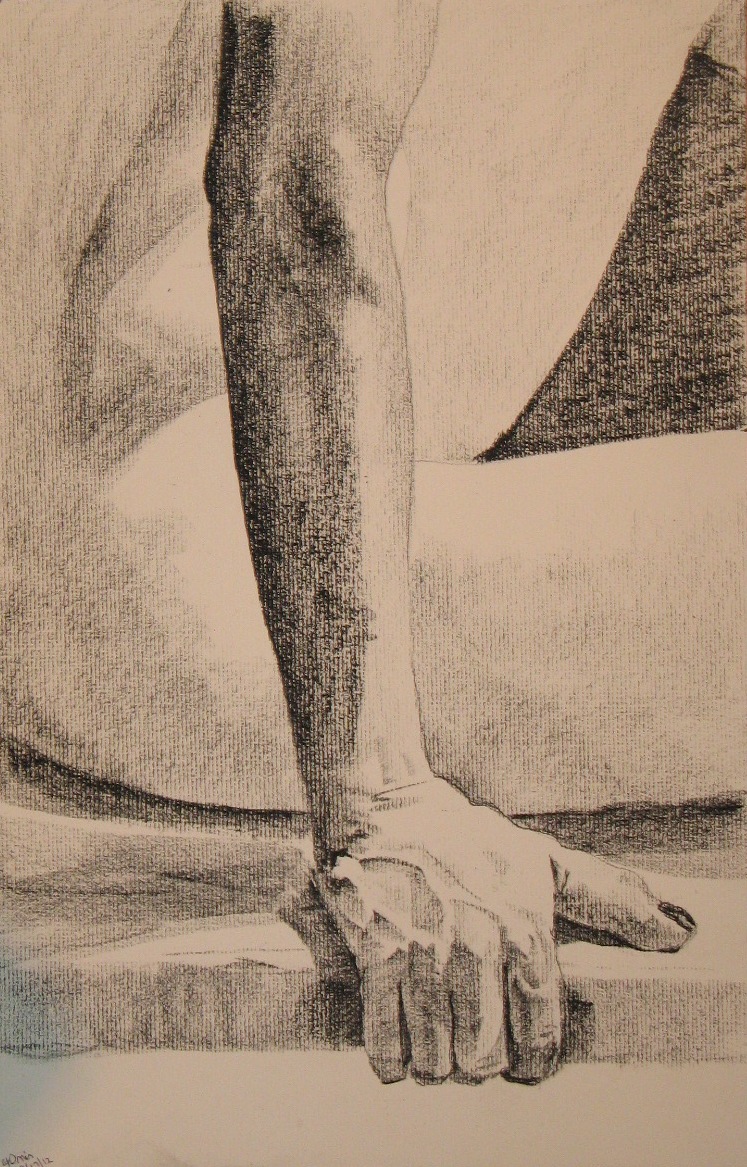
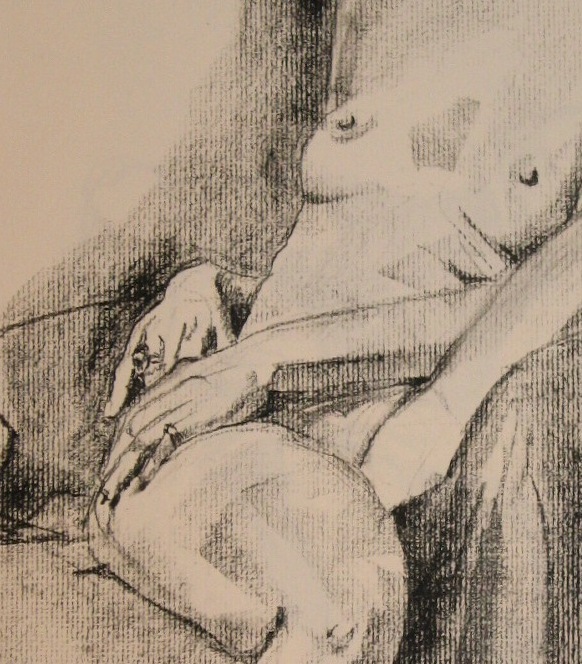
Here is a sampling from those that had been recorded before the big purge, or have been done since then. They range from September to February and the poses range from ten minutes to an hour long. All of them are on charcoal paper, instead of my more usual newsprint. I’m still getting the feel of this paper. It’s even less erasable than newsprint; a mark made on this paper is there for good.

2012 09 10 d 10 min

2012 09 10 e 10 min

09 17 12 d 10min

09 17 12 e 10min

09 17 12 h 40 min

2013 01 28 g 60 min detail

2013 02 04 f 20 min

2013 02 04 h 20 min

This morning: As a woman next to me got up and picked up her toddler, he wrapped his arms and legs around her and assured her, “I’ve got you!”

This afternoon: The bus went by a house the bottom step of whose front steps is currently suspended three or four feet above the ground. The steps have caution tape wrapped around them that says “Caution — Wet Paint.”

A congregation member and I were chatting about learning a new language as an adult. He said there’s a proverb in Japan to the effect that what you haven’t learned by forty, you’re not going to learn.

Interestingly, I had been reflecting on what I’ve been doing over the past several years, going back a ways before forty: deliberately taking on the challenge of things that scare me. I didn’t take them on for the sake of the challenge itself, but in pursuit of some other goal, but along the way I had to, in Eleanor Roosevelt’s words, do the thing I thought I could not do. They have built on each other, the knowledge of having done one giving me courage to do the next.

Ending an unhappy marriage (age 35). Necessary and excruciating, like doing an amputation on myself. Like walking through fire because going into and through the pain was the only way to get beyond it. When, three years later, my doula asked me to prepare for childbirth by thinking of a time I found the resources to do something I didn’t think I could do, this is what I thought of.

Giving birth (age 38). Longed-for but also very frightening. I’m still awed that I did it. I love this poem about that amazing power, that another church member shared to start a Committee on Ministry meeting, making me want to shout “Yes!”

first steps, Alexis O’Toole (Creative Commons license)

Speaking Spanish to native speakers (age 41). Learning Spanish in class, which I began to do at about age 40, was not particularly difficult and not at all scary. What I wondered was whether I’d have the courage to try out my novice Spanish when we then lived in Mexico for six months. I knew I’d learn more Spanish, and enjoy myself more, if I dared to speak to people—dared, in short, publicly to do something I wasn’t very good at. To my surprise, I dove right in with few qualms. Was I getting braver? It appeared so.

Drawing (age 41). A fear of drawing had paralyzed me for 25 years. Whatever freedom I apparently felt as a young child, when I said I was going to be an artist, had been shriveled by fear by the time of my first semester of college, when I took a drawing class and procrastinated on every assignment. I was terrified. When I planned my “sabbatical of art” for 2010, I intended mostly to make abstract collages, but I assigned myself one drawing class with the aim of putting some of this fear behind me. Not only did the fear fall away, but I fell in love with drawing. For the first time in my memory, I loved to draw. It is still a little intimidating to face the subject and the blank paper, to feel my inadequacy to convey what I see with a piece of charcoal, but I have been drawing every week ever since, and I always look forward to it.

Writing and preaching (age approximately 40, and ongoing). As drawing became a source of joy instead of dread, I asked myself whether I could shift writing in the same way. I had already been getting bolder in my writing and preaching, and then the revelations of my sabbatical accelerated the process. That’s the subject for a longer post focused just on preaching. For now I’ll just say: I could already write, but my sermon writing has taken on a whole new dimension in recent years for reasons that can be summarized as more guts.

And now, at age 44, I am doing something else: Learning to be a supervisor. I became head of staff—UUCPA’s first in I don’t know how long—when I got back from sabbatical in fall 2010, but I and the church still have a lot to learn. That’s scary to admit, even though I preached about the merits of “beginner’s mind” in my very first sermon as UUCPA’s minister. I really like the model that Susan Beaumont is teaching in the seminar I’m in right now, and it both fits UUCPA well, and draws on and develops gifts that I have. I’m looking forward to bringing it back and, over the next few years, adding performance management to the list of things I once didn’t know how to do, and was afraid I couldn’t do, until I began doing them and loving them.

Sometimes we do learn new things at forty.
I’ve been putting my thoughts about linked ideas, images, and events in The Dispossessed into what the software, MindMeister, calls a “Mind Map,” here.

Whole sections haven’t been transcribed from my mind to the map, such as the multiple valences of possession, but it’s fun and helpful to get it into this form. What would you add?

Looking forward to class tonight, 7:30 in the UUCPA Fireside Room. Directions here, campus map here.

Cross-posted to the UUCPA blog, which is where comments may be made.

Tim Bartik, who I wish lived near Palo Alto instead of in Michigan so he could be there tomorrow night, has been contributing really interesting and careful comments on The Dispossessed at the UUCPA blog, and his last one, written on February 24, was so helpful in clarifying my own thoughts that I want to post my response here as well.

Forgive the length of this response, but you’ve helped me understand a real key to this novel. I’ve been thinking about your previous comment, which made me realize for the first time the connection between The Dispossessed and Le Guin’s essay (which I cannot recommend highly enough) “The Stalin in the Soul,”  and how I would concisely sum up my scattered thoughts, and before I got back to the internet you did it:

“as long as he or she can find an audience that is willing to pay for that art”

That’s the rub, isn’t it? That’s why our freedom isn’t free. Not only because many great artists never make their art, or many people never get to see it or hear it, because they are busy working in an office or factory; but because many potentially great artists censor themselves for the market. They make what will sell instead of what their art calls them to make. That is an outcome of our economic system. It might be a price worth paying, in the last analysis, but we mustn’t treat it lightly.

Le Guin’s essay describes two novels: a great one that is written and never published in the author’s native land, because it is repressive and censors him in life and death; another great one that is never published in the author’s native land because he never writes it, being too busy writing what will sell to ever get around to his true art. The first author is Yevgeny Zamyatin, author of We, and the second is anyone in the US, including herself. As she says, we’re free “not only to write fuck and shit, and to spell America with a k,” but “to write what we please,” and yet we often don’t. She’s a little hard on her imaginary author, making him concerned with riches and fame. Most artists surrender their freedom just to eat and pay the rent, so their selling out is more understandable.

You are right that Bedap is right–Shevek doesn’t accept it in chapter 6 but he comes to–but I think you are describing the repression on Anarres slightly inaccurately. The bureaucrats can assign Tirin to the Asylum, but they can’t send him there. There are no laws, no police; he can refuse to go. But he goes, under the pressure of his community. The distinction is key, because we also pride ourselves on the fact that no one is going to throw us in jail for expressing ourselves. But do we do it?

If we don’t–and most so-called artists don’t, most of the time–then what is keeping us from doing it? A kind of unfreedom. And if we say, “Well, we’re free really, as long as we find someone to pay us,” we’re being like the Anarresti who “keep their initiative tucked away safe” (chapter 10). We’re refusing our own freedom. And then how free are we? Less free, in a sense, than Zamyatin, who wrote his book at least, even under Stalin.

I’m not saying there’s a better alternative to what we’ve got. I’m not sure whether there is, though I hope so. What I’m saying is that we tend to hide behind our democracy, assuring ourselves that we’re all free, and not acknowledging the walls that our economic system puts up. For every artist I know, I know five other people who would create art if only they didn’t have to earn a living. And don’t ask me how many “artists” I know whose great novels never get out of their heads because they are too busy producing what their publisher tells them can earn them the next advance. I’m sure it’s a lot. Most of them. And let’s not even get started on physics. You create it for the military, or for sale, or you fit it into the ever-narrower realm of “pure research” enabled by the ever-poorer universities. For that matter, I know many ministers who are not pursuing the community ministry they are called to, which would be tremendously beneficial, because they don’t know any way to get paid for their ministry except by congregations.

Last night, when I heard UKLG speak at Berkeley, her interlocutor asked her about her passion for Virgil, since she has such leftist-anarchist politics and he’s a poet of empire. She said she’d thought of lefty excuses for him, which got a laugh, and then she said seriously, “He had to be. If you don’t have copyright, you need a patron, and his patron was the emperor.” Art has to be paid for. (Copyright is just a part of it, something she’s concerned with at the moment since it’s under assault.) One thing she fantasized in The Dispossessed was a society in which artists are supported the same way as anyone else: the only justification they need present for their receiving food and housing and medical care and time is that they are doing the work they need to do, and that they join in the tenthday rotation and do some kleggich like everyone. They don’t need to find a patron; they don’t need to sell their art. They just need to create it. And then, because she is an honest thinker, she identifies what might not work about this: even Odonians start to ask, implicitly about the art, the compositions, the physics maybe, “What is it good for?” (“music isn’t useful,” Bedap points out)–which makes them no different than Dearri, the stupid businessman at Vea’s party. If it doesn’t further their narrow ideas of Odonianism, so they block it. They miss the true Odonianism, of course, which is based on the conviction that if each person follows their calling the society will thrive.

She is very subtle in how she talks about what undermines a revolution. This novel is not Animal Farm. People aren’t shot or driven out of the community by force. Tirin is not SENT to the Asylum; no one can send anyone anywhere, on Anarres. His Stalin is in his soul. But social pressure is often enough to drive someone mad and punish him for his madness. So what’s our equivalent? What imprisons us, who are so free? Isn’t the purpose of Le Guin’s novel to get us to ask that? And she suggests one answer: part of it, a big, big part of it, is money.

Again, disabling comments here so as to consolidate them at the UUCPA blog.  “The Stalin in the Soul” is a very short essay collected in Le Guin’s The Language of the Night and also in a collection called The Future Now.

Two more questions in advance of my class on The Dispossessed next week.

(1) As a teenager on Anarres, Shevek sees a film about Urras, the home planet that’s a lot like ours–multiple countries, all with governments, some of which are capitalist and some communist. The film juxtaposes a famine in the country of Thu where the bodies of starved children are being burned with the wealth and plenty only 700 km away in the nation of A-Io, noting that these exist “side by side” (pp 33-34 in the Avon paperback edition). Do you think  this is a fair criticism? Can it be applied to our world? How would you defend us, or would you make the same criticism?

(2) If you suddenly discovered that Anarres existed and you could move there, would you trade the benefits of living in a society like ours for those of that society? For example, would you give up the various things you own, and the possibility of owning more, in exchange for life in a society where you have almost no private possessions and “no one eats while another starves”?

Cross-posted at the UUCPA blog, and I’ve disabled comments here so that all comments are in one place; please make them over there.

As in previous years, I decided on a spiritual practice for Lent. One recent year, I tried drawing every day, and missed almost as many days as I drew.  So this year I decided to draw, too, but not to aim for every day. Just most days, and something fast. Whatever catches my eye is my subject and I jump in for five or ten minutes; for example, on the first day I drew part of the BART station while I was waiting for a train.

Joy said, “Aren’t you supposed to give something up?” and then answered her own question: “I guess you’re giving up not-drawing.” Yes.

The past two Mondays having been school holidays, I have missed my figure drawing sessions to be with the munchkin, so these little drawings have been nice tidbits to tide me over.

Enter your e-mail address to receive e-mail notifications of new posts on Sermons in Stones

Links I like