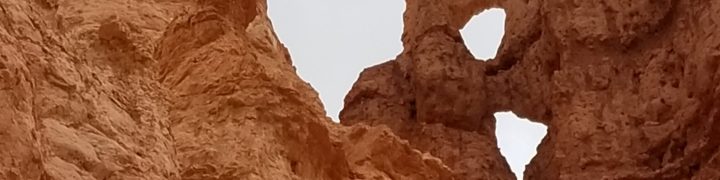

Bass Lake, California as photographed by Guy Welch
I’ve just come back from our church’s weekend at Bass Lake, at Skylake Yosemite Camp, which is, as you’d imagine, just outside Yosemite National Park, and is therefore, as you’d also imagine, breathtakingly beautiful. As torn as I was about being away from my family for two days (since Joy had to work, and being the munchkin’s sole parent for that long, in that setting, is not my idea of relaxation, they stayed home together), I was so happy to be there.
It had been too long. Our practice when I started at UUCPA was to alternate years with our Minister of Religious Education (MRE); as much as it would be nice for us both to go, mid-September is a busy time for UU ministers and we thought someone should keep the home fires burning. I went to Bass Lake in 2003 and 2005, but 2007 was our then-MRE’s last year, so she went, then the next year it seemed like such a good idea for our newly-arrived interim MRE to get to know families there that she went, another time the weekend (switched to June) coincided with our big family vacation . . . so, one way and another, I had not been for five years.
I won’t let that much time elapse again. It is a really special way to connect with the congregation members who are there, and both the drive across the state and the campsite connect me again to some of California’s tremendous beauty.
In the days before I left, I was trying to think of an apt worship service for that place and time, since I always lead a short service there. The first thing that came to mind was a hymn I love, “There is a Balm in Gilead”–a simple and profound song, and very apropos for Yom Kippur, too (which Saturday was), in our UU, interfaith way–and as I made myself a sandwich for the drive, I came up with a new verse inspired by Bass Lake. I composed a second on the way. Details are here, under “Sermons etc.”
I know a great arrangement from Ysaye Maria Barnwell’s teaching tapes, Singing in the African American Tradition, so with the help of one of our fine singers, who kindly learned it in a hurry from me the day before, we sang it in two parts. I would like to abolish the rumor that UUs can’t sing. That little group made a spirit-filled sound, all right.
The weekend begins on Thursday afternoon, but I got there on Friday just before dinner. Here are some of the things I did in my less-than-48-hours:
- looked through a telescope at an incredible view of Jupiter, one astronomers wait several years for: the shadow of its largest moon, Ganymede, on the planet’s surface. I wanted to stay up to see the Great Red spot come around again, but was too tired. That happens every three days, so I’ll get another shot
- saw the Milky Way. For that, you don’t need a telescope, just your own eyes–but you also need a dark sky that isn’t available here in my urban area
- kayaked
- laid on the dock listening to the lap of the water and the sounds of other people playing
- drew, on my own and with others who wanted to do “nature drawing without fear”
- toasted marshmallows and ate more s’mores than I intended
- learned how to do paper embossing and stencilling and made some pretty cards for Christmastime
- went out looking for scorpions with an ultraviolet light–in that light, plain black scorpions are a fluorescent green. I had no idea. I also had no idea that there were scorpions in the area, but I was relieved to see that even at night, their active time, they prefer to curl up under pine needles. (The man who led the scorpion walk said he looked all around and under his cabin and couldn’t find a one.)
- stopped dead in wonder at the shape of the manzanita outside my cabin
- read on a sunny deck, the lake in the distance, Ponderosa pines overhead
- had a visit from a tiny lizard who froze on my cabin doorstep as I came outside
- laughed until I cried at some of the talent show skits
- found an oak leaf that bore the marks of an insect that had eaten its meandering way all across its landscape
- got to know people from my congregation with whom I’d never had a conversation beyond a few minutes at coffee hour
- heard a story read aloud to us by a wonderful reader (talent show again)
- learned the Spanish ABC song from the mom of a child who goes to a Spanish- immersion school
- talked, crafted with, carried children from the congregation (and their friends not from the congregation)
- sang ridiculous camp songs
- put together jigsaw puzzles
- woke up in the woods.
Here are things I didn’t do that others enjoyed:
- yoga
- motorboating
- tubing/waterskiing behind the boat
- canoeing
- swimming
- horseback riding
- tie-dyeing
- playing cards
- tetherball
- ping-pong
- seeing deer
- hiking at Angel Falls.
Incredibly, the weekend almost didn’t come off for lack of sign-ups, but our feisty registrar persevered and made it happen. My question is, why isn’t this fabulous trip oversubscribed every year? It can’t be because of the scorpions, because only a few people knew about them until I spilled the beans just now. (I swear, they are very shy! You will never see one unless you go peering into piles of pine needles at night with an UV flashlight!) At $200/person for three nights, meals and an astounding array of available (optional) activities, it’s not an expensive three-day weekend trip. The food is good and the staff are friendly, fun, and unobtrusive, stepping in when wanted and leaving us to enjoy the camp’s resources as we like. It’s one of the best intergenerational activities of our church’s year, which is why I recommended to our interim that she be there instead of at church on that weekend of her first September with us. It suits introverts and extroverts alike, and you can spend your time in rigorous outdoors activities like hiking and riding, or just sit on the deck knitting for three days.
We advertise it to the several dozen churches in the district, and it’s open to non-UUs as well. I hope by the time the next Bass Lake weekend rolls around (maybe next September, or maybe next June), demand will be so high that the registrar’s job will be a breeze.



Where the girls aren’t
August 25, 2010 in gender, social commentary, the munchkin | Leave a comment
My daughter the munchkin, age three, has begun to sort out the world into boys and girls. “I a girl,” she explains, and asks other people, “Are you a girl?” We do let her know that there are people who don’t fall into either category, but as everyone who’s been asked so far has responded as expected, she might not grasp that concept yet. She is starting to assign her stuffed animals fixed sexes. We ask her sometimes about one or another of them, and get answers that are charmingly clueless about the linguistic implications:
“What’s Doggie?”
“He’s a girl.”
(She has also been known to tell us that she has a husband and that “She’s”–the husband’s–“sick. She has to go to the doctor.”)
You can almost see her drawing conclusions about all the possibilities open to her as she watches movies and notices that Coraline of Coraline* is a girl, as is Violet of The Incredibles–both with blue hair, so that she has already declared the intention to have blue hair too; I think she sees it as a badge of big-girlhood. And we pay attention to what she watches, trying to ensure that what she’s seeing doesn’t narrow down her world while it should be opening it up. Coraline and Violet are smart, brave, and eminently capable. The princess model is everywhere–to Munchkin, the basic requirements, and benefits, are that you have long hair and wear swirly dresses–but she doesn’t balk when I tell her a story about her taking a hot air balloon to a castle in the clouds and being shown around by, not the Princess, but the President. (I specified that the President had long hair. I didn’t comment on what she was wearing, and the munchkin didn’t ask.)
Things have definitely improved in the media since the days of Bambi and Winnie the Pooh, in which the only female characters are introduced in order to be someone’s mother or girlfriend. Not wanting to deprive her of the classics nor give her the message that the world is populated entirely by boys and men, with books I freely change the pronouns sometimes. It’s quite easy to turn Pooh and Piglet into girls if you just pay attention as you read aloud. But you can’t do this with movies, and I’m dismayed to observe that Hollywood is stuck at the tokenism stage.
Here are several movies we’ve watched recently, all of which I’ve enjoyed very much, but that collectively tell my daughter, who loves them too, that she lives in a world where almost everything interesting is done by the boys and the men.
Madagascar: Four main characters. So what do you figure the breakdown is–two male, two female? Nope. Three female, one male? Don’t make me laugh. Naturally, one is female and the other three are male. Gloria the Hippo is also the least important of the four, the sidekick’s sidekick. All of the other major players–the penguins, the lemurs–are male. I’m not sure about the bush baby.
Madagascar Escape 2 Africa: Gloria the hippo gets a plotline! Naturally, it’s about her love life.
Monsters, Inc.: Great movie! And the little kid is a little girl! She’s supercute, too, and brave. Plus, as in Madagascar II, a small juicy part goes to a woman. But the characters we spend the most time with are all male. (It’s a kind of buddy movie, and one of moviedom’s rules is that two women can’t be buddies, at least not without committing suicide by the closing credits.)
Shrek: Another buddy movie, another pack of writers who seem to think that if you create one spunky female character, you’re done paying attention to girls and women. My daughter loves this movie. How I wish I could show her a version where the hero is a girl. Or the hero’s sidekick is a girl. Or half the minor characters are girls.
Robots: Male robot (not sure how that works) goes off to land of male robot hero to redeem male robot dad, teams up with male robot friend, defeats male robot villain. This one has a slightly larger sprinkling of female characters than the above, but the central story is once again about one-half of the, um, species.
Ratatouille: Has a great female character, Colette. She really holds her own–which she has to do, because every other named character is male. Naturally, her main role is Love Interest.
The Incredibles (or, as Munchkin calls it without intentional humor, The ‘Credibles): This one actually has four significant female characters (and a black one! Hallelujah!), and everyone in the family regardless of sex has superpowers, but I’m putting it on the poop list for two reasons: Although Mom and Dad are both superheroes, the story isn’t Elastagirl’s, it’s Mr. Incredible’s. (Of course she becomes Mrs. Incredible when she gets married.) And when they have three kids, of course two are boys and one is a girl, because the rule is that the girls may never, ever outnumber the boys, except in the real world we’re all actually trying to live in.
None of these would ring alarm bells on its own, but looked at as a trend, they make a depressing one. Who is making these movies? As young as they are–as much as they grew up in a world where women weren’t just nurses, secretaries, moms and girlfriends–they seem to bring to writing and directing a worldview no different than the male writers a generation or more older, like Ray Bradbury or J. R. R. Tolkien, both of whom I also adore, but who write about worlds almost exclusively male. (Don’t tell me about Eowyn. I’ve read the book and I know all about Eowyn. And about Arwen, Galadriel, Goldberry, Sam’s girlfriend Rosie, and Shelob. There you have it, the complete list of named female characters in a book of 1400 pages. It takes even less time to list the ones in The Hobbit, since there are none whatsoever.)
Does no one in the entire production process look at the cast list and say “There’s something odd about this picture”? Do any of them imagine watching it with their daughters? I wish that before the script moves on past its first draft or casting begins, everyone involved would consider whether it would pass the Bechdel test: the story has two named female characters who talk to each other about something besides a man. It doesn’t sound like that onerous a requirement, but it would be a huge leap forward.
Our little girl is just becoming aware of the fact that she is a girl, and as she sorts out what that might mean, the message she gets from almost all of the movies we show her–when they don’t just stare past her as if she doesn’t exist–is that it means her role in life is Minor, or at best Secondary, Character. I feel as if we are doing her a terrible disservice.
*A movie that passes the Bechdel Test with flying colors, and more
Share this: