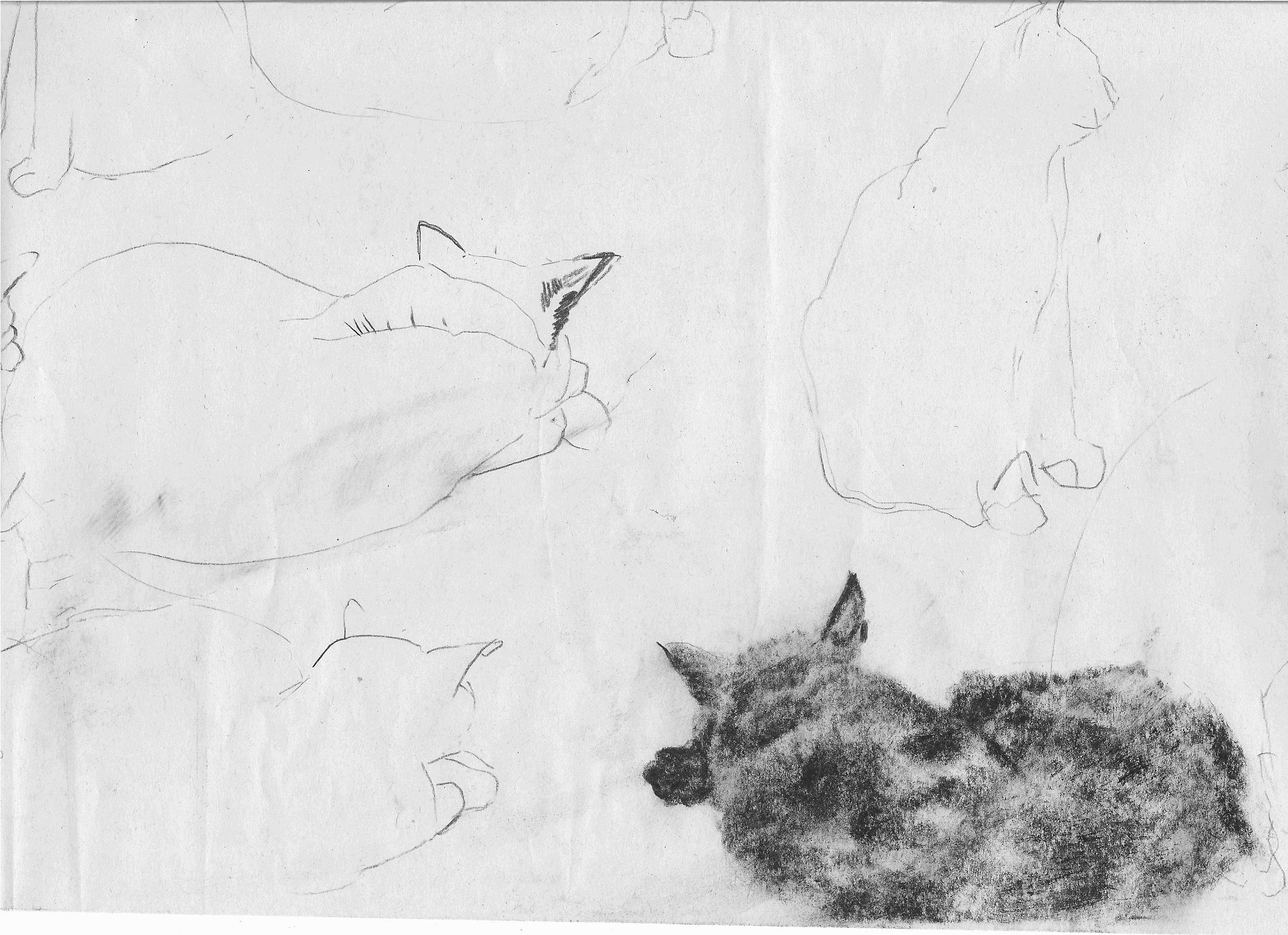
. . . discovering an extra book in a beloved series after you thought you’d read them all.  Donald E. Westlake, writer of great comic mysteries and capers (and lots of hard-boileds under the name Richard Stark, and many other books totalling about 100) had the gall to die two years ago, leaving the world with just one more Dortmunder novel coming through the publishing pipeline.  I still haven’t read that one, and I’ve been a little reluctant to track it down, knowing that it would be the last taste of these very funny, very well-written capers.  Or so I thought.  It turns out that there is another, an older one, that we don’t have and neither of us has ever read.  I brought it home from the library, an odd but appreciated Hanukah gift, and let Joy read it first.  Now I’m reading it and it is not letting me down.

And the story gets better:   Joy greeted it with an “oh yeah, there’s one that’s out of print that we don’t have . . . it’s the first Dortmunder book.”  But it’s clear, reading this, that it is not the first, because it makes reference to a couple of previous plots.  Looking up a chronology confirms that, while these could conceivably be prequels, they’re not.  They did come out first.  So this is actually the sixth, and the first (The Hot Rock) is still out there, republished and waiting for us to read it.  I’m pretty sure I’ve never read Jimmy the Kid either.  And then there’s the really-truly-last, Get Real, also deliciously unread.

Simple pleasures.  Thanks, Mr. Westlake, for a few gifts from beyond the grave.

Like most UUs, I strongly affirm the inherent dignity of each person.  But there is the dignity inherent to being a human (I would say a living) being, and then there is dignity that you either don as a mantle by how you act, or cast aside.  From time to time, I find myself wishing people would behave with a little more dignity so that we might regard them with the respect their roles deserve.

For example, California has a new Chief Justice of its Supreme Court.   The radio piece the day of her swearing-in opened with a little clip of the governor saying, with a dignity befitting the occasion, if an unavoidably comic accent,* “so help you God.”  And then we heard a speech from later in the ceremony, spoken by the new Chief Justice herself, who related how when she was a little girl, she used to walk with her family through the capital, past these very buildings, but they didn’t ever think of actually going in.  Hm, I thought–so far so good, a humble and down-to-earth anecdote–and then she gushed, “And now we’re sitting in the front row!” I was embarrassed for her, and for the state.  Did she really mean to imply that that was the most important aspect of this ceremony?  She is the highest judge in our courts, and anyone who enters her courtroom is subject to the strictest protocol of respect.  Could she maybe reflect that in the ceremony, and save the giggly “OMG, can you imagine, me a Chief Justice!” stuff for her private family party afterwards?

I have been to a few ordinations that lose their balance this way too.   Comments on the personal characteristics of the new minister have their place, but they sometimes dominate to the point that the ceremony feels more like a high school graduation (or even worse, the party afterwards) than a sacred initiation.  The “whoo hoo, you did it!” tone (and words) that I’ve heard directed at the ordinand convey to the congregation that this is just a personal achievement of the minister, not about them at all.  They also say that the whole ceremony is about itself, about that day, rather than about the ministry to follow, which is like making a wedding all about a wedding instead of about marriage.  New colleagues, if that’s not  the way you want your ministry to appear, then beg your participants to focus on the meaning of ministry, not on you.  If they compliment you, smile with the humility you surely feel as you imagine the enormity of the burden you are accepting.  And though you may be thinking “I made it!” yourself–it’s only natural, after the long way you’ve come–then please share it with your friends privately.  It really doesn’t belong in the service.  This is an hour in which we focus, together, on the holy power and the world’s needs that called you to ministry, and devote ourselves to serving them, with your leadership.

*Before I get deluged by the Austrian Anti-Defamation Committee:  I don’t think Austrians are inherently comical.  Just the ones whose accented “hasta la vista, baby”s are seared on our brains.

Theologians know the danger of positing a “God of the gaps”–inserting God as an explanation of whatever phenomena we don’t yet understand.  The problem with defining God in those terms is that as human knowledge proceeds, God shrinks.  God used to be the cause of thunder (and thunder therefore a proof of God’s existence), until we understood what causes thunder.  Then God was the cause of rainbows, until Newton came along and explained rainbows.  But wait, God still created human beings by fiat–until we saw all the evidence that human beings arose via evolution.  None of this means there is no God–just that, if you rely on a “God of the gaps” for your belief, you are standing on an ice floe in warming waters.

The lawyers defending Proposition 8 have a similar problem.  Advocates of what people are now calling “traditional marriage” used to say that marriage had to give men rights over women, or it wasn’t marriage.  They lost that when women’s right to control their own property and bodies was affirmed.  Then came Loving v Virginia and they argued that a crucial purpose of marriage was to preserve the integrity of the races (just look it up!), but the Supreme Court said, no, that’s not what’s essential about marriage–any man and any woman can marry.  Then they rested on that for a long time, until people started questioning the difference between a male-female relationship and a female-female or male-male one.  “Ah,” the marriage-of-the-gaps people said, “It’s that men and women can procreate, and that’s what marriage is for:  protecting procreation.”  But so many people have argued the obvious point that we do allow male-female couples to marry who cannot, or state an intention never to, procreate, that they’ve had to change their definition of marriage again.  Now, according to Charles Cooper (lead attorney for the Prop 8 defenders in the federal case), it has something to do with protecting people whose sexual relationship could lead to accidental pregnancy.

Of course, this has nothing to do with marriage; instead, they have searched for the one demonstrable difference between hetero and same-sex couples, and declared it the gap that must be filled by marriage.   That’s a mighty small gap.  I think they’re running out of gaps.

The divine, to many of us, including me, is not an explanation for the supernatural or inexplicable, but a name for the wondrous and good, so we don’t have the problem of our god diminishing as knowledge fills in the gaps.  And marriage is not a bludgeon used against undesirable members of society, so we can affirm it for what it is today in our culture:  the rights and responsibilities assigned to people who choose to be life companions, for whichever reasons they want, but usually because of mutual affection and the desire to share their lives.

Incidentally, readers of the Bible will note that that definition bears little resemblance to what marriage was in Biblical times and places–and a good thing, too.

I had my sermon all but finished, but Saturday morning, a niggling voice told me it wasn’t where my passion lay, and I listened to it and wrote an entirely different one. I had been brooding over the economic news, but Bernie Sanders’s own sermon in the Senate this week–it sure hit me like a sermon–sent me over the edge. Our crazy economic system and how we are arguing about just how much crazier to make it–that was what I wanted to say about childhood in this country at this moment.

So with the couple of hours in the early morning of Saturday and Sunday when I’m usually up before my family, plus a strong dose of anger and grief, I wrote this. I’m glad I followed my instincts. I heard from many people how much they needed to hear it, and I think that was mostly because it was the sermon I most needed to say.

A Childhood Demon

On NPR’s “Talk of the Nation” this morning I caught a little bit of an interview about bullying. The interviewee said that it was hard to collect information from adults who’d been bullied as children because, even after all these years, they were so ashamed that they often didn’t talk about it even to their spouses.

So I realized I ought to come out of the closet: I was bullied all through elementary and junior high school. It never got physical, except for the time that bitch Lisa Ogden knocked me down at the bus stop. Her taunting on the bus was worse than the damage to my knees, though. I dreaded coming into school many days. In 7th grade I got such bad headaches I wept from the pain, and my parents took me to the doctor, who diagnosed stress. That made sense to me. The stress had little to do with schoolwork, and everything to do with having to spend five days a week, week in, week out, in a place where people who hated me were permitted to harass me.

May I state the obvious? Bullies thrive where adults allow them to. Teachers and administrators can’t control everything that happens in a school, but they have a lot of power; if they declare a behavior unacceptable, that behavior will occur less often. This may be easier to do with physical bullying than with taunts, which are so easily muttered as kids pass in a hallway, but it works for everything. Look, we have rules in our classrooms against chewing gum and showing up late; I don’t think it’s too much of a challenge to add a rule against abusive speech. The teacher, dictator of the classroom, decides what constitutes abuse. I would enthusiastically support any teacher who did this, whether my child were the victim, a bystander, or the bully.

When I was a teacher at a boarding school, I knew of some kids who persistently bullied the others, extorting their boom boxes and the money they got from home, hitting them whenever they could get away with it, and generally setting up their own little kingdoms. What was worse was that their dorm parents knew about it and looked the other way–one even said he thought it helped keep kids in line. Never mind that the kids being kept in line were often really good kids and the one who needed reining in was being allowed to do whatever his sadistic imagination invented. My own suspicion was that that dorm parent got some kind of kicks from these power dynamics, but he was pretty rule-happy so it might just have been that he couldn’t deal with any behavior not explicitly outlawed by the school rules. That same dorm parent earned an immortal spot in my memory when he was supervising a trip to a football game and a sweet kid, an advisee of mine, was kicked viciously by another kid (about whom I’m sorry to even report this, because I generally liked him– but he had some Anger Management Issues). Another teacher saw it and brought the kids over to the dorm parent, who literally began looking through his manual and said, “It doesn’t say anything here about kicking . . .

The same thing happens in prisons. There are punishments the guards aren’t allowed to use, so they let the prisoners inflict them on each other. It’s not substantially different than inflicting them themselves, though if the courts actually declared it a violation of the clause against cruel and unusual punishment, they would have to put a moratorium on imprisonment.

I have a lot of remorse that I never brought this issue to the headmaster, my only consolation being that I don’t think he would have been any more effectual than I was.

I saw a less extreme case in the next school I taught in, a Catholic school in California. I apparently made an impression on the students when I told them I would treat putdowns between them as a disciplinary matter, just like talking back to a teacher or failing to turn in homework. One of my brightest students, ‘Jonathan,’ came in for a lot of bullying. I don’t know whether my rule made his life outside the classroom easier, maybe harder; I know that he didn’t get put down in my hearing. When I talked to another teacher of the same grade about the bullying problem, though, she said, “You have to admit that Jonathan asks for it.” Wow, blaming the victim, in a religious school! She was even Catholic, which I was not (come to think of it, the dorm parent who thought bullies were a useful part of the boarding school’s discipline system had hankerings to be a chaplain). Privately, I diagnosed her as a former bully herself, but I never actually asked.

Grownups need to be grownups if kids are to be safe. If they have unresolved issues that make them despise the kids who get bullied, they need to get over them or recuse themselves from teaching. If, like most teachers, they hate the bullying but just don’t know how to help–I encountered well-meaning teachers like this when I was a girl–there are good resources nowadays. They can start in the earliest years with You Can’t Say You Can’t Play, by Vivian Paley.

ETA that Doug Stowe at Wisdom of the Hands also posted on this topic yesterday: adult bullying in schools


When I came up from the subway yesterday and walked up the United Nations Plaza on my way to pick up the munchkin from school, I was startled to see that San Francisco City Hall was drenched in red light. I walked along thinking of the people who vanished from this city when AIDS struck, and of the ones in places like southern Africa, where it’s getting worse. I didn’t know until later that monuments all over the world were going red in honor of World AIDS Day.

Photo by Troy Holden

This one provided some excitement for the munchkin, who wanted to know how it got that way, and why. I explained that there’s a disease that’s made a lot of people very sick and the building was lit up with red to remind us that we need to do something to help them and find a way to cure it. She got very concerned: “But I want to get home to Mommy and have Hanukah.”

Right, sweetie. We don’t need to eliminate AIDS right this moment, before we go home from school. But oh, how I wish that was all it would take.

Today was the last day of the term at the drawing studio, so I might not get to do figure drawing until January. Now that I’ve devoted every Monday morning to art for several weeks, I’m in the habit; I missed it badly the week I couldn’t go because Munchkin was sick. So Mondays 9:30-12:30 will be my art time for the month of December too.

I’m trying to go darker and use more shading/planes, relying less on line. As if by magic, that turns out to make light more visible in the drawings. Lumos!

I’m also trying to work on a bigger scale, which makes the drawings hard to scan in one piece, hence the “top” and “bottom” for most of these.

It’s hard to put these online sometimes because the flaws haunt me (what have I done to her poor right leg in the 20-minute drawing?), but I’m committed to being publicly imperfect as a way of wearing down the perfectionism that made such a daunting wall between me and drawing for years. I don’t post everything I draw, for which, believe me, you should be thankful, but I also don’t wait to have something to post that I’m 100% satisfied with. Who knows when that might happen.

I’d pointed Munchkin to her classroom door, since she insists now on going by herself, before the service. I’d taken up my spot by the front door, robe and stole on, ready to greet people as they entered. But everyone who crossed the patio seemed to be stalling at a little cluster of people by the big tree who were staring at a spot about eight feet up.

I went over and saw something that I’ve never seen before: a spider actually in the act of creating her web. She had started from the outside and was spiraling in clockwise. At each segment she paused, attached a length of thread to the radial support, and moved on. The web had the sun behind it, and as it shifted in the breeze, different sections glowed iridescent.

We were all speaking of the web-spinner as “she.” It’s a nice change (I notice, eavesdropping in zoos and parks, that we usually refer to all unfamiliar animals as “he”), but I wondered aloud whether it’s true that only the female spider spins. Maybe it is just a figment of our cultural memory: Charlotte, Arachne, women as the community’s spinners and weavers. The crowd wasn’t sure. A little online research suggests that males do spin webs, but mostly when they are very young (pre-mating age). We didn’t ask this spider its age, but it was quite large, and the males are usually much smaller than the females.

The bell rang and we went into the service, but I already felt like I’d been to church.

It used to be that in order to be granted conscientious objector status, you had to claim religious grounds; I believe you also had to be a member of a “peace church” such as the Quakers or Mennonites. In either case, this was overturned in 1965, in United States v. Seeger, which ruled that one could seek CO status based on any religious belief, defined as “a sincere and meaningful belief occupying in the life of its possessor a place parallel to that filled by the God” of other people.

And one can claim CO status even though the religion one belongs to is not uniformly pacifist. For example, you can currently say you are a conscientious objector because you are a Christian and wish to follow Jesus’ teaching to turn the other cheek. The fact that there are other Christians who do not interpret that passage as requiring pacifism doesn’t automatically invalidate your conviction, in the eyes of the committees empowered to make these decisions. I have written letters of support for members of my church, explaining carefully that their pacifism is grounded in their Unitarian Universalism even though being a Unitarian Universalist does not require one to be a pacifist. (That non-creedal church thing always needs explaining.)

Hell, Vietnam, Cambodia, and Laos could testify for the wiggle room even within Quakerism, since our only Quaker president was Richard Nixon. But I digress.

Now the Truth Commission on Conscience in War, on whose Planning Committee the Starr King School for the Ministry serves, proposes a further expansion of the grounds for conscientious objection. To my mind it is similarly reasonable to US v Seeger, though difficult to administer (as are people’s current claims of religious objection to war): instead of requiring all would-be COs to be pacifists, it would allow someone to object to participation in a particular, or particular kind of, war.

For example, one might be allowed to take a Just War stance, such as the Roman Catholic Church propounds. This makes a lot of sense. Why tell Just War advocates, “Nope, it’s all or nothing”? “Fight in all wars or none”?

Many applicants for CO status in recent years have objected to fighting in Iraq but not Afghanistan. Their applications have been automatically rejected; this proposal would change that. It would enable the enlistment of potential soldiers who right now do not enlist because they don’t want to be compelled to fight in a war that is unjust by their ethics.

Furthermore, it reflects the kind of distinction most people make. Some of us are opposed to violence of all kinds; many more support its use, reluctantly, in certain circumstances. There are plenty of us who would risk our lives, even threaten another’s, in order to save the women of a village from mass rape, but would neither kill nor die to save the profits of the United Fruit Company.

The proposal got attention from the New York Times‘s At War column today. My first impression, sadly, is that comments on the New York Times website aren’t that much more intelligent than the ones on your average Yahoo story. There are quite a few comments along the lines of “if they’re too scared” (one person says “too delicate”) “to be soldiers, they shouldn’t sign up.” More thoughtful are the reminders that we don’t have a draft and so anyone who wishes not to volunteer need not, but they don’t address the fact that some would-be soldiers may be needlessly excluded from serving.

I don’t wish to enroll lots more people in the armed forces, but I do like a public policy that encourages nuanced moral reasoning.

A few drawings from today’s session, ranging from seven minutes (the first two, which are two parts of one drawing too large to scan in one piece) to thirty (the last two, ditto).

Last week I only brought charcoal and graphite, as distinct from actual pencils of same, which had a wonderful effect: I had to draw more in planes and broad strokes. I am trying to do this more instead of focusing so much on lines and fine detail, so this was good. Today I brought the charcoal pencils along too, and used them along with the charcoal sticks, when sharper lines were called for.

Click thumbnails to see larger size.

Enter your e-mail address to receive e-mail notifications of new posts on Sermons in Stones

Links I like