You are currently browsing the category archive for the ‘uncategorized’ category.
Today’s word: humility.
“To bow and to bend we shan’t be ashamed . . .”
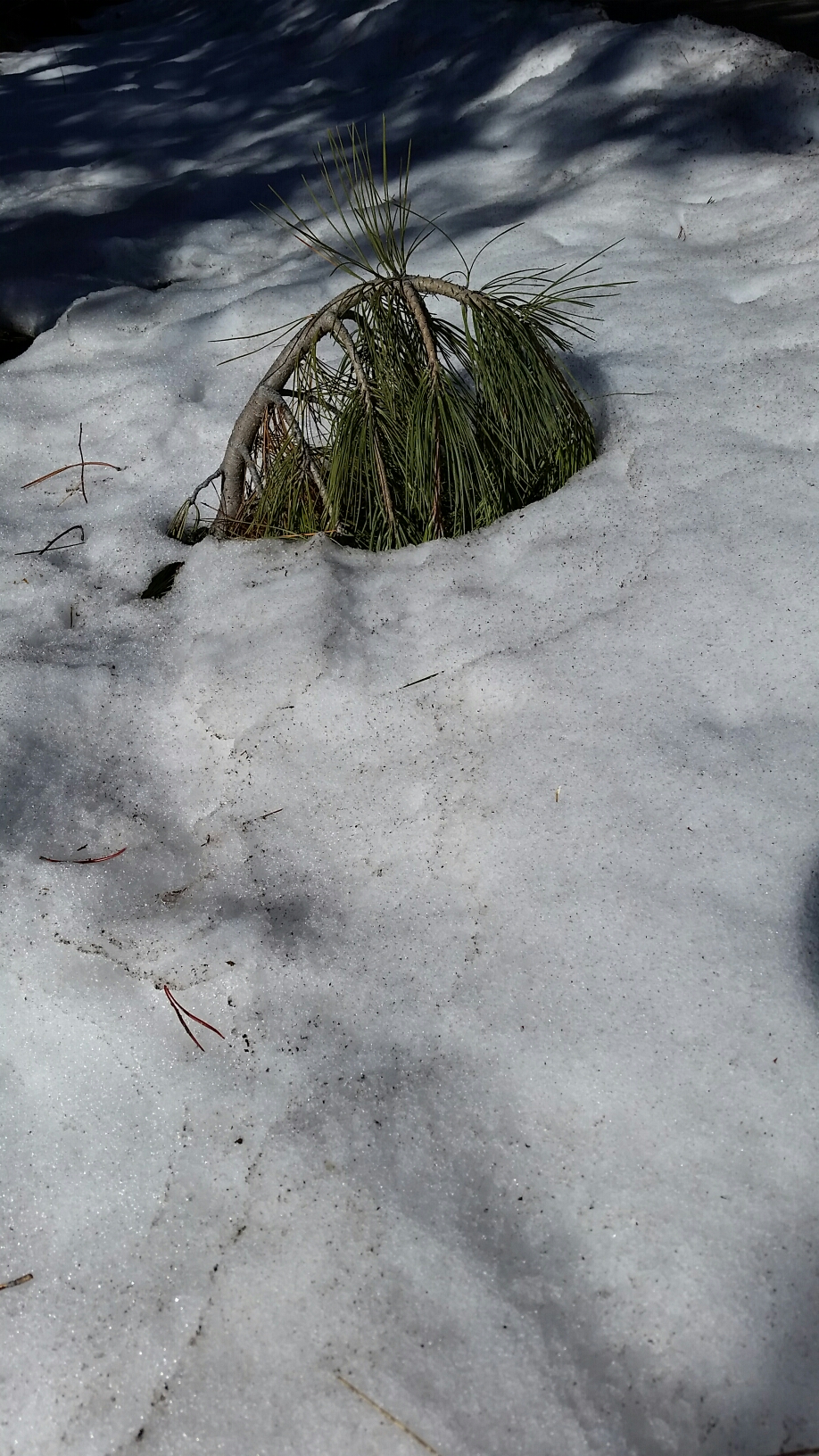
I was just wondering whether I should have a Lenten practice this year, when the UUWorld popped up in my e-mail inbox with an article about #UULent, a photo-a-day practice. Something I know about myself is that 47 straight days of anything is very challenging (Lent practices of privation skip Sundays, but this practice continues through Sundays, with a twist). However, if I only hit 30 out of 47, that will be 30 days of attention to a spiritual matter.
Today’s word is mindfulness, and the internal process that occurred when I saw this outside a restaurant window today exemplified . I saw the light coming through these leaves and two thoughts came into my mind simultaneously:
How beautiful!
It’s a geranium, and I don’t like geraniums.
I have a category in my mind–geraniums–and a judgment about it–I don’t think they’re beautiful. Mindfulness allows perceptions in (“How beautiful!”) that don’t fit in my categories, and even challenge them.

So I am beginning this season with gratitude for this geranium, the sun, and the prompt from creators Mr. Barb Greve, Karen Bellavance-grace, and Alex Kapitan to consider mindfulness with my camera. I also want to express an extra thank you for giving me a gentle way out of a long dry season of blogger’s block.
If you care to join me, I’ll be posting daily on Twitter @AmyZMorgenstern (hashtags #UULent, #UUCPA) and also on Facebook–please connect there, or in the comments, and I’ll look forward to seeing your photos–whether one or 47.
Look at that–I never posted last year’s Christmas Eve homily. Probably because I came home tired that evening, wrapped a few more presents, woke up to a lovely Christmas morning with my wife and daughter, and then traveled with them all over California visiting family, friends, and Joshua Tree National Park.
It was called “Come, Emmanuel” and it stands up quite well to re-reading one year later.
I was walking around a pond in a development in Louisville, Colorado, yesterday afternoon when I saw a fluffy black and white flag wiggling above the foot-tall grass. Then another appeared. Before I caught a glimpse of the bodies that went with the tails, I knew they had to be skunks.
I hesitated for a moment, thinking of their reputation even though I know it’s exaggerated, but reasoned that even if they noticed me, they wouldn’t be frightened into spraying, with me several yards away and easy escape routes all around. So I watched for several minutes as they moved between partial and complete concealment. I am not sure I have ever seen a living skunk in the wild, and I wouldn’t have expected to see one before dark. As best as I could tell, one was larger than the other and both were nosing along the ground or close to the roots of the grasses.
They disappeared into the high reeds closer to the edge of the pond, and I watched for another three minutes or so but didn’t see them again. I reluctantly headed back to the house, feeling so elated that sighting a rabbit hop ahead of me and across the road a few minutes later seemed ordinary.
Ten minutes each:


Twenty minutes each:


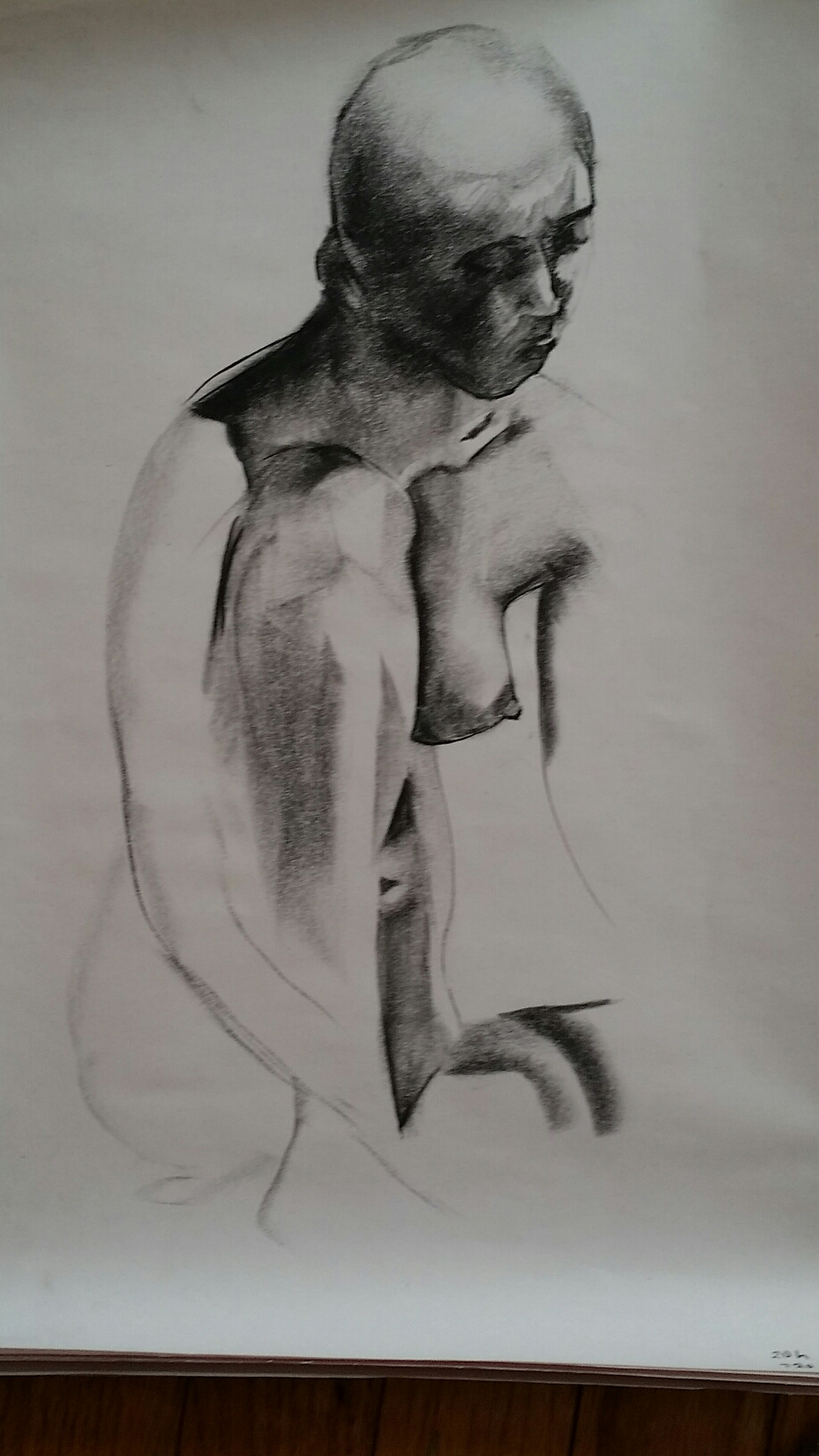
So much frustration. But mostly only when I look at them afterwards. While I’m drawing, I’m at peace.
Today is pi day here in the United States, where we list the date before the month in our date shorthand, thereby enabling geeks to celebrate our geekiness on 3/14 each year. This year it’s extra special: 3/14/15 at 9:26:53 celebrates the first nine decimal places of pi.
It’s only fitting that today’s entry for Women’s History Month celebrate a female mathematician, and until earlier today, I didn’t even know the person I’m writing about was a mathematician. Florence Nightingale is of course more well-known for her pioneering work in nursing; her professionalization of the role (nurses were previously without training), management of hospitals, and attention to sanitary conditions, so transformed medicine that she is known as the founder of modern nursing. She was also a social reformer on issues including education, poverty, prostitution, and (despite her generally low opinion of women) the expansion of women’s professional opportunities. However, hand in hand with these accomplishments goes her work in the field of statistics: she believed that public policy should be based on data, and she had the skill and training in mathematics to present data in vivid and accurate forms.
Paul Lewi calls her “one of the pioneers of modern statistics.”
She . . . insist[ed] that statistics should be used and understood by politicians and officials as a rational means for decision making. To this effect she designed original diagrams which illustrated in a dramatic way the needless sacrifice of human lives and the simple means to prevent it. These diagrams were
published as part of the many reports and proposals that she prepared on various issues including health care, education, child labor, work houses and crime.
Her work in the Crimean War went far beyond her admirable service as “the Lady with the Lamp”; she documented, and presented in then-new and convincing graphic form, the causes of death among the British Army. Eschewing the philosophy that was urged on her of “the dryer the better,” or the bar chart that was then popular but would not have conveyed the comparison between the same months in different years, she devised a complex variation on the pie chart now known as the “Nightingale Rose.”
 T
T(An animation of this chart can be viewed here.)
Nightingale went on to use “applied statistics”–a term she coined, according to Lewi–to drive policy changes in public health in India and at home in England. All of this was possible because her talent as a mathematician was recognized and nurtured beginning in her earliest years. So have a piece of pie for pi day, improved pie charts, and a woman who saved thousands of lives or more.
What all three of these have in common is that the gesture is expressive of what I saw. For example, in the first one, her right arm is totally wrong–I got the proportions off somehow and shortened it painfully. But I can feel the lift of her chin and the pressure her left ankle puts on her clasped hands as she holds it.

I got lost in the weeds here and spent time on the shadows along his right side and other little fritterings, and I messed up the right knee so that it looks as if his elbow sinks two inches into it (reality is unforgiving–put a line half an inch in the wrong place and your drawing gives off a big neon WRONG sign). But again, the tilt of his head is here, even with nothing drawn in but his ear and chin, and the weight of his hand on his left knee, and the twist of his body.

I fussed over the beautiful contours of his right upper arm but got them wrong and couldn’t fix it (erasing is a very limited option given the materials and time limit). What makes me happy about it is the gesture, again: his stare downward, his inward turn.

Gestures and proportions, plus light and overall energy and mood of the situation–I don’t think I’ve ever made a drawing that captures them all to my satisfaction. Maybe that is the next goal to aim for.
I’ll be joining 1000 Voices for Compassion, which currently stands at the mathematically-pleasing number of 1024 bloggers who will write about compassion on February 20. What do you think compassion is? What does it mean in your life?
Outside my office in Palo Alto, California, is a pleasant green area where squirrels chase each other up and down a tree, run along the walkways outside the office, search for food in the gutters of the walkway roofs, and scamper on the lawn. Some are gray, and some are black; I’m told they’re all one species that simply comes in a range of colors, the way humans do. I have reason to doubt this.
You see, I have seen black squirrels before, in two and only two other cities: Hanover, New Hampshire, and Princeton, New Jersey.
If the previous sentence does not cause ominous music to begin to play in your interior soundtrack, I hope the paragraph break will. Let me repeat.
I have seen black squirrels before, in two and only two other cities: Hanover, New Hampshire, and Princeton, New Jersey.
Paragraph break. Ominous pause. Music rises.

photo: Tony Hisgett from Birmingham, UK
Do you see the pattern here? Hanover, home of Dartmouth College; Princeton, home of Princeton University; and now Palo Alto, home of Stanford University. Top-flight research institutions all, with biological research underway. Yes, I will say it, and you may scoff but I know the truth: someone in a white lab coat is messing with our squirrels. And once in a while, a black squirrel escapes from the lab that created it and mixes with the local population of boring old gray squirrels, or as a neighbor of mine in Connecticut used to call them, “rats with bushy tails.” They vandalized her lilies, so her resentment was understandable. And I do mean “vandalized,” not “ate”; they would bite off the buds and leave them there, a vicious reminder that they and they alone controlled the fate of her garden. I have not caught the black squirrels or the gray squirrels in an act of vandalism, although I came in one morning to find the pot where I planted new agave shoots turned on its side and emptied of plants. At least that thief did something with them.
But I digress. My point is, black squirrels do not show up in East Podunk, Illinois, or Nowhere Center, Mississippi (until ten people add comments telling me the places they’ve seen them). They appear, mysteriously, in the hometowns of Ivy League and only-outside-Ivy-League-because-they’re-too-new-and-Western universities. They are the squirrel equivalent of the rats of NIMH, the hyperintelligent counterparts to the not-so-bright grays.
I shared this theory with Dan, our minister of religious education, and he has added a terrifying wrinkle. According to one report, black squirrels have been known to attack dogs. You read that right. Fatally, if the rumor’s true, so don’t click if you’re a dog lover.
It’s been warm this week and I’d normally prop my door open and let in the summer breeze. But the squirrels keep pausing outside my office door, having a peek through the glass. Once, I caught two of them looking at me at the same time. What happens if the black squirrels’ intelligence marshals the power of the gray army? If they organize, I and the peanut butter in my desk don’t stand a chance.
Without net neutrality, this post might still be loading.
Just this, for so long that you got tired of it and went somewhere else. That’s what big ISPs want, which is why they’re pushing the FCC to approve “slow lanes” for sites that don’t pay a premium.
I have loved living in this age, seeing the internet grow from nonexistent, to a seldom-used novelty, to the central part of our lives it is now. It’s how I do research, meet new people, share my daughter’s childhood with faraway family and friends; it’s my ongoing university, workshop, and studio; it’s how I met my wife. I hate to picture looking back on this as the long-gone heyday of the internet. I don’t want to tell my daughter, as she works with a much different network of channeled and ranked information, “Let me tell you about 2014, when the internet was still neutral.”
Let your members of Congress know we want our net to stay neutral (that’s a great site to bookmark, by the way). Ask them, “Please have the FCC classify internet as a Title Two common carrier.” And call the FCC itself:
1. Dial 888-225-5322
2. Push 1, 4, 0
3. A person will answer.
4. They will ask for your name and address.
5. “I’m calling to ask the FCC to reclassify Internet Service Providers as Title Two Common Carriers.”
6. They’ll ask if there is anything else you would like to add.
7. “No, thank you for your time.”
8. Hang up. (This helpful information courtesy of Blog.Reddit)
If you’re not in the US, you can help this way.

 Sermons in Stones
Recent comments