You are currently browsing the category archive for the ‘Oaxaca’ category.

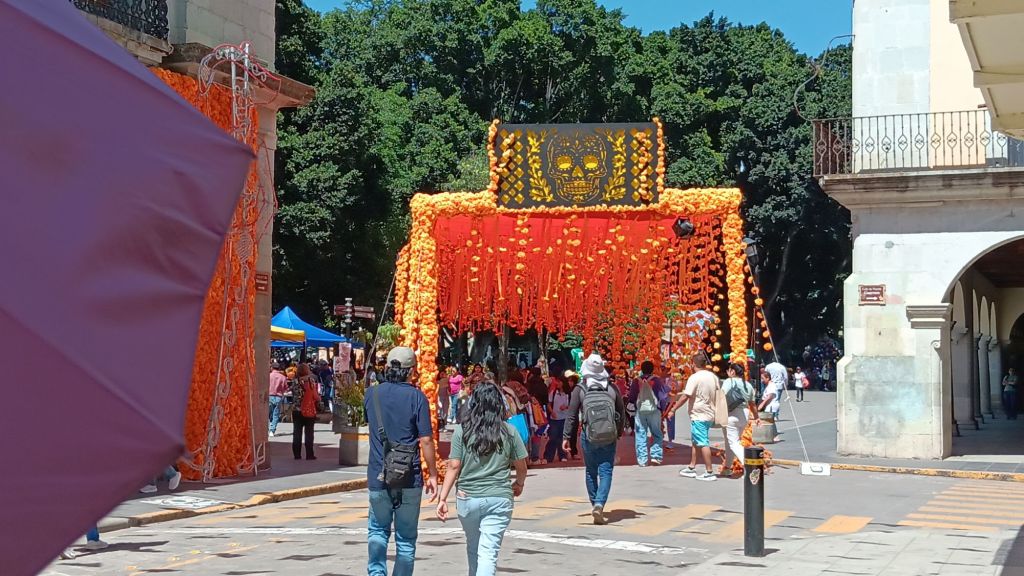
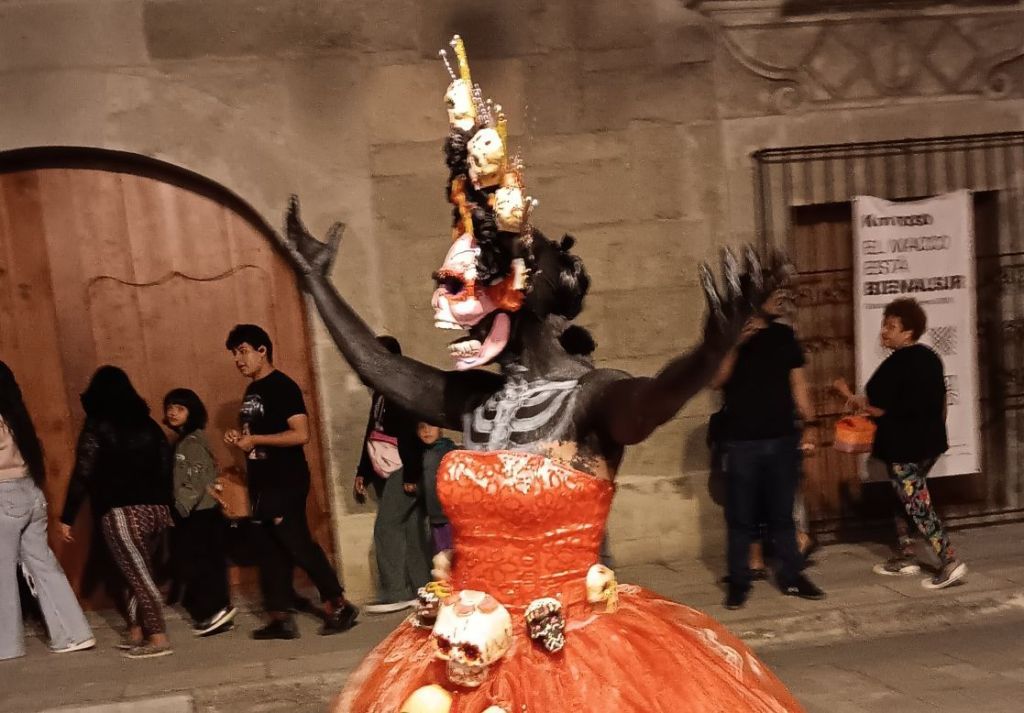

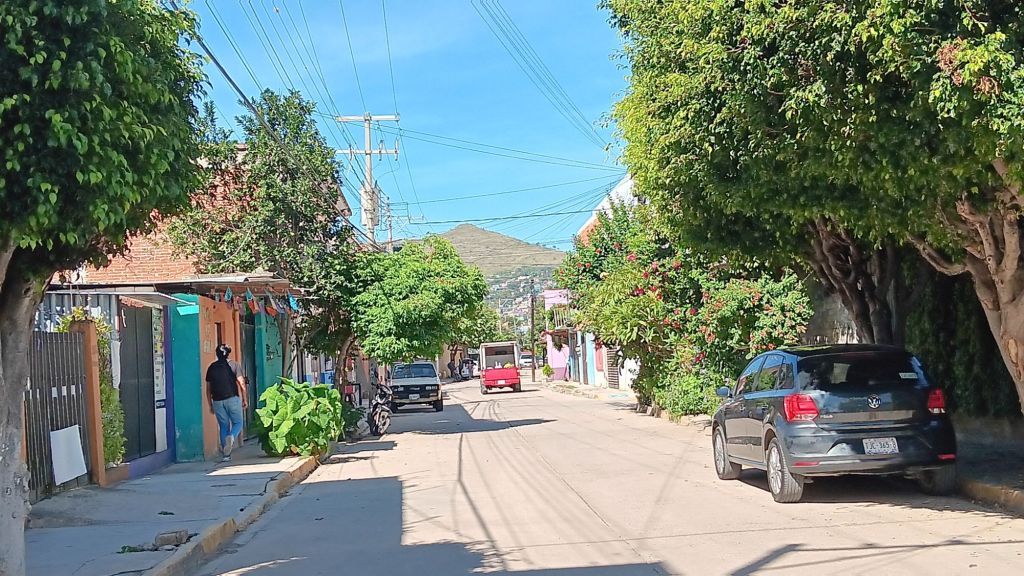
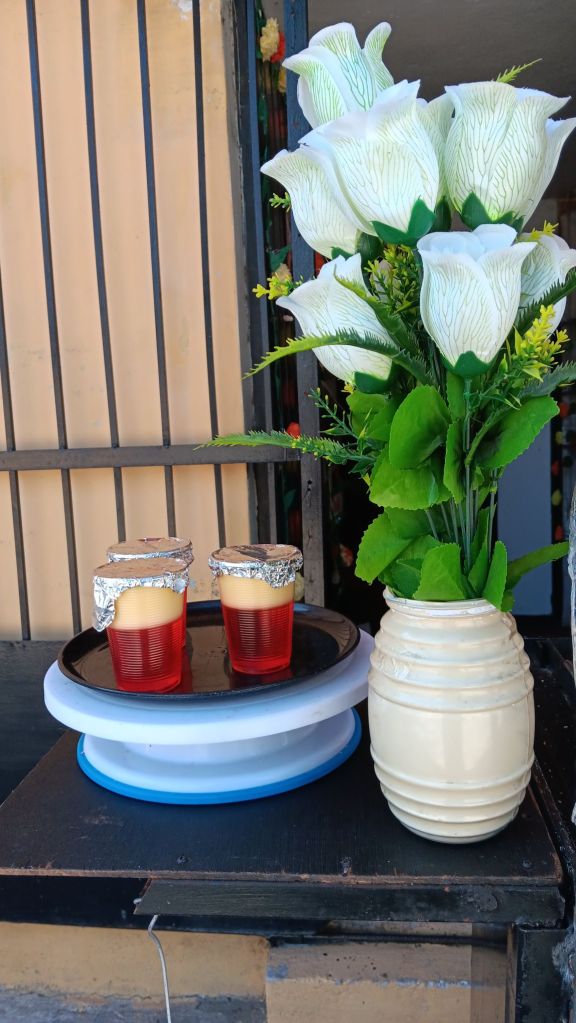
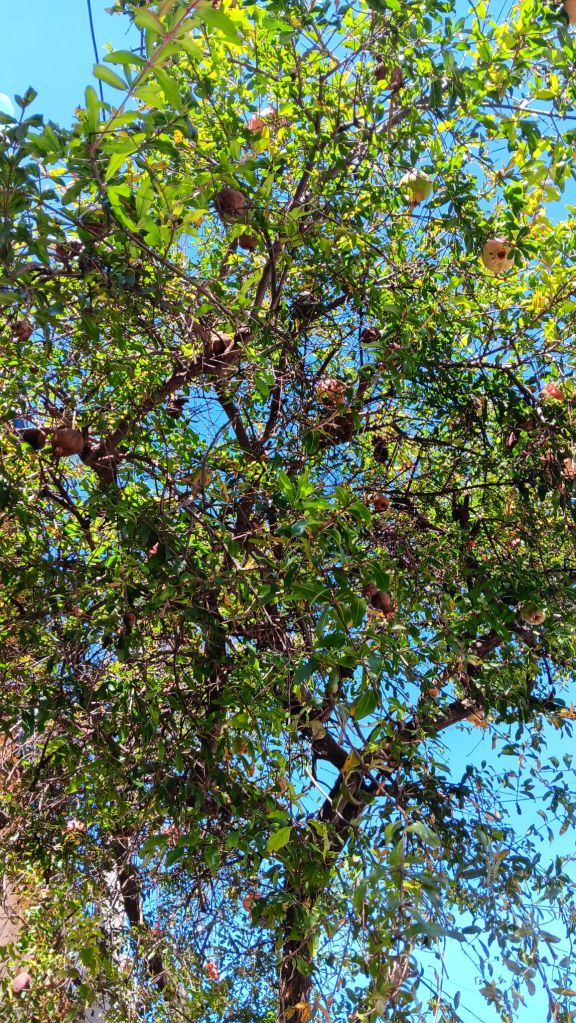
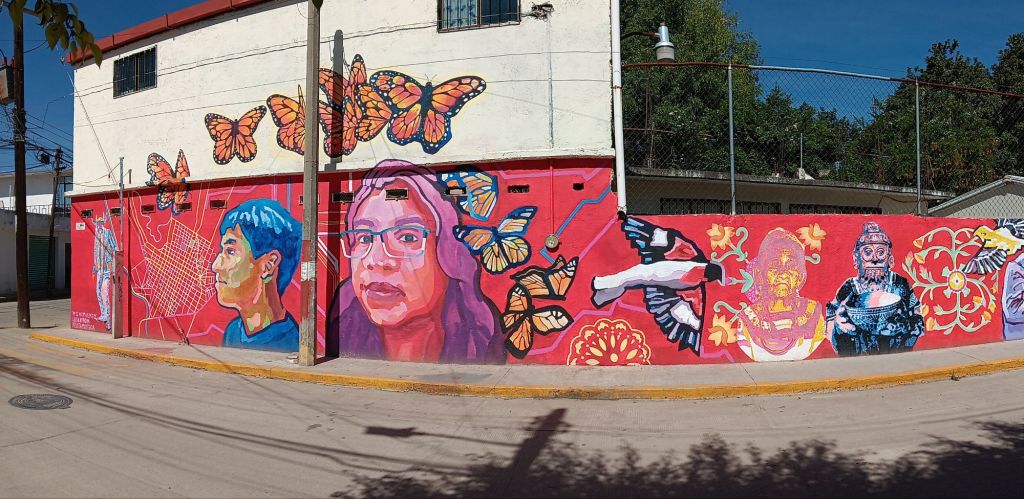

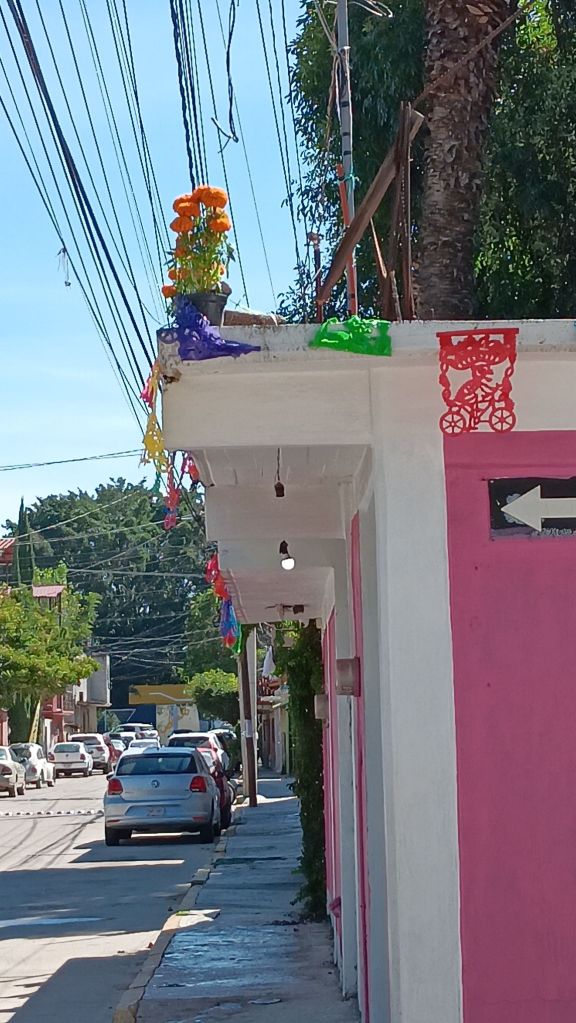

I was headed to a café several blocks from our place, but gave up–I think Google Maps is out of date–and went to the local huge supermarket for oat milk and other necessities.


We had breakfast at the house and then headed to the centro. Altars and special decorations for the fiesta are everywhere.

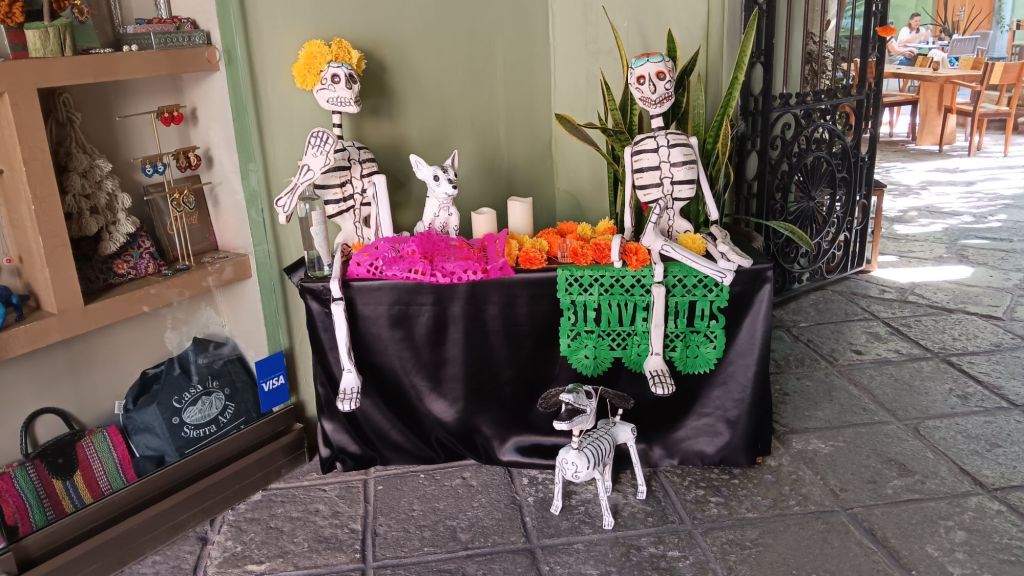
What pictures can’t capture are the smells, like the heavenly scent of tortillas cooking all through the neighborhood. The feel of the round bumps of paving stones underfoot, and the necessity to duck now and then where a guy wire crosses the sidewalk. The sound of the very annoying truck driving all around with a recording of a woman speaking that was loud yet unintelligible. When the truck passed close by me as I explored, I realized she was listing all the tamales the truck driver sold. Yum. Maybe tomorrow I’ll flag it down, though I hate to reward such an obnoxious method of advertising. And then there were the sounds of dogs distantly barking, roosters crowing, people chatting with their neighbors. It all adds up to a place so familiar and beloved, I can’t believe we stayed away for six years.

I started this several years ago and put it away, not to rediscover it until Saturday, when my daughter planned an alebrije-painting session for the family as a Christmas present. I did the patterns on the tongue, top fangs, and right cheek then. I want to complete it and hang it on the wall, instead of consigning it to a drawer of half-painted and unpainted critters, so this evening I started painting the sides of the face. Even using acrylic markers, I can’t get the precision and intricate detail of Oaxacan artists, but they are my beacon.
To paint alebrijes is to be back in Oaxaca: sitting around tables with a dozen other norteamericanos in the upper terrace of the Oaxaca Lending Library. Painting my very first one (a sea turtle) in the town square of San Martín Tilcajete during a festival dedicated to this, the town’s signature art form. Sitting at home (home for our six-month sabbatical), at the table we had bought in the huge market, Abastos, strewn with the evidence of our various projects, such as the long huizache pod I had picked up from under a tree in the neighborhood, captivated by the geometry patterning its surface also.

Here’s the painting I started on August 19 (L) and its second stage, done today (R). The difference in color is mostly from the light in the room where I took the photos.


Our last day in Mexico, last month, I took a photo of this window, whose multiple layers caught my eye. I drew it almost immediately, but could tell it really wanted to be a painting. I hardly ever paint; when I went to list the categories for this post, “art” and “drawings” and various other media were on my list, but I had to add “paintings.”I actually watched a few YouTube videos on Acrylics for Beginners (Katie Jobling and Clive5Art were helpful), then dove in today. I like the way this medium urges me to work roughly before adding details. Those will have to wait until the weekend, probably.It’s on canvas, 9″ x 12”.

Oaxaca (7/10/19, pencil and white charcoal pencil)
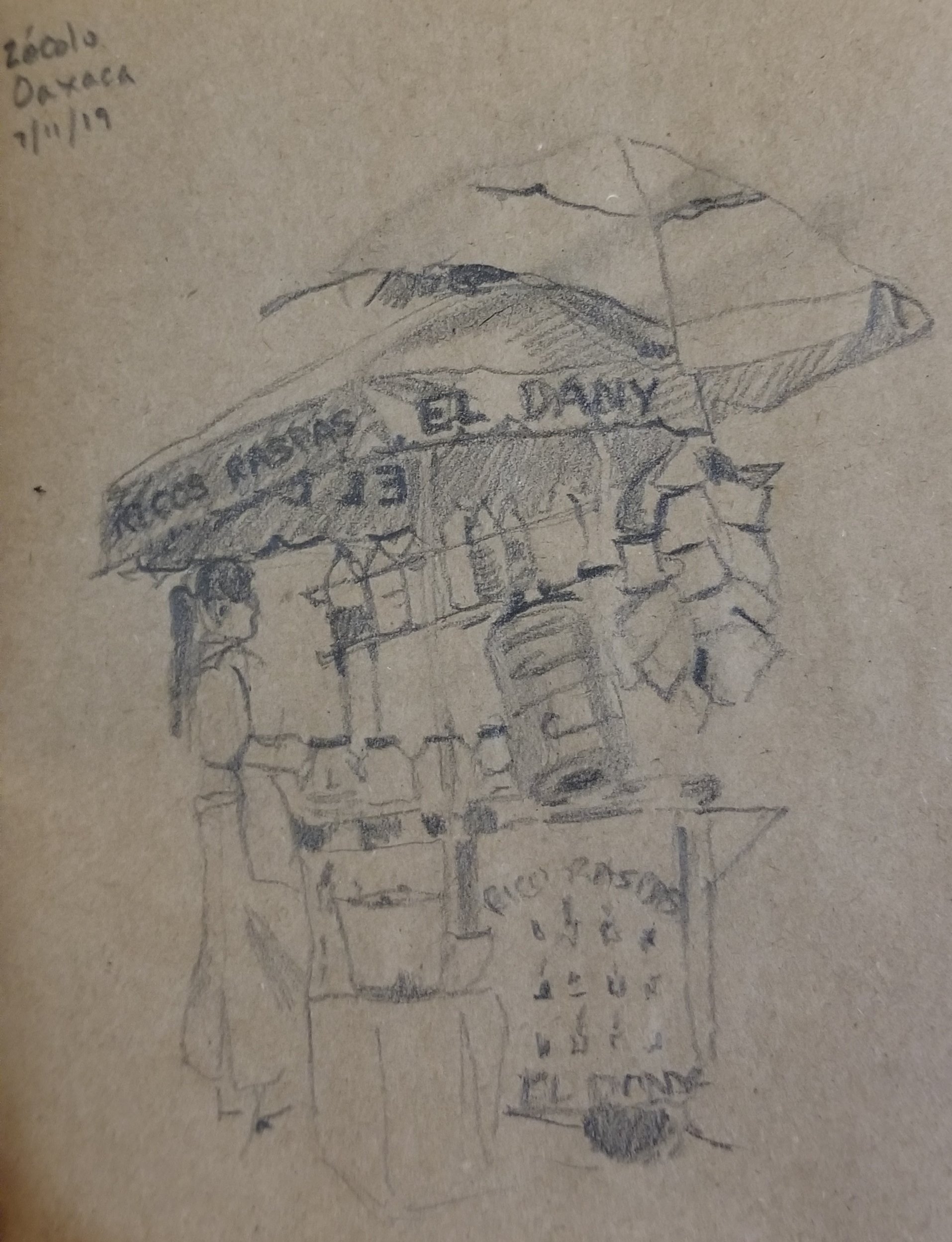
Oaxaca Zocalo (7/11/19, pencil)
After drawing the above two–and keeping up a streak of drawing daily–I fell ill with a bug whose main effect was to drain me of energy so that it was hard even to stay sitting up for long. So I didn’t draw for two days, and then tonight, it felt so good to have enough life in me to look at the passionfruit in our fruit bowl and try to convey its wrinkles.

Passionfruit (7/14/19, pencil & white charcoal pencil))
Something I want to practice more is drawing clothed people. They always look so stiff. I tried to draw a dancer in Teotitlan the other day, and while his shadow looked lively, he looked like he was made of wood. I couldn’t capture the gesture, his sense of movement and aliveness, the way I can (sometimes) when drawing nudes. It’s all practice.
Recent sketches have brought me face to face with a big challenge in my drawing: how to portray very complex, detailed objects without showing every detail and while still conveying their general appearance. Drawing always entails decisions about what to put in and what to omit, but with some subjects it’s particularly difficult.
Last week I tackled the overhead branches of a leafy tree (known locally as a huizache; I think it’s a kind of acacia). I was rescued from this one early because Joy and Mookie wanted to go into the nearby museum, so I don’t know whether the approach I was using would have worked.

Then there’s this, from yesterday. As with the overhead branches, the complexity of these vines climbing the wall (of the San Pablo cultural center, in Oaxaca’s Centro) is exactly what drew my eye, and what I want to get onto the paper. Yet I don’t want to draw every single line and shadow. I drew fast and tried not to get too many niggly details down, but I didn’t know how to do what I would do with a more unitary subject, such as a human nude: draw in big simple shapes and then add detail. A subject like this seems to be nothing but detail, so I’m flummoxed.

Sorry for the glare on the paper. These are quick and dirty cellphone shots of my sketchbook.
For context, here’s another visitor’s photo of the same wall. Yummy detail, right? But how do I capture that?
I’ll keep working on it. I’m looking at nature drawings by masters like van Gogh and Monet to try to figure out how they conveyed complexity.
During vacation, I’m managing to do what I did earlier this spring for a few months, and drawing for at least a few minutes every day. Can I make a daily habit of it once I’m back into the swing of work? Let’s see.
A friend suggested that posting drawings now and then might help me, which I think is true, so here are a few.
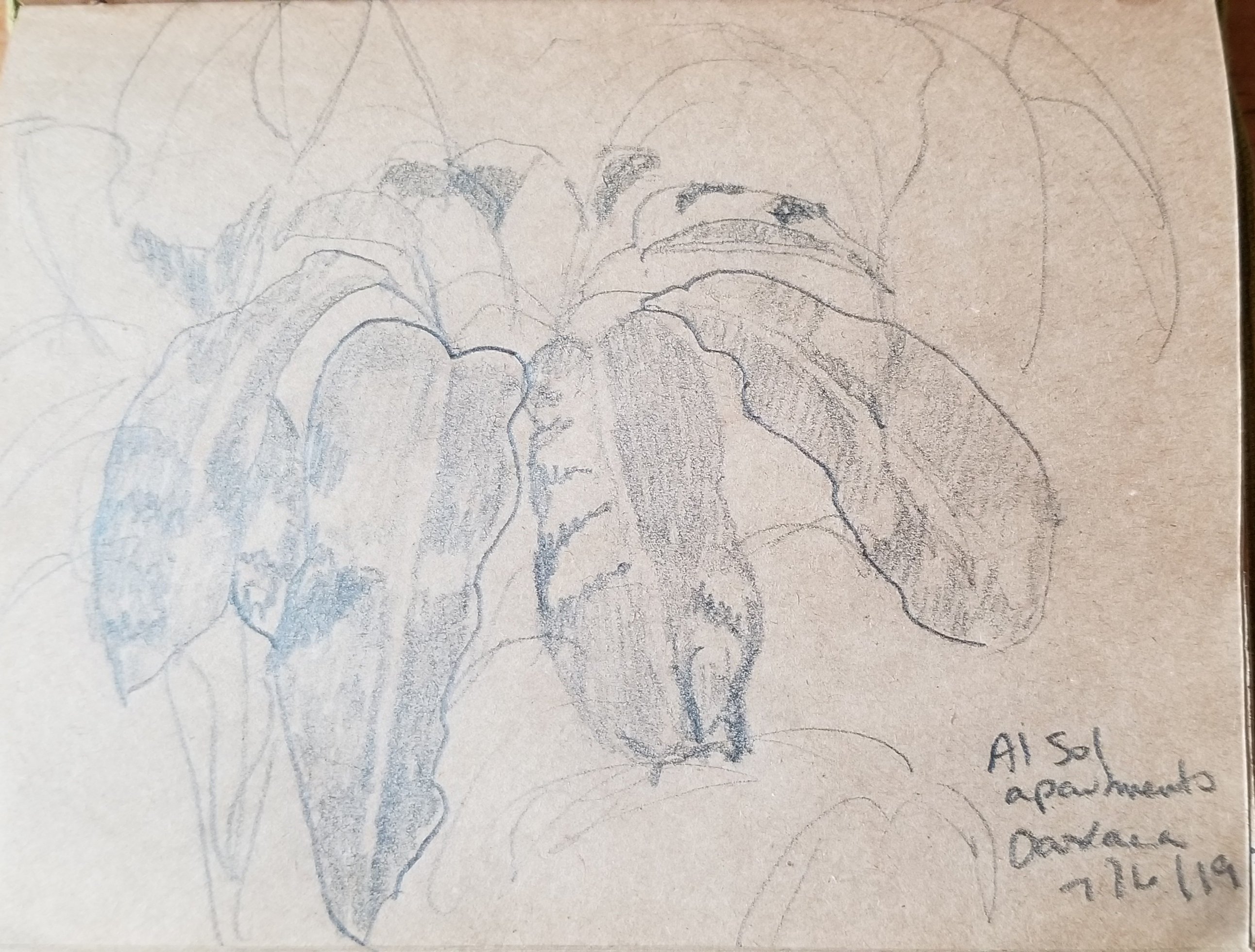
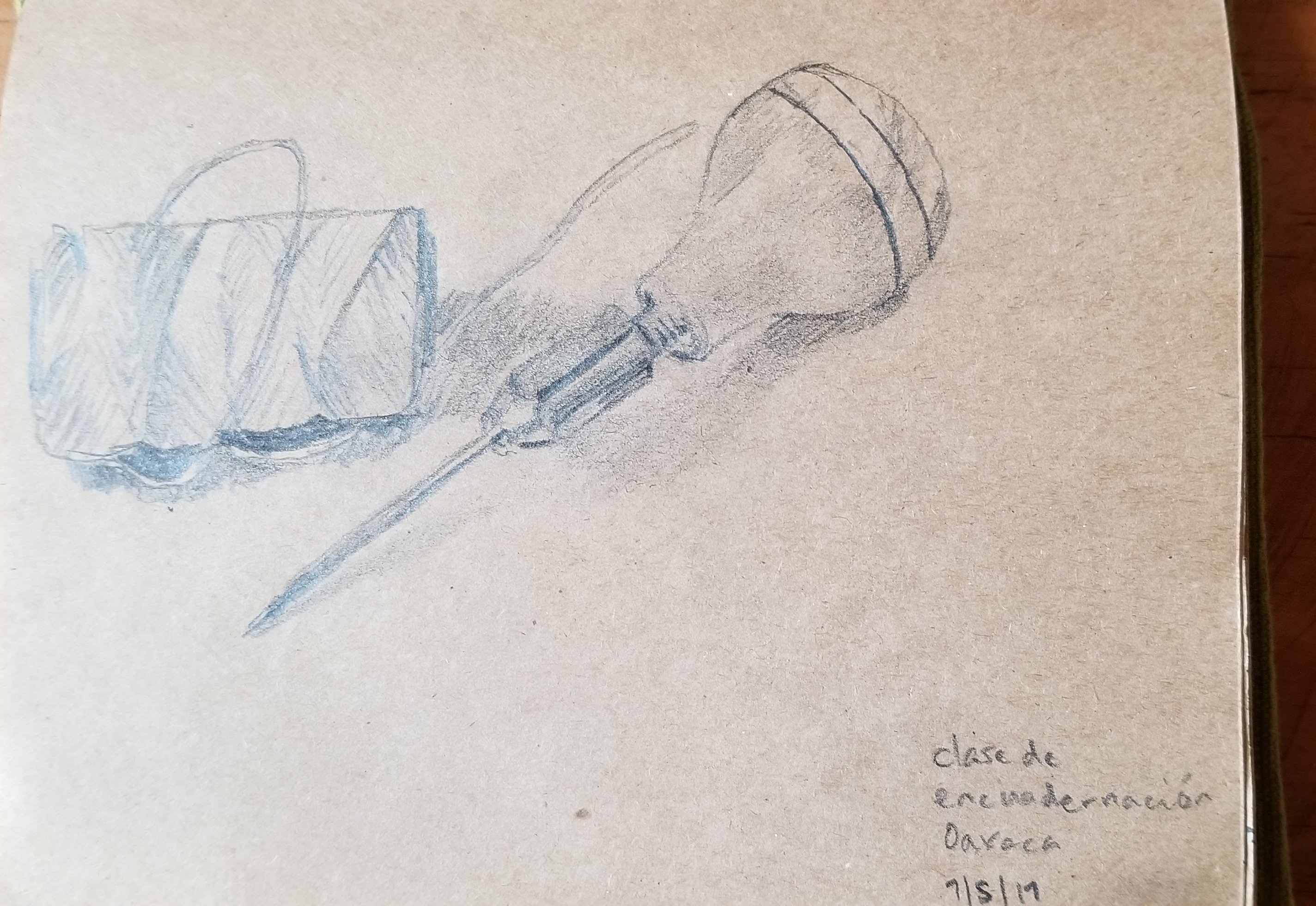
I’ve been carrying my sketchbook with me (it’s small, about 5″ x 7″) and trying to work fast when I have a few minutes. Working fast helps me focus my attention more on the big picture and less on the niggly details, and in these four it worked fairly well. More on that challenge tomorrow.
The first two are graphite; the last two are fine-tip pen.


Black History Month, day 6
Reading about Elizabeth Catlett for yesterday’s post made me curious about Mexicans of African heritage. Catlett was an immigrant late in life, like other artists from the U.S., but Mexico does have a small population of people whose ancestors include Africans. As in the United States, many are descended from people who were enslaved, though the Spanish conquistadores brought comparatively few slaves to Mexico from Africa, preferring to enslave the indigenous population. The state my family and I lived in for six months in 2016, Oaxaca, actually has the 2nd-largest percentage of people who identify as afromestizo, people of mixed race that includes African roots, but I had no idea until now.
A significant number settled in the Costa Chica (little coast), defined here as the stretch of Pacific Coast “from the port of Acapulco, Guerrero to Huatulco, Oaxaca.” Huatulco is a beach town my family visited and loved so much when we were living in the city of Oaxaca–which is inland, a short plane ride over the mountains from the coast–that we just had to squeeze in a trip when we spent three weeks in Oaxaca city the next year. Next time we go, we’ll know to seek out afromestizo music and dance there, and not just swimming and snorkeling.
Even if you haven’t lived in Mexico, you have encountered Mexican afromestizos. The actor Lupita Nyong’o identifies that way, having been born in Mexico City and holding dual Mexican and Kenyan citizenship, though she is ethnically Luo (Kenyan) on both sides. That explains her first name, a nickname for Guadalupe, which for obvious reasons is a common Mexican name. The afromestizo probably known best to people who know a scrap of Mexican history, though, is Vicente Guerrero, a hero of the War of Independence, Mexico’s second president, and namesake of a street in probably every city in the country, as well as a state.
I didn’t know much else about him, so I looked him up. One of his notable achievements before being deposed by his vice president and assassinated: freeing Mexico’s enslaved people.

Portrait of Vicente Guerrero, by Anacleto Escutia after an anonymous portrait. Chapultepec Castle [Public domain]

 Sermons in Stones
Recent comments