You are currently browsing the category archive for the ‘Unitarian Universalism’ category.
S. is an electric-vehicle (EV) driver, builder of a platinum-LEED home, and all-around passionate environmentalist in my congregation. He lends his EV out to everyone who’s curious (Joy, my wife, calls him an EVangelist), and one Tuesday in October, he brought it to church for me to try it for a week. It’s a Leaf. It was lots of fun. And I promised I’d write it up, which I am finally doing now that I’m making myself blog daily (except for the Weekend from Hell, which we will ignore).
The first thing you need to know is that I have a serious commute. It’s 32-39 miles, depending on the route. A car has to get me that far in heavy traffic with lots of battery charge to spare, or I’m going to be very nervous. The car had plenty of charge for the job.
It did not always have as much charge as it said it did, or maybe it’s vice versa. For example, we took a seven-mile drive to a restaurant one day. The car said it had 35 miles of charge, so that seemed plenty safe. By the time we’d gotten to the restaurant, our cushion had dwindled; the car was reporting it had dropped 14 miles. Ulp. We made it home, no problem, but this erratic behavior could hamper travel.
Plugging into the 110 outlet in our entryway was enough to charge the battery overnight, but it meant running the cable over the sidewalk, which meant taping it down each time. If we owned an electric car, that would get old very fast. We’d need a charging station in the street, or in our garage, or at least we’d want to use the 220 outlet that’s in the garage. (Our garage is not presently accessible to any car that wants to keep its undercarriage attached.)
At work, I could fully charge in 4-6 hours, because our church rocks and puts its money where its Seventh Principle is by having a free charging station. If you had a commute of any significant length and didn’t have access to a charging station while at work, an EV would be pretty impractical; however, more chargers are popping up all the time, many available to anyone who wishes to use them, for free or a small fee. Mobile apps direct EV users to the network, and there’s a great community feel to it, eco-creative types helping each other out. Our church is on the apps’ maps, and we often have visitors who are there to plug in while they’re working, shopping nearby, etc.–or they live in the neighborhood.
The other cool thing about UUCPA’s charger is that, like many Palo Alto locations, we opt for Palo Alto Green, which means that all our electricity is from renewable sources. So after I charged at work, I was driving a truly zero-emissions vehicle. Even charging at home, with plain old Pacific Gas and Electric, I’m running a much cleaner car than one with a gas engine. Joy, who is an energy analyst for the state of California, says that even if you use electricity generated in the dirtiest way available (that would be coal), driving an EV would still generate lower emissions than a hybrid, gas, or diesel engine. (S. takes care to say, “The manufacture of the EV causes emissions,” proving that there is such a thing as a rigorously honest evangelist.)
A factor that surprised me may be a major barrier to widespread acceptance of EVs around the country: they’re cold. A gas engine engenders so much excess heat as a by-product that when you want to warm the interior, you just run a little air off the engine. Okay, all that heat is part of the problem–but in Vermont, you need it. Heck, you need it in Palo Alto. You can turn on the car’s heater, of course, but making heat from electricity takes a lot of energy, and it cuts into the battery’s time quite a lot. The seat warmers, plus some old-fashioned approaches like a blanket over the lap, were good enough in this climate, even for an easily-chilled person like me, but in a cold climate, EVs will need more efficiency to get both a warm interior and a long-lasting battery.
On the other hand, S. is an early adapter and the Leaf has been around a while, so I was driving one of the least efficient EVs. I’m sure this aspect of the technology will keep improving, as will the infrastructure that is currently reminiscent of the earliest days of ATMs, when they were few and far between and of so many formats that most of them didn’t take your card. Standardization will come soon, as it usually does in technology.
Joy got to go on a tour of the Tesla factory last week–don’t ever let anyone tell you that the job of State of California Regulatory Analyst lacks in glamour and excitement–and reports that they plan to offer an EV for under $30,000 in 2017. Our Prius will be pushing 200k miles by then. Hmmm . . .
A homily given at the Unitarian Universalist Church of Palo Alto, Christmas Eve, 2013
What are we to make of these angels? What are we supposed to think about all these angels?
There’s a lot in this lovely little story of Christmas that is hard for the rational mind to believe. But you can explain most of it away—the miraculous birth, the amazing star. But not angels. They are a whole different kind of creature that populates the Bible, something between the human and the divine. People have invented a whole field of study called “angelology” and explained all the various ranks and types, which only makes it all harder to believe for me.
But the meaning of the word “angel” in the Bible that I was taught as a child and that means the most to me today is something very simple and grounded in our real lives. An angel is a messenger. Someone who comes from God to a person, carrying a message. Someone who tells us something we need to know about the holy.
What is the holy? Well, according to the Unitarian Universalist songwriter Peter Mayer, everything—and I see no reason to doubt him. Which would seem to suggest that everything is or can be a messenger of the holy also. Anything that helps goodness, wisdom, hope, get from out there to inside here, is an angel of a kind. Anything that brings us a message that the holy is the holy is an angel.
It doesn’t have to be a beautiful young woman straight out of a Renaissance painting, with classical features, flowing long hair, and wings. When you’re sick and scared in the hospital, and an overworked, overweight, aging nursing assistant puts a reassuring hand on your shoulder and smiles, and you look into his eyes and feel a flame of hope come to life inside you—he’s an angel.
It doesn’t have to be a human being. When you are filled with despair and there seems to be nothing except barren ground and hard edges, and you stumble home and your cat rubs her cheeks against your ankles, and you remember that there is something soft and loving in the world—she’s an angel.
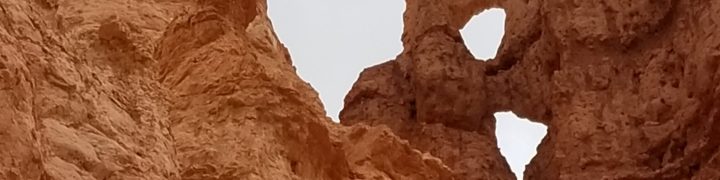
It doesn’t have to be alive. A shooting star, the Badlands of South Dakota, a sand dollar shell washed up on the beach, the ocean itself . . . these have all been known to whisper messages of hope, harmony, beauty.
Whenever a message comes that reminds you of holiness, you have met an angel.
The messages don’t always have to be pleasant, either. We may hear that people are dying in South Sudan (radio as angel). We may be informed that we have hurt someone’s feelings (angry friend as angel). We may suddenly grasp that we are going the wrong way and have been going the wrong way for years (road sign as angel). If these messages awaken in us compassion, love, greater understanding, or a thirst for justice, then they are the holy speaking to us.
Everything is holy; anyone, anything, can be an angel.
And so the unknown writer of the Epistle to the Hebrews reminds us, “Do not forget to show hospitality to strangers; for by so doing, some have entertained angels unawares” (Hebrews 13:2).
This, to me, means: be open to the unexpected, the unknown, the apparently uninteresting. It may be the messenger bearing a note for your ear. And we are reminded in particular to be open to those would-be messengers that we turn away because they bear messages we don’t want to hear. After all, when the holy breaks into our awareness, it can make us have to change our lives. It can turn everything upside down.
A message implies that there is something we now must do. Here’s a text message that says, “Call me, it’s urgent.” Here’s a messenger of God saying, “Joseph, marry your fiancee,” or “Shepherds, go to Bethlehem and look for the baby who will be King of the Jews.” Here’s an angel saying, “I bring glad tidings of peace on earth, goodwill to all people.” Wait a second. As the first carol we sang tonight, “It Came Upon the Midnight Clear,” says, there hasn’t been peace on earth. People have not extended goodwill to each other. What has followed that message has been “two thousand years of wrong.” That’s because the message is never just a point of information; it’s a command. Go and do something. Make this a world of peace. Make goodwill between yourself and your neighbor. Hear the angels sing and take their messages to heart.
So the messages that come our way can be disruptive, reassuring, joyful, scary, exhilarating . . . . it depends on what we do with them. One thing is certain. When the holy speaks to us, whatever form the holy takes, whatever form its messenger takes, that angel is always bearing good news.
Inspired by an exchange on the UU Growth Lab
We Unitarian Universalists sometimes assume that people in other religions are “more comfortable with hypocrisy” or “comfortable pretending to believe things they don’t believe.” That must be true of some people, but I don’t think that it is a fair or true way to explain why many people remain in religious communities where they don’t believe in the whole package. I stayed involved in Judaism for years after developing serious doubts, and I can articulate several reasons why.
The rituals were beautiful and still meaningful to me in many ways. Some of the meanings were about a vision of God or human destiny that I didn’t believe anymore, but many others were still consonant with my beliefs. Also, the rituals and practices were very wrapped up in family life. I hadn’t lighted the Shabbas candles with my family for all those years only because I believed that God commanded us to rest; I had done it as part of a treasured family gathering, a time of togetherness and mutual blessing. Absenting myself from that would have been removing myself from a special meal at week’s end lit by the glow of candlelight, the beginning of a day we committed to spend together and with gathered friends, instead of scattered all over town on various errands and activities. Dropping the practices that had lost much of their meaning was not as simple as “don’t go to services anymore” or “eat whatever you like.”

The things that I still did believe in, and the values that my religion helped me to practice, were so important to me that I was not willing to give them up just because there were also elements of the religion that appalled me. I knew of no other community that would support these values and beliefs–not yet. I certainly knew of no other community that would support these values and beliefs in the context of a culture that I had known from birth, that is shared by my ancestors, and that goes back thousands of years, and I still don’t. (I finally decided that I would have to do without that. It was a sad, painful choice.)
So there I was, going to synagogue, participating in many aspects of Jewish life. I was not pretending. All the people closest to me knew about my struggles with my faith. Some knew sooner than others, and of course the people sitting in the next row at shul might not have known at all, and might have assumed that because I was singing along with the service, I believed what they believed. That bothered me, but it’s not as if every person in a synagogue believes exactly the same thing even at the best of times. I’m sure some of them had similar internal struggles to mine.
I eventually left, but I don’t think that I am truer to myself than others who shared my doubts but chose to remain. People may stay for a lifetime in a religion that is not a perfect fit, because it’s the best fit. We don’t get to create religions from scratch, not if we want things like 5,000-year-old roots; we choose from a limited list of options. I’m really no different today than anyone who chooses an imperfect religion (or job or place to live or marriage or . . . ). Unitarian Universalism suits me very well, but not perfectly. Just the same, I’m staying here. Does that make me insincere? Of course not.
There are good reasons for people to stay in a religion with which they have profound disagreements. If that’s strange to us, perhaps instead of assuming that they are faking it, we could approach them with curiosity and compassion and inquire about what they seek and what they have found.
Jordinn Nelson Long, at Raising Faith, has posed some questions of interest to her and other seminarians, such as who ministers to ministers, if it’s true that on becoming a minister, one loses one’s church. My answers are in this guest post. Thanks for the invitation, Jordinn!
In a great addition to our Sunday services, our Associate Minister of Religious Education, Dan Harper, is going to be doing something special in the 9:30 service three Sundays a month. This past Sunday morning he led a chant, a quasi-call-and-response called “Have You Got the Spirit?”
Have you got the spirit? / Oh yeah!
Let me see it in your head!
He drafted our music director to stand beside him and lead the congregational part, and we all shook our heads and waved our arms as called upon. As in education, there are theories that worship should engage the whole person–you want elements that use different modes and appeal to different aspects of ourselves. This one had laughter, using our bodies, music (rhythm), camaraderie, and definitely lots of spirit.
Return engagement is this Sunday, 9:30 a.m. Oh yeah!

A Unitarian Universalist friend and I were talking about class tensions in church, and he said that he found Water Communion hard to bear because it was so much about the places people had gone on their summer vacations.
Oh yeah. I’ve been to some Water Communions that felt that way too. It is so easy for our ingathering ceremony, in which people bring water and pour it into a communal bowl, to turn into a “what I did on my summer vacation” recitation, which can make the ritual obliviously exclusive of those who don’t have summer homes, or summer vacations, or the money for airfare, or the luxury to stop working for even one week out of the year. What a shame; it’s so opposite of what the Water Communion can be.
The core symbolism of the Water Communion is that we all come from water: as a species on a planet where life began in the ocean, as mammals who float in amniotic fluid as we are readied for birth, as beings whose cells are mostly water. And yet we are separate from each other, and we have been apart–since there tends to be a slowing-down, a different rhythm in the summer months, even in churches that have services and religious education right on through the summer–and now we are reuniting. We are separate and together, the way water scatters into rain and streams and clouds and springs and ponds and puddles and yet flows together again and again, one great planetary ocean. Not only is no drop of water superior to any other; all water comes from the same place.
So the class issue is only a part of what’s awry with the “where I went this summer” approach to the ritual. Even if everyone in the world had a summer home in Provence, “This water comes from our summer home in Provence” would not be what I wanted this ceremony to be about. It’s so trivial, whereas “We are separate beings and yet all one” is one of the profoundest truths we try to encompass.
I’ve deliberately shaped our Water Communion at the Unitarian Universalist Church of Palo Alto (UUCPA) with these concerns in mind, and that conversation with my friend made me realize that other UUs could learn from that process, so I’m going to share it here. I’d also like to learn from readers: judging by this description, or by your experience of UUCPA’s Water Communion if you’ve been there, have we succeeded? And what do you do in your congregation to keep our attention focused on the deepest meanings of the Water Communion?
Here are some dos and don’ts that have guided me.
Don’t: have an open mike where everyone describes where the water came from. Not only is this impractical for any but the smallest congregations, but it just about orders people to say “We brought this from the Mediterranean, where we went on a beautiful cruise.”
Do: provide a way for people to share the significance of the water they’ve brought, and have a leader or leaders share a precis. Doing this has allowed me to rephrase people’s descriptions in a way that honors the most important aspects, while playing down the others. So, for example, if someone writes, “This water comes from our family’s summer home on Cape Cod, where I’ve gone since I was a small child visiting my grandparents–this year I was there with my grandchildren,” I might share, “Water from the Atlantic Ocean,” or “Water from a place made sacred by five generations of one family,” or “Water from a multigenerational family gathering,” or some combination of those.
Do: frequently model modest origins for your own water. I usually bring mine from my home tap, even if I’ve been somewhere exotic. (In the spirit of full disclosure, one reason is that when I do travel, I always forget to bring back a little bottleful . . . !)
Do: make reference to the water’s many sources. At UUCPA, we have banners that artistically express the four directions and elements; sometimes we use those in this service and people pour their water into a bowl under one of the banners. They can have a time of meditation to think about where their water comes from, symbolically or literally, and choose the direction/element accordingly. Jane Altman Page wrote nice words to accompany something like that here, on the Worship Web.
Don’t: just pour the water down the drain. While keeping it in the water cycle, that doesn’t honor the sacredness of the ritual. People are bringing something of themselves when they bring that “water from a special day at the beach” or “tap water from my great-grandfather’s house,” so it’s important to let them know that it will be treated with due reverence.
Do: do something important with the water. For example, carry it out ceremoniously after the service and water a special tree. . . . Bless it and invite everyone to put it on their foreheads / hands / feet / hearts. . . . We save some of ours for dedications throughout the year, and pour some in from last year’s dedication water so that the water is now gathered from many years of rituals (does anyone else do this? I don’t even remember if I came up with that idea, or inherited it on arriving in Palo Alto). I usually pour the rest out on our grounds with some words of thanks and praise. (A comment by a church member just reminded me of another possibility: invite people to bring some of the mingled water home, the way we do with the flowers at Flower Sunday, and encourage them to mindfully use it, e.g., to water a plant.)
Do: frame the ritual in terms of its larger meanings. There are so many. Our Minister of Religious Education, Dan Harper, has done a wonderful, geeky demonstration of just how many molecules of water we’re talking about, and how big a number that is. (Remember, we’re serving in Silicon Valley. When you ask, “Are there any geeks here who can come hold this paper for me?,” many hands shoot up.) He uses that to prove our literal interdependence. The year Water Communion was preceded by Hurricane Katrina, we had to talk about the destructive power of water, and that was a chance to go into some theological depth.
And, if you’re reminding folks about Water Communion now, as summer starts, don’t emphasize that they should bring their water back from special travels. There’s no need to mention travel at all. This year, my reminder in the newsletter said “We bring water from the places of our lives.”
I’d love to hear what others do.
Reading some more about Emily Dickinson before giving today’s sermon on some of her poetry and its power, I came upon the description of her “earliest friend,” Benjamin Franklin Newton. He died young, but before he did, he had a great influence on her that she referred to throughout her life. Among other things, he introduced her to Emerson, whose poetry, she wrote in wonder, “has touched the secret Spring.” Hm, I thought. Wonder if he was a Unitarian. Sure enough, his minister was Edward Everett Hale.
I’ve posted my Easter sermon here on this blog, and also on UUCPA’s blog. It will soon be up at the church website.
In personal news, I did not keep to my Lenten practice of drawing at all. I drew on Monday mornings as usual, and besides that I did only a handful of drawings. I think I should just acknowledge that I’m at my limit for daily practices, between reading my Dickinson poem (today is #220, and next week’s sermon is on the journey so far) and exercising and following the various necessary family routines.
I’ve been putting my thoughts about linked ideas, images, and events in The Dispossessed into what the software, MindMeister, calls a “Mind Map,” here.
Whole sections haven’t been transcribed from my mind to the map, such as the multiple valences of possession, but it’s fun and helpful to get it into this form. What would you add?
Looking forward to class tonight, 7:30 in the UUCPA Fireside Room. Directions here, campus map here.
Cross-posted to the UUCPA blog, which is where comments may be made.
Tim Bartik, who I wish lived near Palo Alto instead of in Michigan so he could be there tomorrow night, has been contributing really interesting and careful comments on The Dispossessed at the UUCPA blog, and his last one, written on February 24, was so helpful in clarifying my own thoughts that I want to post my response here as well.
Forgive the length of this response, but you’ve helped me understand a real key to this novel. I’ve been thinking about your previous comment, which made me realize for the first time the connection between The Dispossessed and Le Guin’s essay (which I cannot recommend highly enough) “The Stalin in the Soul,” and how I would concisely sum up my scattered thoughts, and before I got back to the internet you did it:
“as long as he or she can find an audience that is willing to pay for that art”
That’s the rub, isn’t it? That’s why our freedom isn’t free. Not only because many great artists never make their art, or many people never get to see it or hear it, because they are busy working in an office or factory; but because many potentially great artists censor themselves for the market. They make what will sell instead of what their art calls them to make. That is an outcome of our economic system. It might be a price worth paying, in the last analysis, but we mustn’t treat it lightly.
Le Guin’s essay describes two novels: a great one that is written and never published in the author’s native land, because it is repressive and censors him in life and death; another great one that is never published in the author’s native land because he never writes it, being too busy writing what will sell to ever get around to his true art. The first author is Yevgeny Zamyatin, author of We, and the second is anyone in the US, including herself. As she says, we’re free “not only to write fuck and shit, and to spell America with a k,” but “to write what we please,” and yet we often don’t. She’s a little hard on her imaginary author, making him concerned with riches and fame. Most artists surrender their freedom just to eat and pay the rent, so their selling out is more understandable.
You are right that Bedap is right–Shevek doesn’t accept it in chapter 6 but he comes to–but I think you are describing the repression on Anarres slightly inaccurately. The bureaucrats can assign Tirin to the Asylum, but they can’t send him there. There are no laws, no police; he can refuse to go. But he goes, under the pressure of his community. The distinction is key, because we also pride ourselves on the fact that no one is going to throw us in jail for expressing ourselves. But do we do it?
If we don’t–and most so-called artists don’t, most of the time–then what is keeping us from doing it? A kind of unfreedom. And if we say, “Well, we’re free really, as long as we find someone to pay us,” we’re being like the Anarresti who “keep their initiative tucked away safe” (chapter 10). We’re refusing our own freedom. And then how free are we? Less free, in a sense, than Zamyatin, who wrote his book at least, even under Stalin.
I’m not saying there’s a better alternative to what we’ve got. I’m not sure whether there is, though I hope so. What I’m saying is that we tend to hide behind our democracy, assuring ourselves that we’re all free, and not acknowledging the walls that our economic system puts up. For every artist I know, I know five other people who would create art if only they didn’t have to earn a living. And don’t ask me how many “artists” I know whose great novels never get out of their heads because they are too busy producing what their publisher tells them can earn them the next advance. I’m sure it’s a lot. Most of them. And let’s not even get started on physics. You create it for the military, or for sale, or you fit it into the ever-narrower realm of “pure research” enabled by the ever-poorer universities. For that matter, I know many ministers who are not pursuing the community ministry they are called to, which would be tremendously beneficial, because they don’t know any way to get paid for their ministry except by congregations.
Last night, when I heard UKLG speak at Berkeley, her interlocutor asked her about her passion for Virgil, since she has such leftist-anarchist politics and he’s a poet of empire. She said she’d thought of lefty excuses for him, which got a laugh, and then she said seriously, “He had to be. If you don’t have copyright, you need a patron, and his patron was the emperor.” Art has to be paid for. (Copyright is just a part of it, something she’s concerned with at the moment since it’s under assault.) One thing she fantasized in The Dispossessed was a society in which artists are supported the same way as anyone else: the only justification they need present for their receiving food and housing and medical care and time is that they are doing the work they need to do, and that they join in the tenthday rotation and do some kleggich like everyone. They don’t need to find a patron; they don’t need to sell their art. They just need to create it. And then, because she is an honest thinker, she identifies what might not work about this: even Odonians start to ask, implicitly about the art, the compositions, the physics maybe, “What is it good for?” (“music isn’t useful,” Bedap points out)–which makes them no different than Dearri, the stupid businessman at Vea’s party. If it doesn’t further their narrow ideas of Odonianism, so they block it. They miss the true Odonianism, of course, which is based on the conviction that if each person follows their calling the society will thrive.
She is very subtle in how she talks about what undermines a revolution. This novel is not Animal Farm. People aren’t shot or driven out of the community by force. Tirin is not SENT to the Asylum; no one can send anyone anywhere, on Anarres. His Stalin is in his soul. But social pressure is often enough to drive someone mad and punish him for his madness. So what’s our equivalent? What imprisons us, who are so free? Isn’t the purpose of Le Guin’s novel to get us to ask that? And she suggests one answer: part of it, a big, big part of it, is money.
Again, disabling comments here so as to consolidate them at the UUCPA blog. “The Stalin in the Soul” is a very short essay collected in Le Guin’s The Language of the Night and also in a collection called The Future Now.

 Sermons in Stones
Recent comments