
You are currently browsing the category archive for the ‘art’ category.
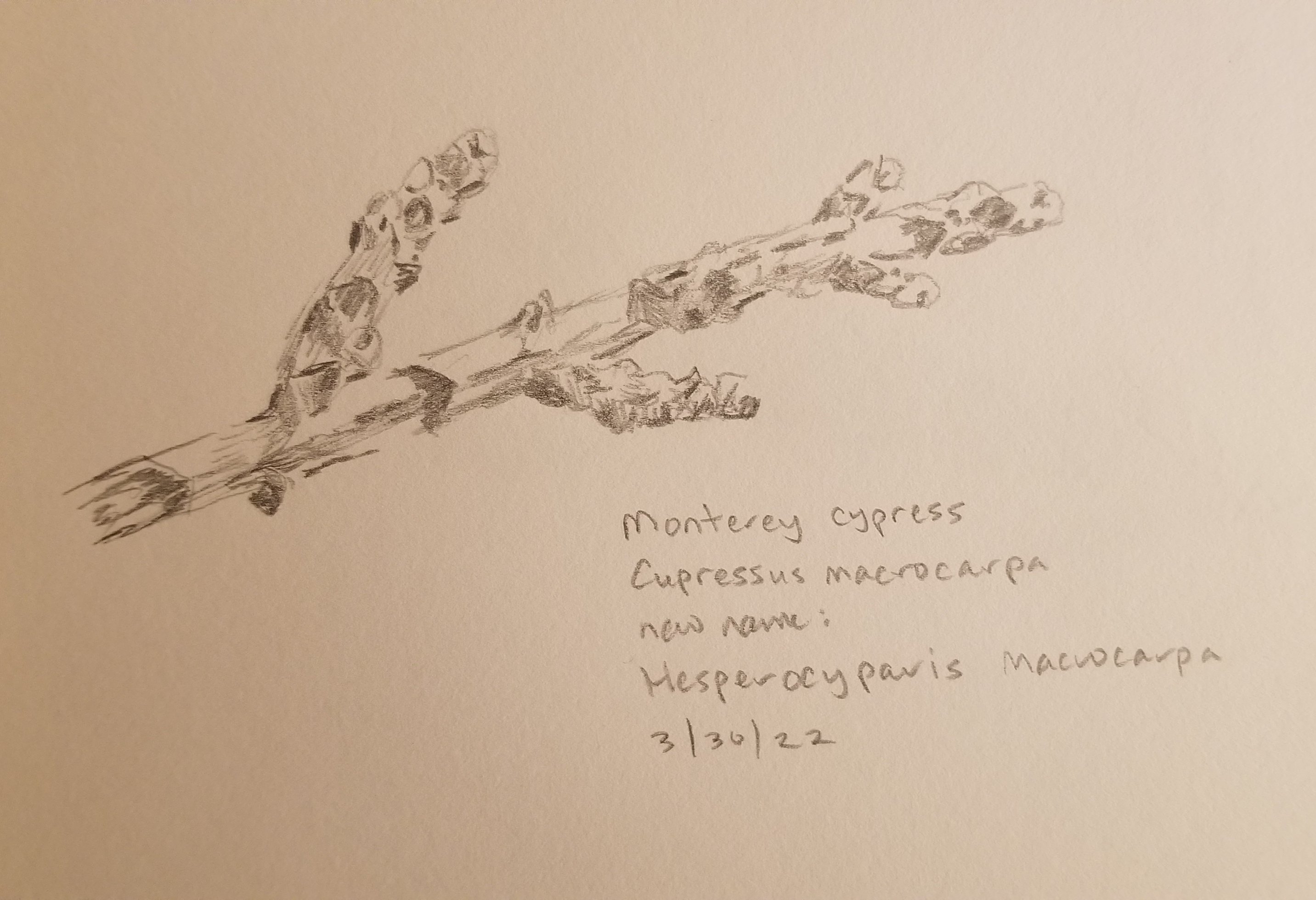
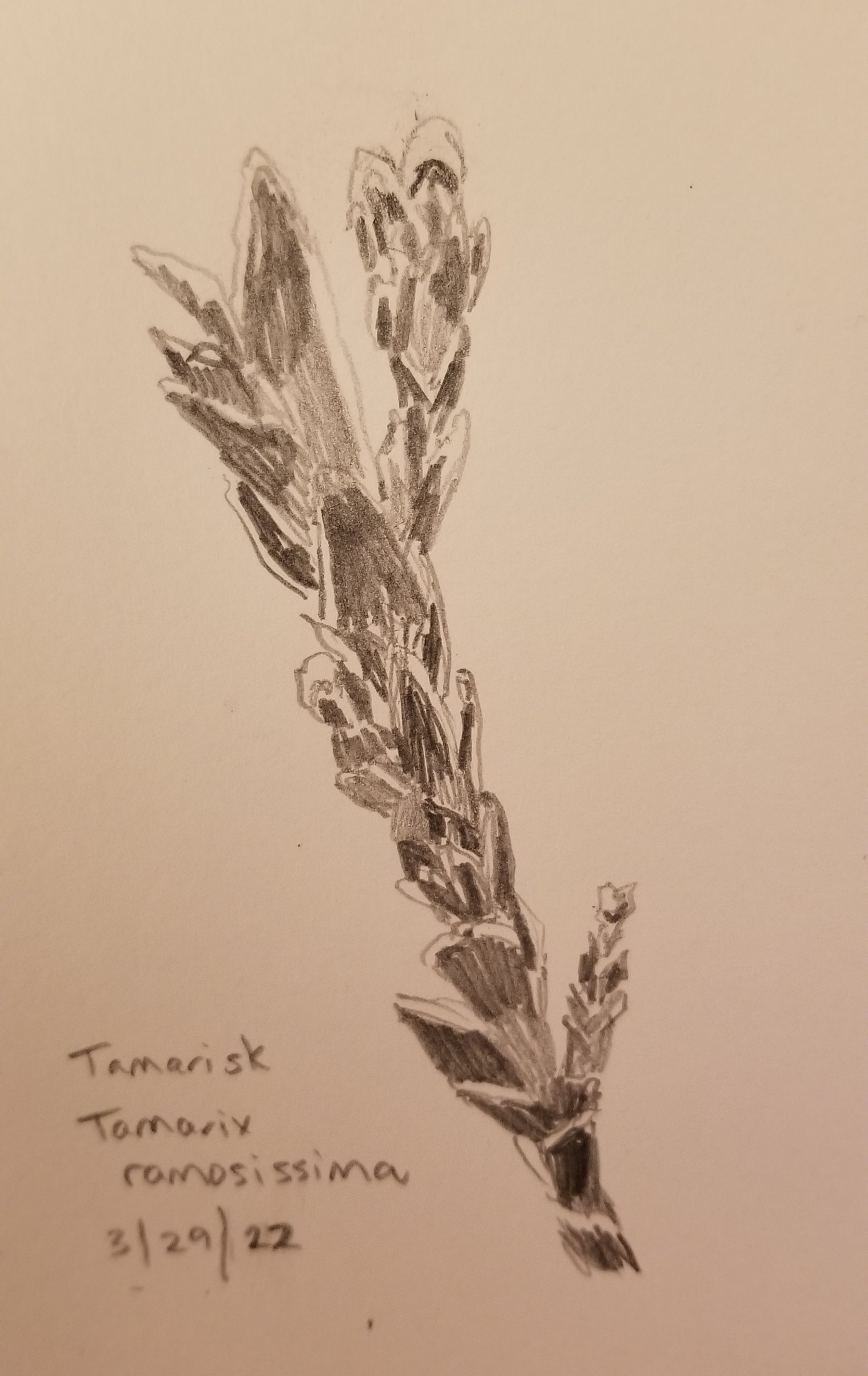
I think I have the right tamarisk here, Tamarix ramosissima (working back to Latin from Spanish, I can guess what that means: many, many branches!). Before leaving on vacation, I jotted down the next several trees by their common names, and noted next to tamarisk that it is deciduous. Another way it deviates from most of the trees I’ve drawn so far is that it is not a conifer. But the field guide categorizes them first by leaf type, and T. ramosissima has the scale-like leaves typical of cypresses and cedars (one of its common names is salt cedar, so called because it has a high tolerance of salty water, and also exudes quite a lot of salt).
It is also invasive, which is not all that unusual, but this tamarisk is particularly successful at it. That ability to thrive in water and soil too salt-laden for many trees, and a similar tolerance for poor soil, help it to crowd out many species that are native to the west’s riparian habitats, such as cottonwood and willow.
It was widely planted in the south and west because of its hardiness, and because it has long spires of beautiful pink flowers.
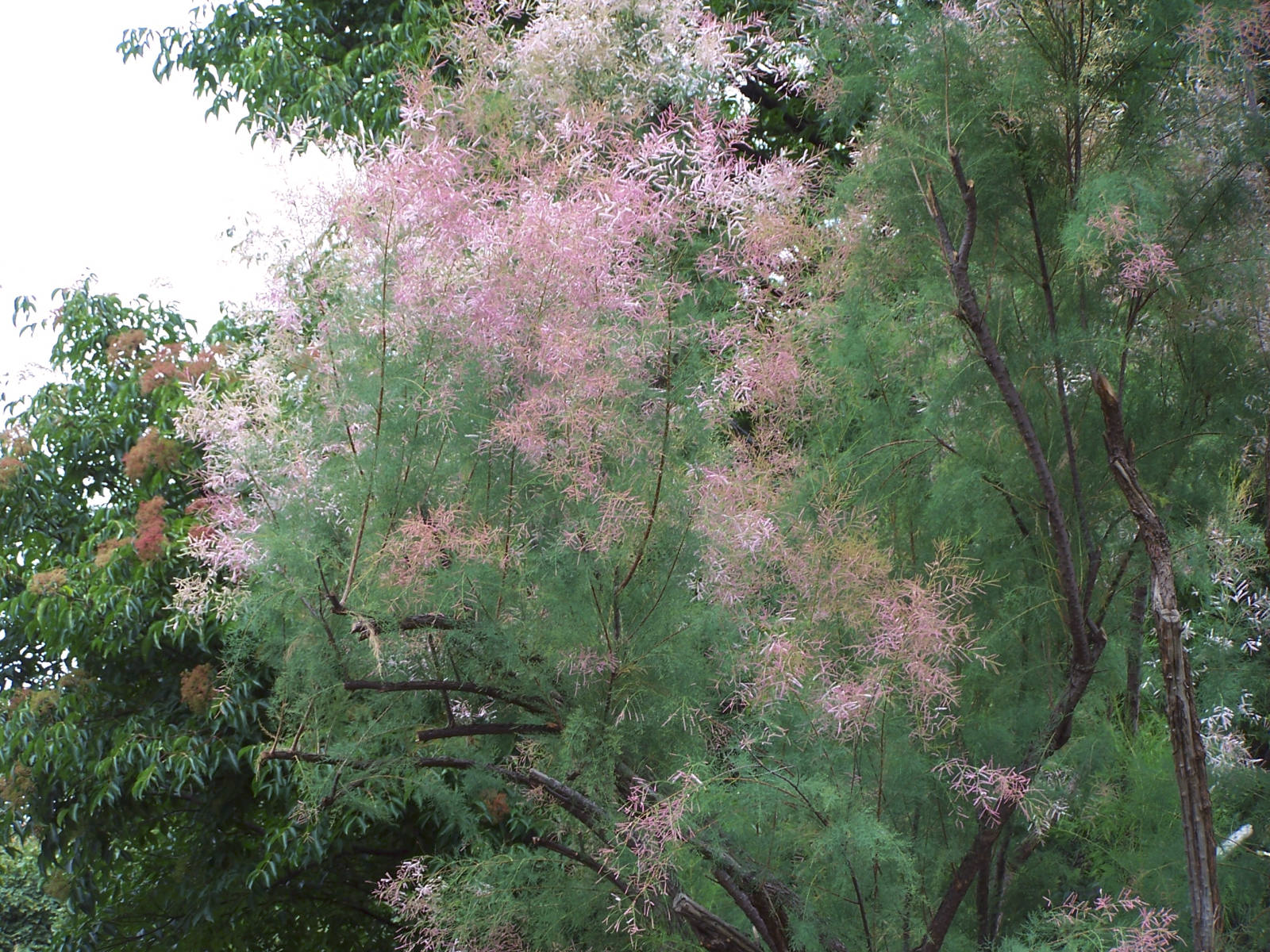
Pretty, no? But not only have we planted it, we keep stressing out the native trees with the ways we manipulate rivers and lower their flow. Tamarisk takes over, which leaves many of the fauna in the lurch, because they can’t eat it, the way they depend upon doing with the shrubs and trees along the rivers and oases.
So there is a huge push to eradicate tamarisk from our region. Does its unwanted status make it less of a pleasure to draw and discover? I can’t say it does. But I do hope the native species displaced by it can make a comeback.
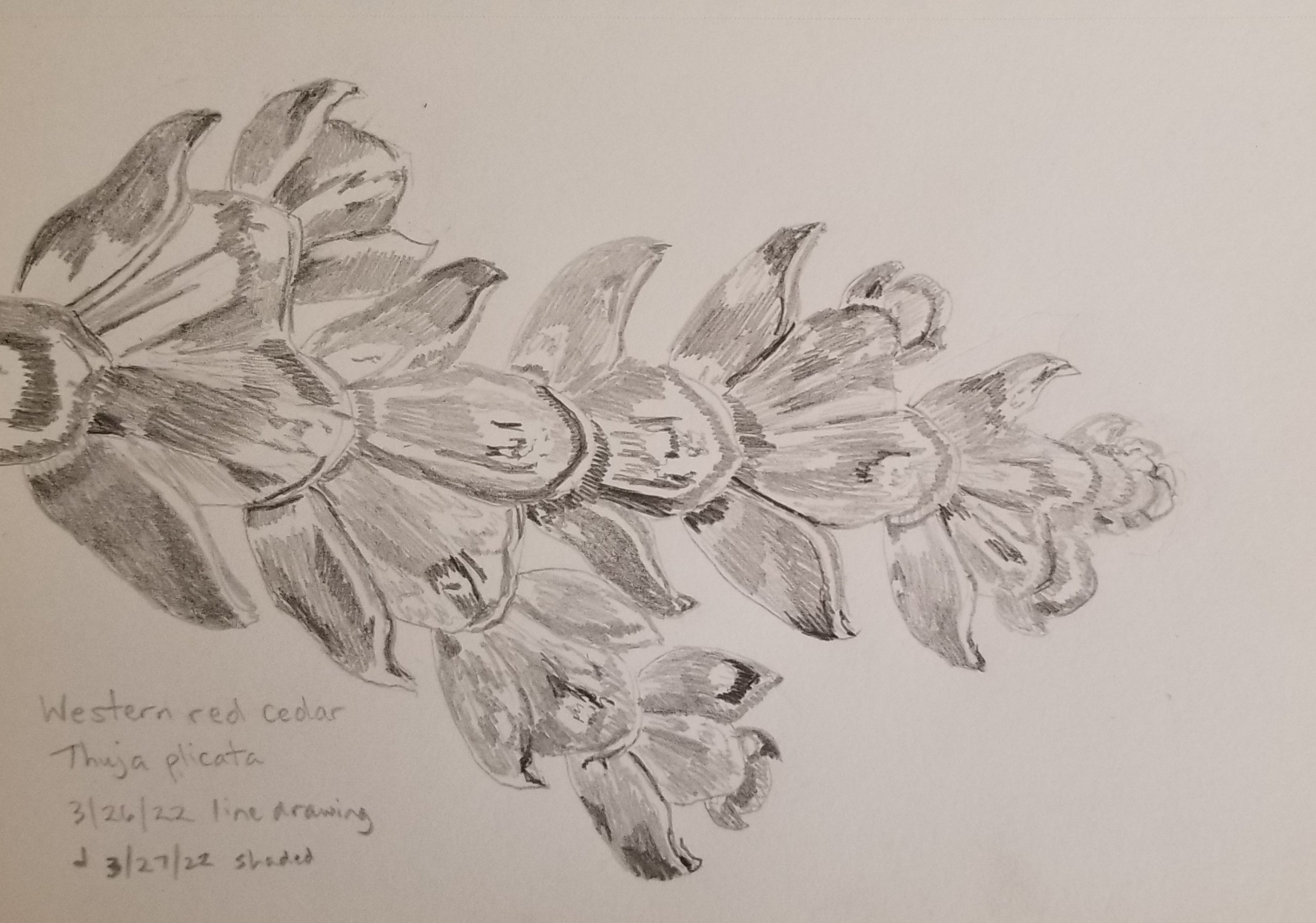
The leaves I drew yesterday were so shiny that I didn’t want to stop with a line drawing, but went back and added the shadows, shades and sheen. So here is the Western red cedar again.

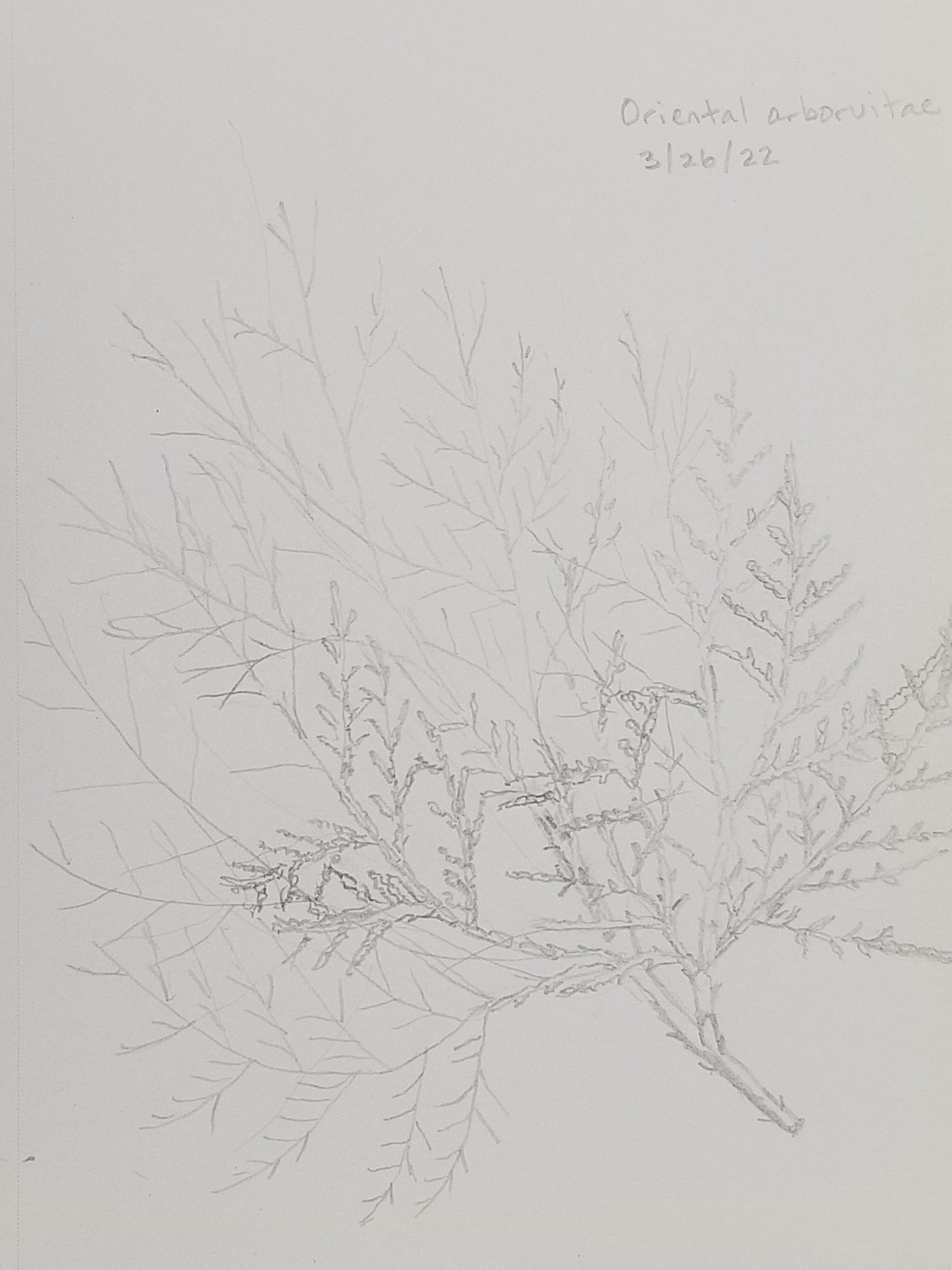
Scientific name Platycladus orientalis. The branch is so beautiful, I longed to draw every detail. That lasted for, well, you can see. A few twiglets.
I need to copy works of some of the great draftspeople to learn better how to combine detail and a more impressionistic approach. It’s so mysterious to me.
This is yesterday’s drawing, because last night was so packed with packing and work deadlines. We are on the road. Oriental arborvitae kept me happy as we waited for a delayed flight, and tonight I’ll be in another state and draw the next one.
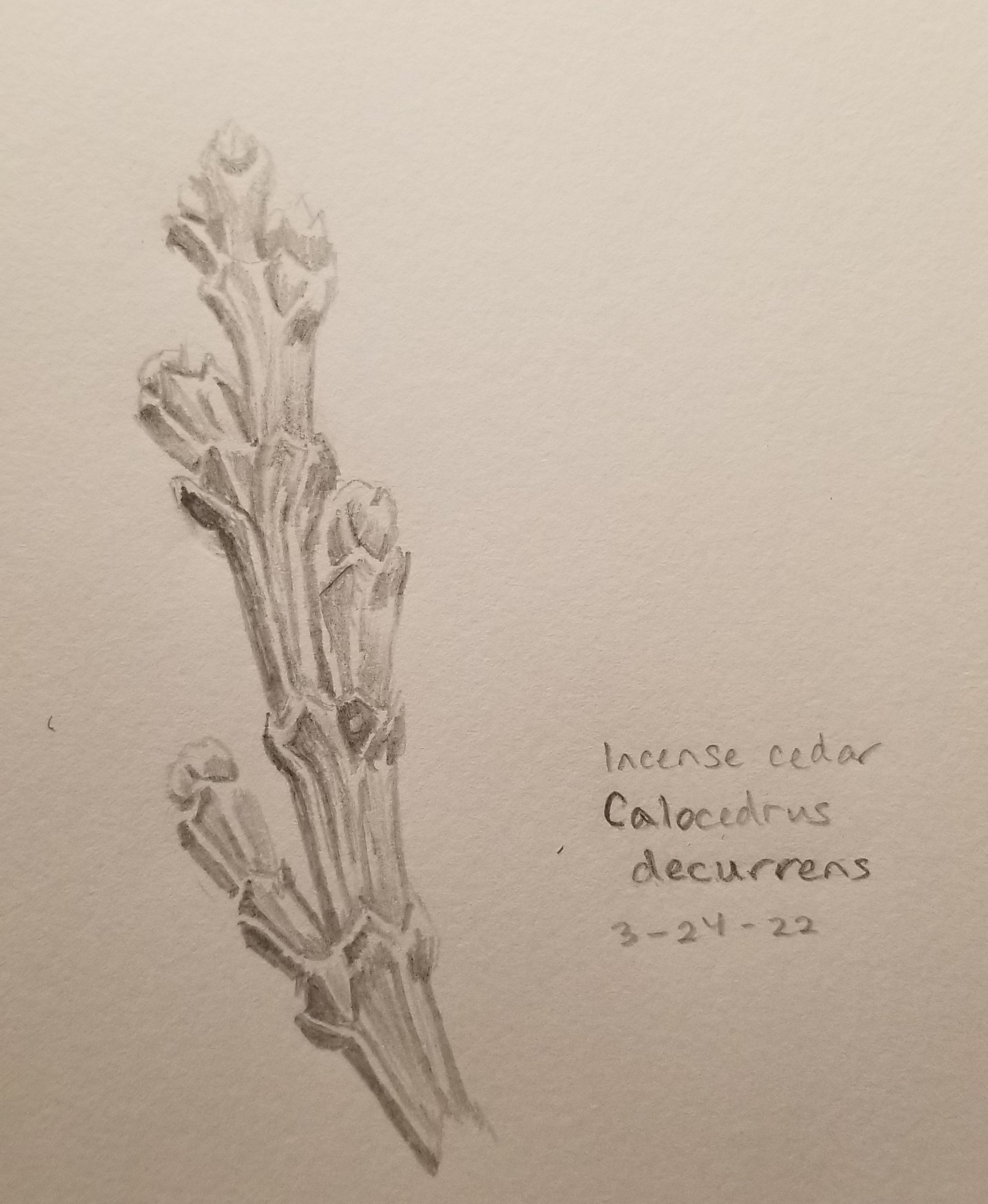
These leaves take my breath away.
And I am at the back page of the sketchbook my daughter gave me a year or two ago. The last entry: a weeping branch of Chamaecyparis nootkatensis.
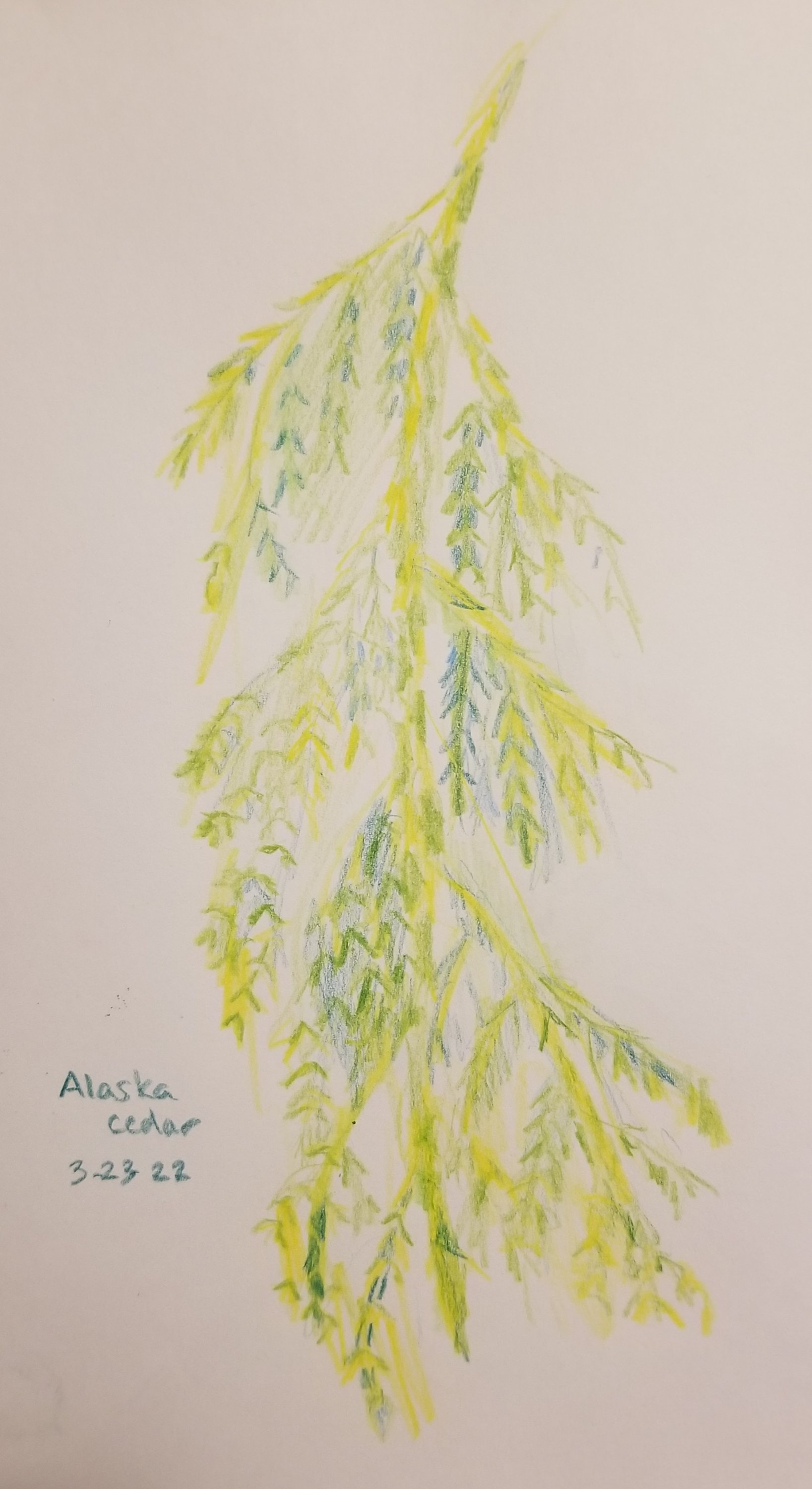

. . . which isn’t a cedar. At least, it’s not of the genus Cedrus. Quite a few conifers not in that genus get called cedars anyway, and this is one of them. It is a member of the genus Chamaecyparis, making it a cypress, though there too, the common name of “cypress” and the family, Cupressaceae, do not consistently correspond to each other. Maybe frequent commenter ERP will work through the tangle of what is and is not a cypress or a member of Cupressaceae.
In any case, for a tree to belong to this genus, Chamaecyparis, it must have scale-like leaves in adulthood, which means that here on my 55th tree, I have at last moved on from needles! This drawing feels like a schematic; I was just learning how these little scales fit together. What’s the pattern, and how does it change when a new twig (twiglet?) branches off? It’s fun to learn it. I will get a lot more familiar with them over the next few weeks, because there are 23 other trees with scale-like leaves here in western North America.
The leaves, that is, the scales, of the Port-Orford-cedar are tiny: about 1/16″ each.


Recent comments