You are currently browsing the category archive for the ‘a leaf a day’ category.

The Latin name for desert – willow is Chilopsis linearis. What I’m holding here is slightly different, a C. x tashkentsis (we think), but as it is one of only two trees in my yard, there was no way I was going to draw it from a photograph. Close enough.
I also didn’t want to pull a green leaf off the tree, so here is a dried one. I have drawn one of these before, captivated by its spiraling curl. This one shows the same tendency.
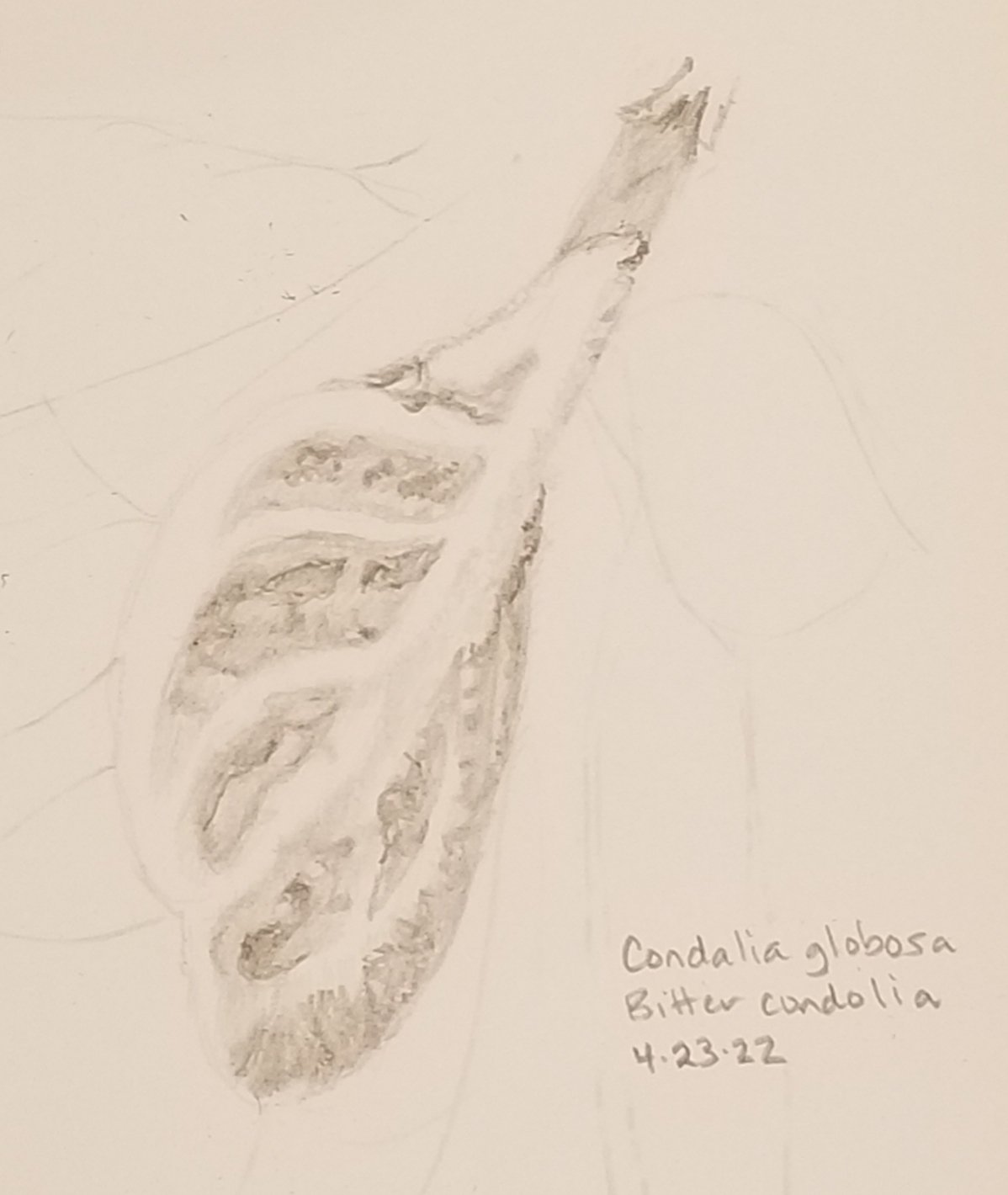
This is the underside of the leaf.

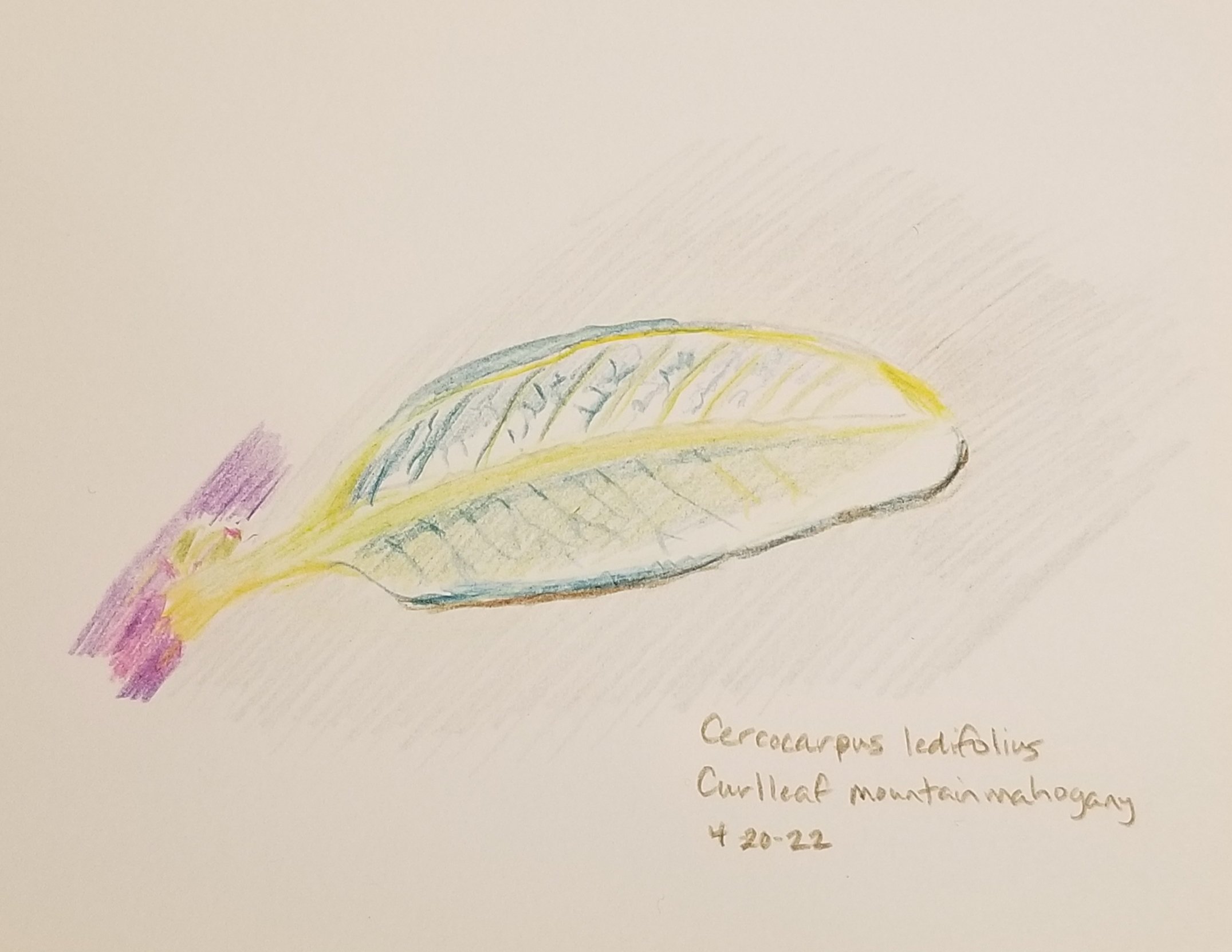
So called because the edges of its leaves sometimes curl under. Here’s a view of a leaf’s underside.
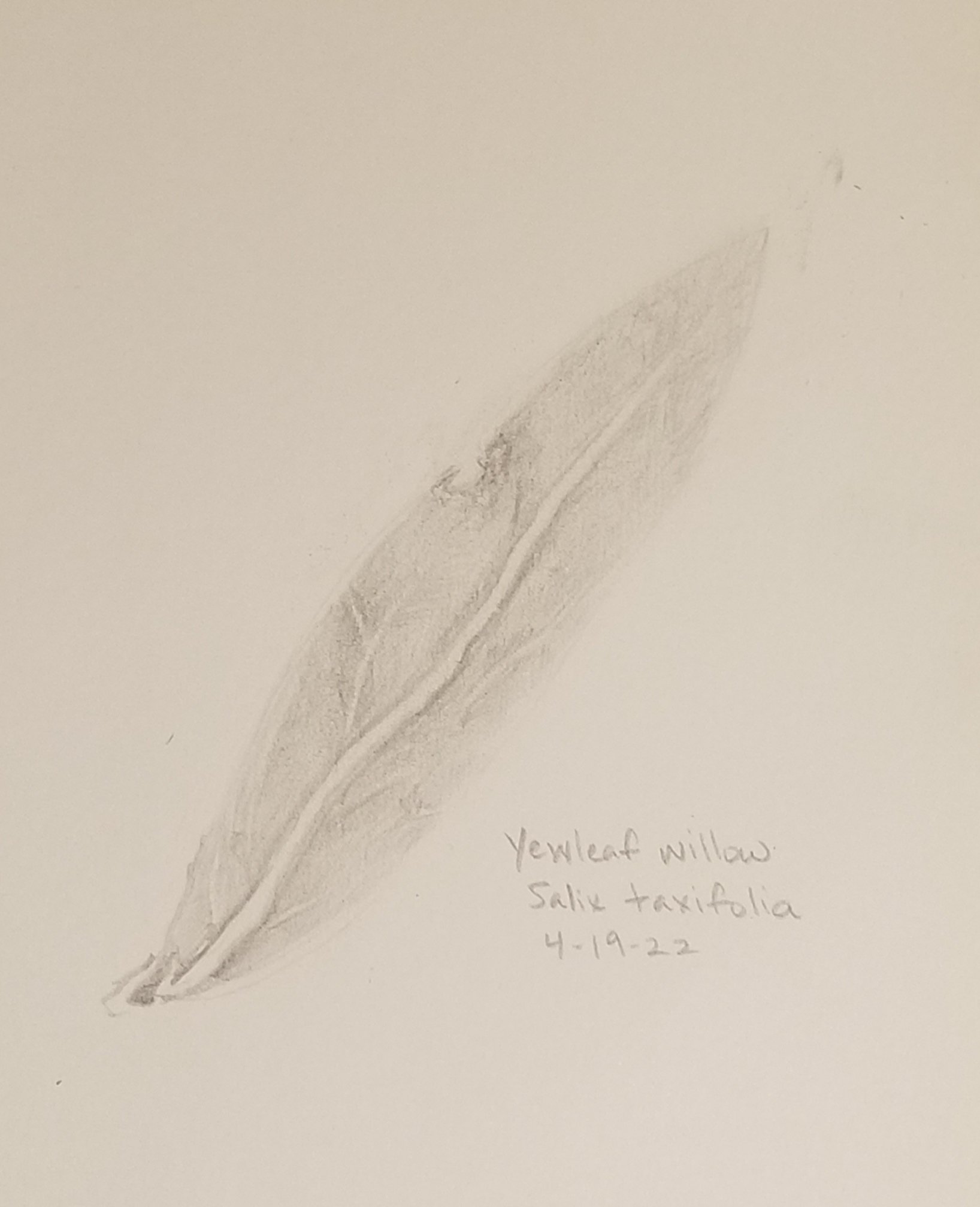
For those who recall that aspirin is derived from willow bark, here we are: Salix taxifolia, as in salicylic acid.
Ah, the teeny tiny veins of yewleaf willow. And of most of the leaves to come, I suspect. I’m not good at them yet, but this year will be an intensive course.
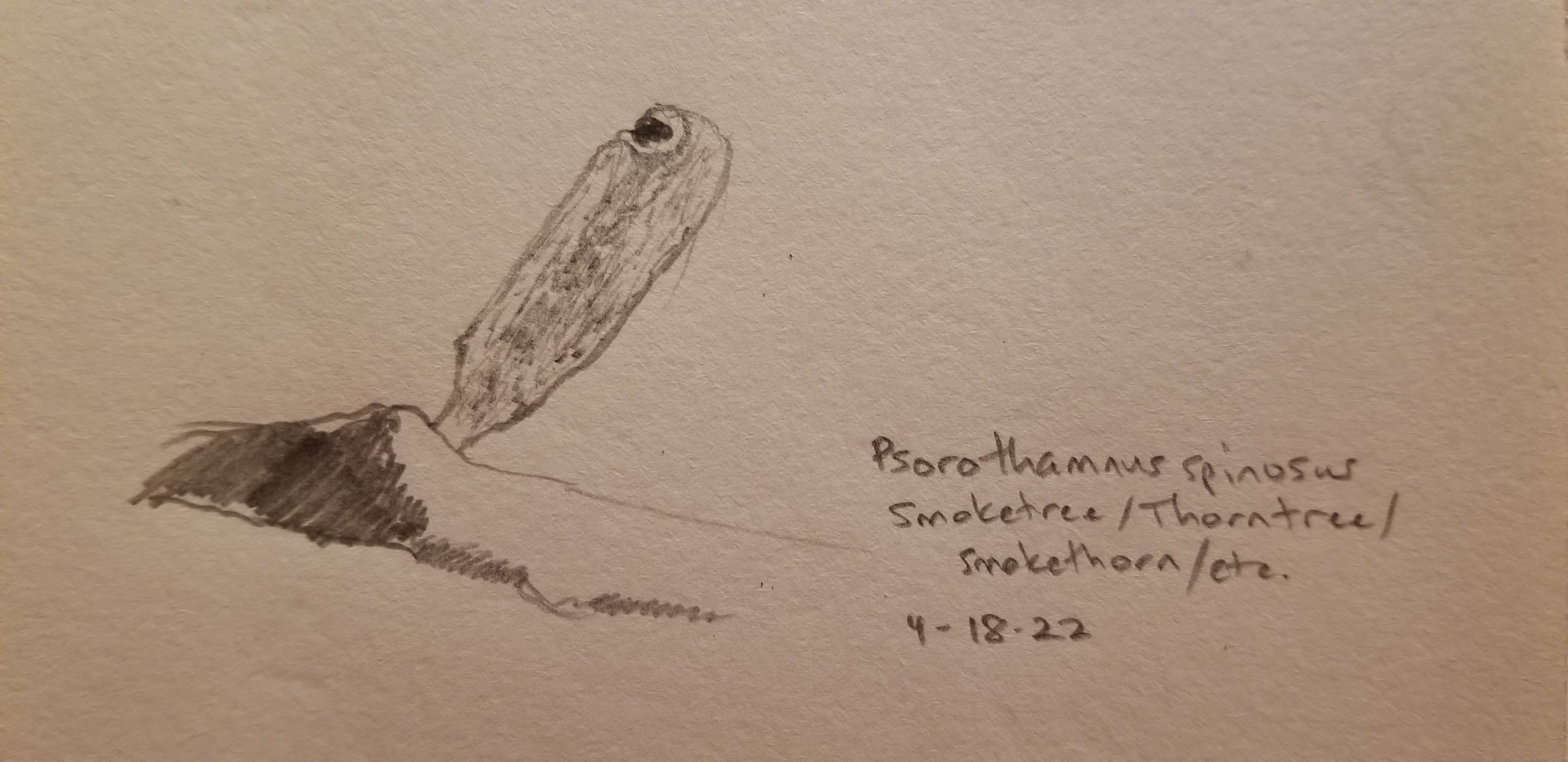
The second tree in the “untoothed simple leaves” section of the field guide, like the first, is a spiny desert dweller that has barely any leaves at all. Finally I spotted one clinging to a twig in a photo that was clearly meant to showcase the thorns and the brilliant indigo flowers. But short-lived though the leaves of Psorothamnus spinosus (formerly Dalea spinosa) are, they are simple and untoothed. And also very fuzzy, which is a challenge to my drawing ability that I see will continue with some other trees in my near future.

It has mistakes, as always, but for me this is a successful drawing: when I get into the paper what I love about the subject: here, the tangle and depth of the twigs and thorns, and the light that filters through it.
Several plants bear this common name, but this is the first I’ve ever drawn (or heard of), and it is sheer coincidence that I came to it on Good Friday.

I’m not sure if the drawing is finished, or I’m just tired. I think the latter, in which case I will finish it tomorrow.
These aren’t the leaves, by the way. I think the leaves are the tiny, scattered dark spots–not very interesting, whereas the tangle of twigs and thorns–! Canotia carries out its photosynthesis via its twigs.

This is the last of the conifers. I’m looking forward to entering the world of broadleaf, deciduous trees. Thank you for your beauty, pines, firs, spruce, cedars, cypresses, junipers!
This is the other tree that’s sometimes called redberry juniper. It is named after Gifford Pinchot, a forester, conservationist, political ally of Theodore Roosevelt, and governor of Pennsylvania who served as the first head of the U. S. Forest Service.


 Sermons in Stones
Recent comments