You are currently browsing the category archive for the ‘a leaf a day’ category.
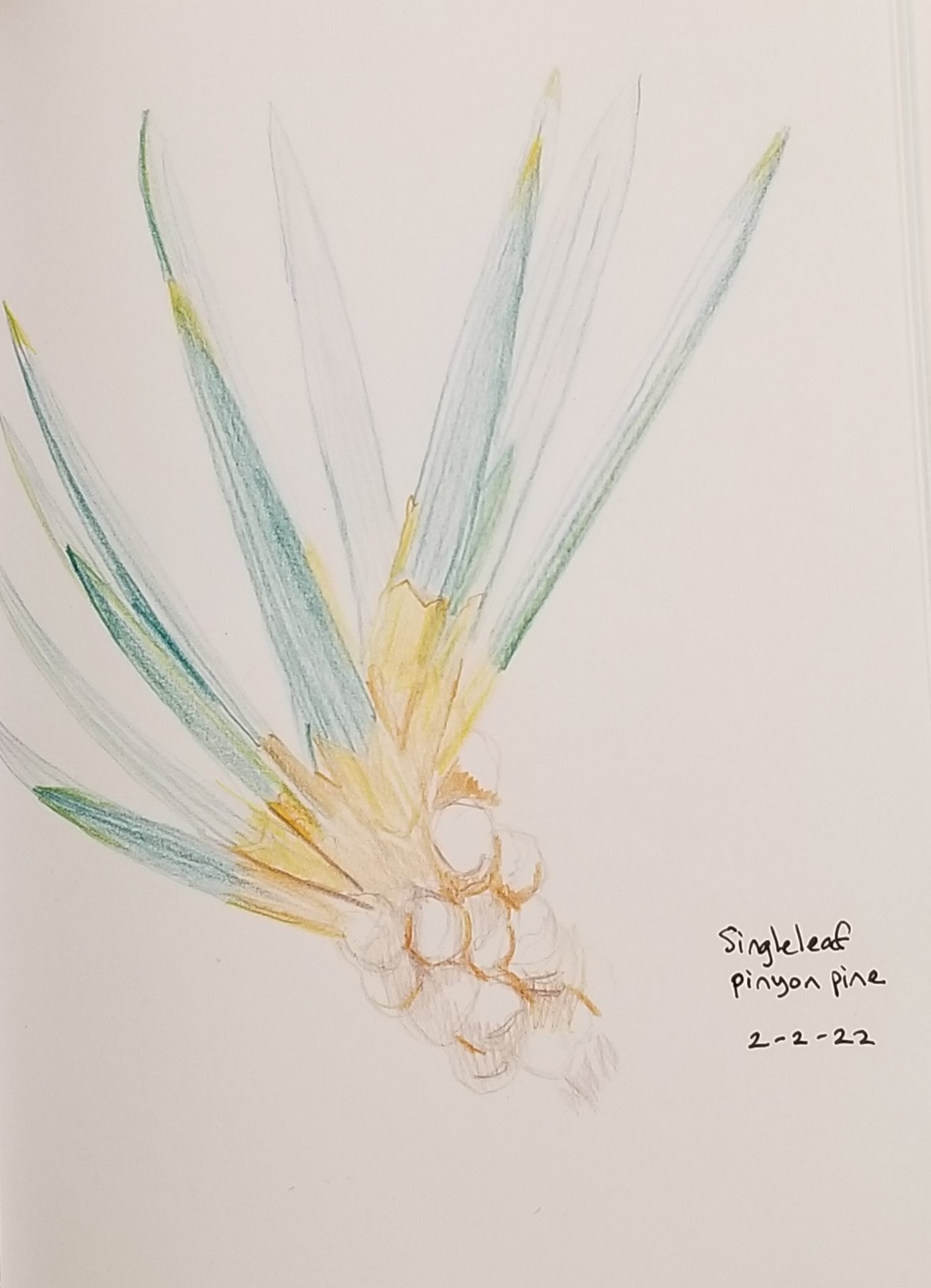
I like the sense of scale the hand provides. These are such short needles, only 1-2″ long as a rule. This tree, which as far as I know I have never seen, is just barely native to the land that is now the state of California. Its range is mostly in Baja California, Mexico, and just peeks up over the border into the southernmost part of the state, not by the coast but inland.
I stopped when I got tired, which means that some of these needles cast no shadows or don’t connect up to the twig. Spooky.


I couldn’t resist drawing the cone on this one. It was so beautiful in the midst of its bouquet of leaves.

The Audobon field guide says this pine was given its common name because when tepee-building Native Americans needed center poles for their houses, they often used its slim, straight trunk.
Also called scrub pine. “Whitebark pine is considered the most primitive native pine because its cones do not open until they decay.”

Even though it’s only 9 p.m., I had to fight to stay awake and force myself to draw, fast, so that I could go to bed. I didn’t get enough sleep last night, and tomorrow will be a busy day.
So I quickly looked up photos of limber pine–so called, a direct translation of its Latin name, because the twigs are so flexible they can be tied into knots–and some prominent ones that popped up were brown and spotted with needle cast. This has happened before. Apparently a common reason for someone to post pictures of pine needles is that they are suffering from some kind of illness or infestation. Needle cast is caused by a number of fungi; in this case, the fungus is Bifusella saccata. I am feeling a powerful need to learn more about these fungi, but as I said: tired. Now that I have documented a few ailing needles, I’m going to bed.

Decidedly not a native, but it was introduced thoroughout this continent and has become naturalized in some parts of the United States. In California, it is cultivated for various purposes, including Christmas trees.


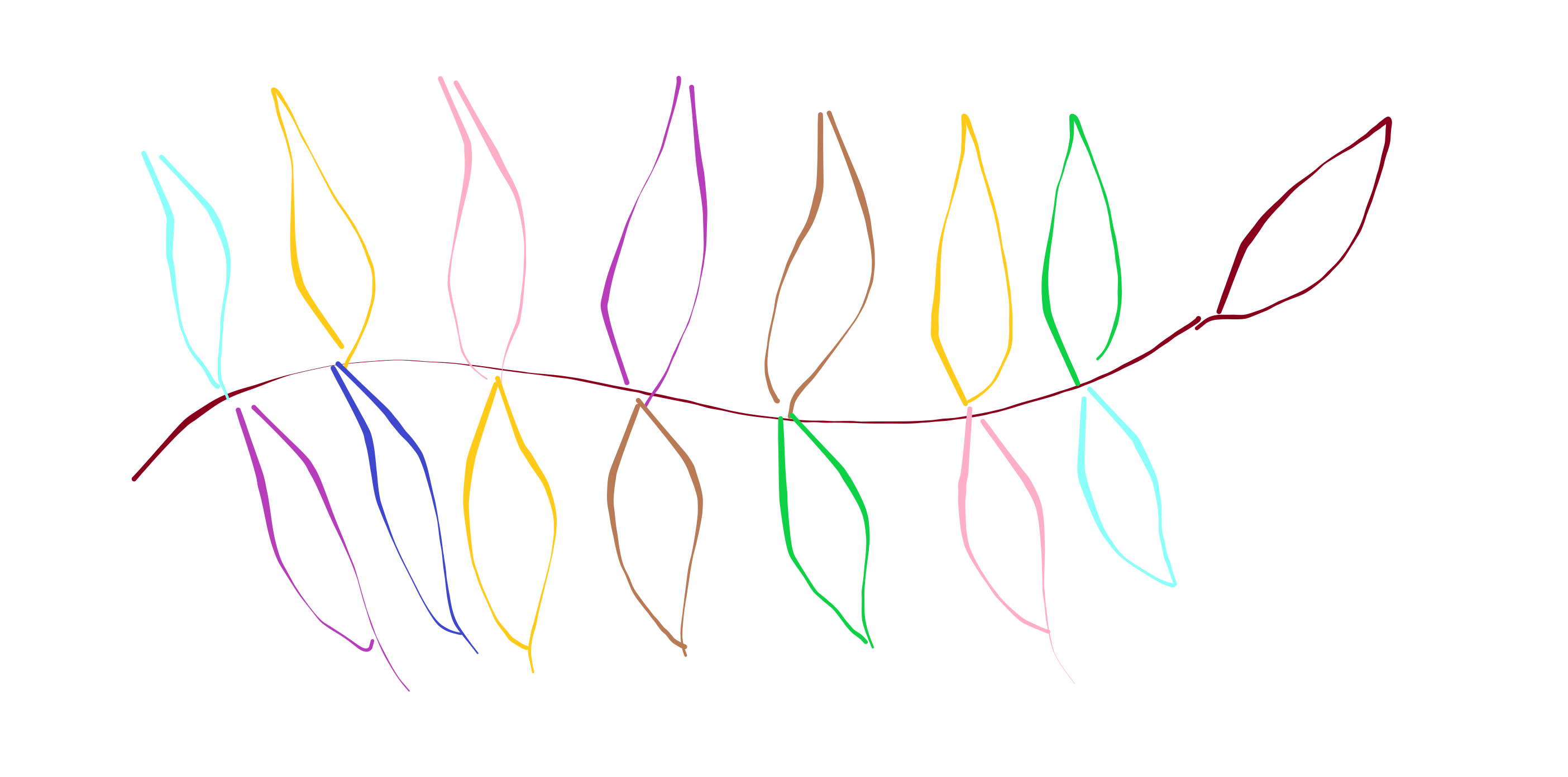
What a liberating example Janet set with her year of butterflies! When she was very tired or didn’t get to her drawing until very late in the day, she would draw one freehand. Here’s my equivalent, done with Paint 3D (not sure what’s 3D about it, as I did not get that adventurous). It was a long Board meeting tonight and a heap of laundry lies between me and bed. Literally. It’s piled up where I sleep, waiting for me to fold it and put it away.
Back to the needles tomorrow.
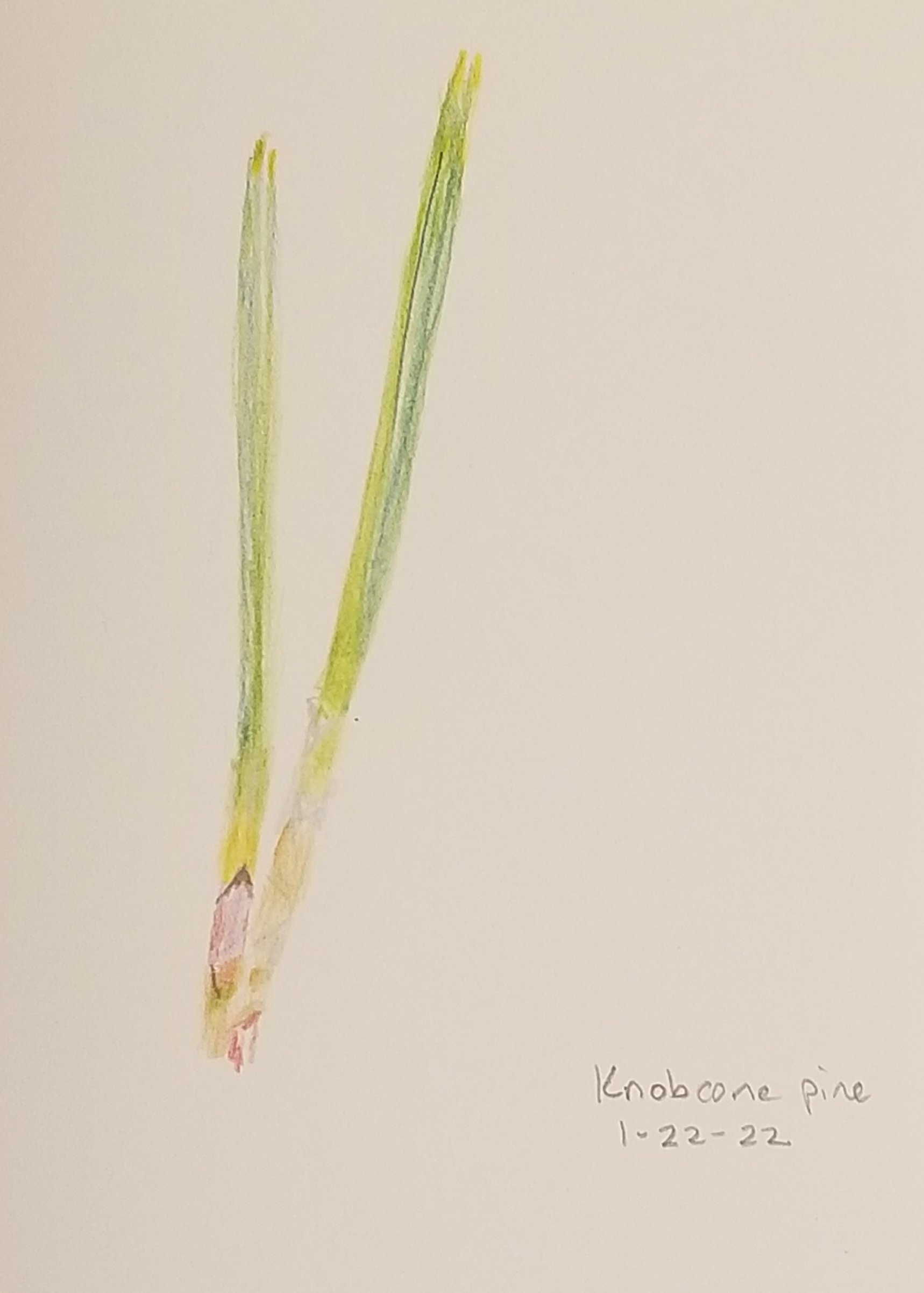
Native from southwestern Oregon to Baja California. From the Audobon guide: “The whorls of many knobby, closed cones help identify this species. Since the cones may become imbedded within the wood of the expanding, trunk, this species has been called ‘The tree that swallows its cones.’ When fires kill the trees, cones as much as 30 years old are opened by the heat and shed their seeds. The abundant seedlings then begin a new forest.”

 Sermons in Stones
Recent comments