A day late…
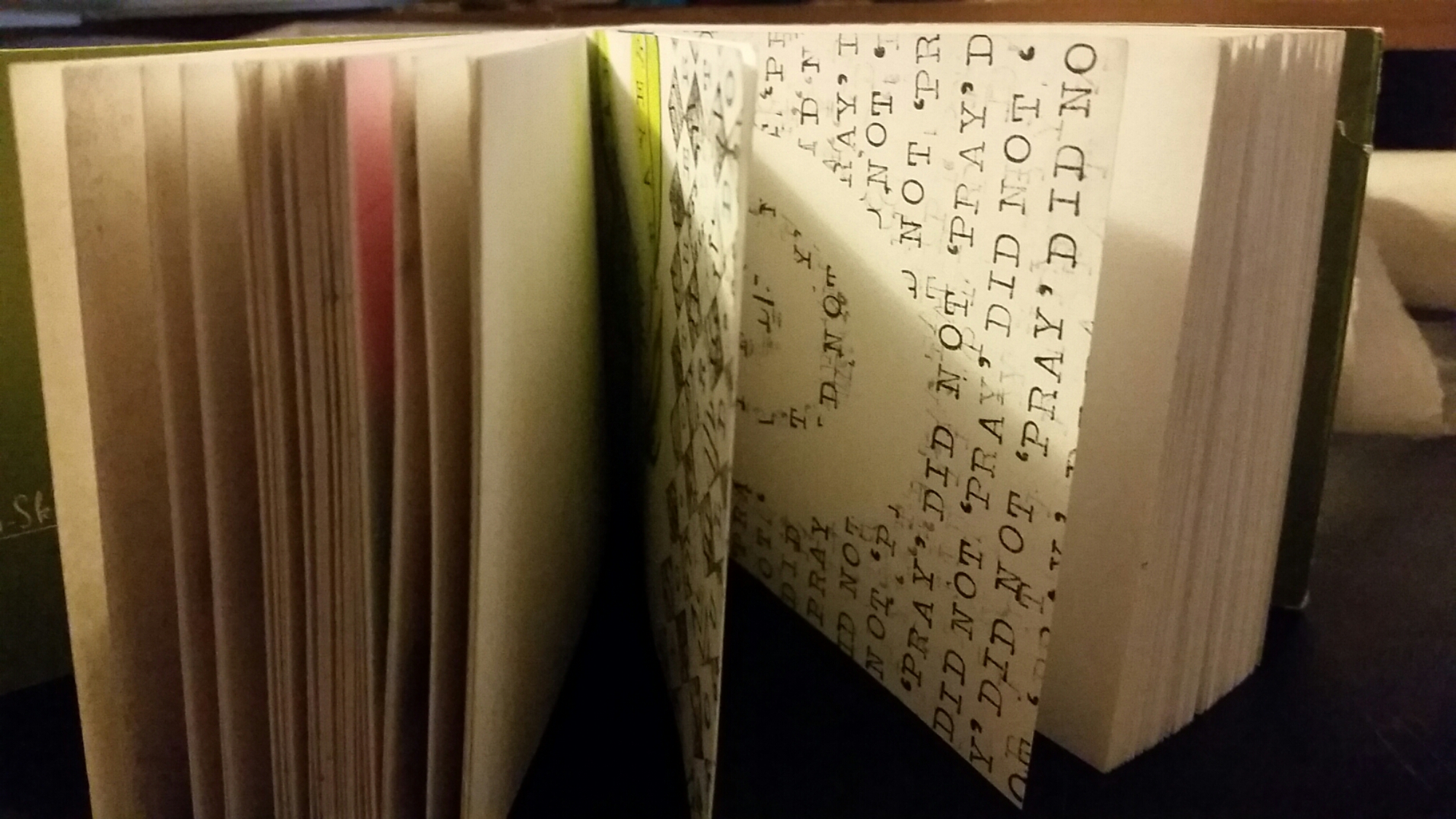
A couple of pages from my art journal, where I joyously dove in to three quick pieces this weekend.
Finding the sacred everywhere. Thoughts on religion, art, books, politics, philosophy, and life in general from a Unitarian Universalist minister.
Today’s word is love. My family and I are at an annual camp weekend for LGBT parents and their children. Love overflows here: people rocking others’ babies and their own, friends reunited, couples getting some time alone while their kids have camp activities, strangers playing word games together and getting up from the table as friends, everyone singing.
And then there are quiet moments of connection within the crowd, like V braiding a Valentine sparkle into her wife N’s hair (shared with their permission).
K. L. Allendoerfer at A Thousand Finds is also undertaking this practice, in a relaxed way that I will try to emulate. Lovely!
Today’s word: quiet. Just behind me as I took this photo was a road circling Lake Tahoe, and behind that was the bustle of the family camp I’m enjoying this weekend. The trees, snow and moon seemed to exude a quiet that blanketed all of that.
I was just wondering whether I should have a Lenten practice this year, when the UUWorld popped up in my e-mail inbox with an article about #UULent, a photo-a-day practice. Something I know about myself is that 47 straight days of anything is very challenging (Lent practices of privation skip Sundays, but this practice continues through Sundays, with a twist). However, if I only hit 30 out of 47, that will be 30 days of attention to a spiritual matter.
Today’s word is mindfulness, and the internal process that occurred when I saw this outside a restaurant window today exemplified . I saw the light coming through these leaves and two thoughts came into my mind simultaneously:
How beautiful!
It’s a geranium, and I don’t like geraniums.
I have a category in my mind–geraniums–and a judgment about it–I don’t think they’re beautiful. Mindfulness allows perceptions in (“How beautiful!”) that don’t fit in my categories, and even challenge them.

So I am beginning this season with gratitude for this geranium, the sun, and the prompt from creators Mr. Barb Greve, Karen Bellavance-grace, and Alex Kapitan to consider mindfulness with my camera. I also want to express an extra thank you for giving me a gentle way out of a long dry season of blogger’s block.
If you care to join me, I’ll be posting daily on Twitter @AmyZMorgenstern (hashtags #UULent, #UUCPA) and also on Facebook–please connect there, or in the comments, and I’ll look forward to seeing your photos–whether one or 47.

Look at that–I never posted last year’s Christmas Eve homily. Probably because I came home tired that evening, wrapped a few more presents, woke up to a lovely Christmas morning with my wife and daughter, and then traveled with them all over California visiting family, friends, and Joshua Tree National Park.
It was called “Come, Emmanuel” and it stands up quite well to re-reading one year later.
Yesterday I had the great honor of preaching the sermon at the ordination of, as we may now call her, the Reverend Pam Gehrke. The sermon means a lot to me, and I’ve posted it here.
I want to thank Pam for the invitation, and Sally Ahnger, Sarah Moldenhauer-Salazar and Rachel Anderson, who added a great deal to the details just by being honest. The sermon is dedicated to Dan Kane and all the saints who from their labors rest.
And my wife, Joy, is just the kind of editor I need: a close reader who brings up small and large matters, who honors what I want to say whether or not she agrees with it, and who knows me well enough to say when she doesn’t think what I wrote is what I really believe, and be right. She made this a much better sermon. Thank you, sweetie.
I took my first foray into National Theatre Live recently, lured like millions by the prospect of seeing Benedict Cumberbatch play Hamlet, and I really enjoyed it. If you want to see interesting theater at $20-plus-handling, I highly recommend looking up what’s being broadcast from the National Theatre to a cinema near you. Not only is there great acting, but when else do you get to watch Shakespeare and eat popcorn? It’s like being a groundling, except with more comfortable seats. My one complaint was that the preliminaries made the actual start time 30 minutes after the time on the ticket. I wished they’d told us whether we had time for a run to the restroom; next time I’ll know.
Specifically re: Hamlet, it had been a long time since I’d read or seen it, and something has changed in me–not in the play, obviously–because I realized that that play is sad. Really heartbreakingly sad. I know that that is what the word “tragedy” means, but reading the play in my callow, callous youth, the sheer waste and misery of it didn’t make such an impression. The play opens with Hamlet already sunk in grief; you never see him as he was before his father’s death, but only get enough intimations of his humor, intelligence, and emotional fervor to feel the decline. It closes not only with eight people freshly dead, five of them young, but with the country handed over to a stranger: something else that never struck me as that tragic before but on this viewing, seemed to be the final evidence of how badly the time is out of joint. Hamlet’s murder of Rosencrantz and Guildenstern also hit me hard–it’s so cruel and unnecessary, and he’s so completely lacking in remorse. Everything about his collapse into isolation is right there in that moment: how he’s unable to see that he is not the only one whose strings are pulled by powers he can’t resist. Cumberbatch makes us believe in a Hamlet with a razor-sharp intelligence who can turn that intelligence to exquisite self-awareness, yet also be blind to the obvious about himself.
Something else I had forgotten, or not fully realized when I last saw a production or read it (15 and 30 years ago, respectively), is how funny the play is. I remembered Hamlet as one of Shakespeare’s most pleasingly sarcastic characters, but he’s funny in other ways too. This production played up his wit and imbued certain lines that can be played pretty straight (e.g., “he will stay till ye come,”.about the dead Polonius) with heavy sarcasm. The Hamlet in this production is a very funny guy, not just in a bitter way (that would get tiresome) but with a real sense that even on the slope to disaster, he’s enjoying himself sometimes. That glimpse into what his personality must have been like before the events of the play adds a bitter twist to our laughter.
I have many questions about the characters, especially Ophelia and Gertrude–my main objections to the direction in this version are in the indeterminate way these two are portrayed. What is making Ophelia completely fall apart–her father’s death, or the collapse of any hope of a relationship with Hamlet, or something else? (This production played down the “She’s no longer a virgin and is therefore doomed” interpretation by removing her Valentine’s Day song about “the maid that out a maid / Never departed more.”) Was there any hope for them to marry in the first place? Polonius and Laertes stress that that was always out of the question due to their difference in station; yet Gertrude says she hoped they would, and she ought to be the final word on court protocol. So which is it? You can direct it to favor either one, or to point up Ophelia’s confusion about which is true, but this production just left me feeling confused, myself.
And Gertrude: After the big scene between her and Hamlet, does she shun Claudius as her son has begged her to do? How does the accusation of murder affect her feelings towards him? Altogether this production did not give us much to go on about Claudius and Gertrude’s relationship–no spark of passion nor mistrust. Another fascinating question–did Gertrude drink the poison knowingly–can be interpreted strongly one way or the other, but this production left it vague and in fact sped right past the critical moment.
Likewise, the dumbshow interaction between Hamlet and Ophelia in Act II, scene 1 was done so fleetingly that I wondered why they put it in at all, and whether it was supposed to be the incident that Ophelia then reported to Polonius, or something else. I know it’s hard to fit Hamlet into three hours, but here and there they needed to slow down.
The set was stunning, but lots of aspects of the production seemed off or aimless. The costumes were a bit bewildering, especially Horatio’s everpresent backpack. Really, what was that supposed to signify? I wanted to say “Dude, we know you’re a student. You can put down the backpack now.” “Dude” would be the right term–he was Hipster Horatio, with elaborate tattoos, big glasses and a little beard. I have no idea who the children in the promotional materials are supposed to be–younger versions of the characters? Laertes was boring; maybe this is Shakespeare’s fault.
But any number of glitches wouldn’t have outweighed the delight of a few marvelous, marvelous performances: Hamlet and Polonius (Jim Norton) being the best, with nice little touches from minor characters such as the first gravedigger and Rosencrantz (Guildenstern didn’t feel as engaged to me, despite having more lines). Ciarán Hinds’s take on Claudius seemed flat at first, but grew on me more and more. It’s one of my favorite characters in Shakespeare, and in his performance, I saw things I hadn’t seen before: that he acts more like a CEO than a king; that a spirit of cover-your-ass rules his life, as we see in his relentless efforts to justify himself to Laertes and anyone else who will listen. Ophelia (Siân Brooke) was terrific before she went mad; I’m not sure how I feel about her portrayal of Ophelia after her father’s death. Maybe this comes down to the fact that I always want to sidle up to Ophelia and say, “Just between us, I promise not to breathe a word–aren’t you the teensiest bit relieved that he’s gone?” I’m always wanting to see that ambivalence in Ophelia. The rest of us think that Polonius is a buffoon and destructively overbearing; surely his children chafe just a bit?
Anyway, a great night at the “theater.” National Theatre Live keeps showing plays for months after they’re produced, even after their runs on the stage end, so you can still catch this Hamlet and lots of other productions.
Recent comments