You are currently browsing the category archive for the ‘drawings’ category.

The website Pest Management Handbooks (Pacific Northwest) says, “The serpentine madrone miner adult is a tiny moth. Larvae of this leaf- and twig-mining moth blaze sinuous, serpentine mines across the surface of leaves. Although damage might be unsightly on individual leaves, they do not affect the long-term health of the tree.”
As we know, I don’t think it’s unsightly. I love these patterns and the history they reveal. But I’m glad to know that the leafminer (whose scientific name, Marmara arbutiella, signals its special relationship with the Arbutus genus) gets what it needs without causing real harm to the tree. My daughter tells me this variety of symbiosis, in which the relationship is beneficial to one species, and neither helpful nor harmful to the other, is called commensalism.
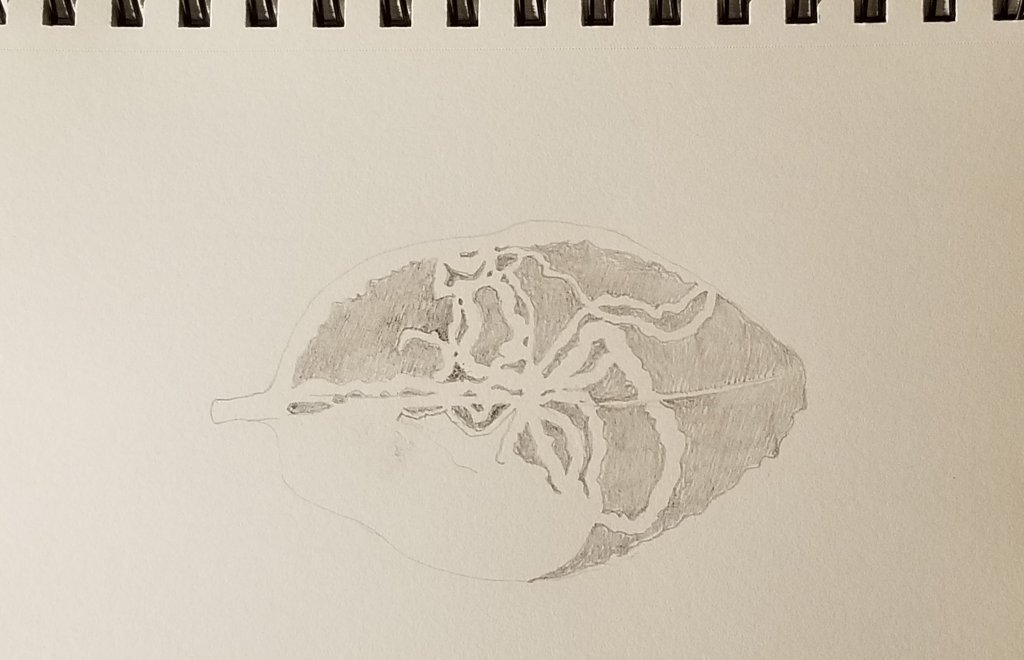
Again, I want to spend more time on this one than I can do in one day, so this is a work in progress. This madrone leaf was visited by a leaf miner. Not good for the leaf, I’m sure, but so beautiful.
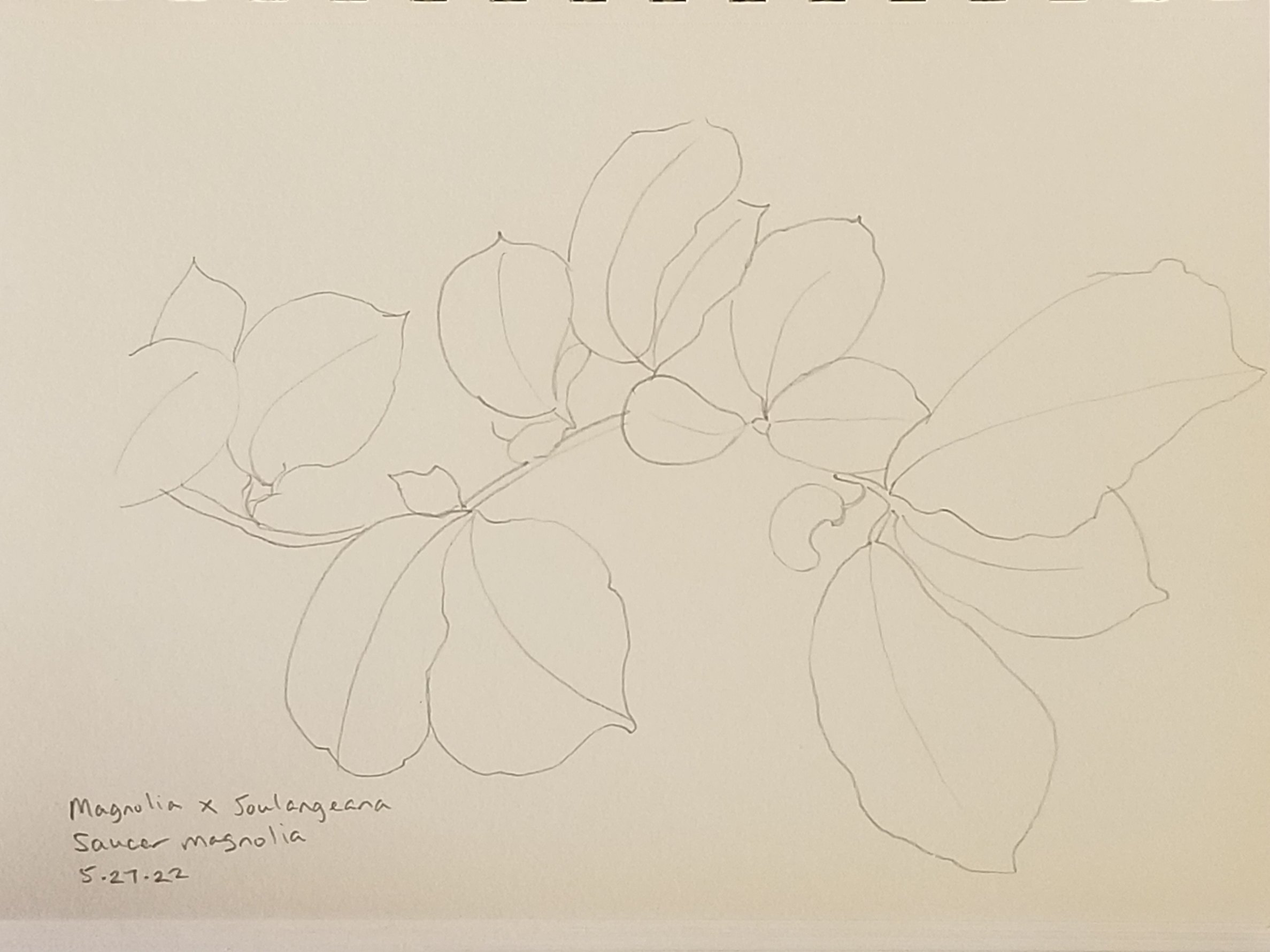
A madrone branch adorns the front wall of UUCPA’s sanctuary, so this species, which as far as I recall I had never heard of before I came to Palo Alto, now has a sacred significance for me.


Color is hard. I’m experimenting, seldom sure what’s working, enjoying.
One of the meanings of “osier” is the pliable twigs of trees that can be used to make baskets. This tree is well-named, because the twigs are bright red. The leaves are green until cold weather, but I just had to draw one in its fall colors.

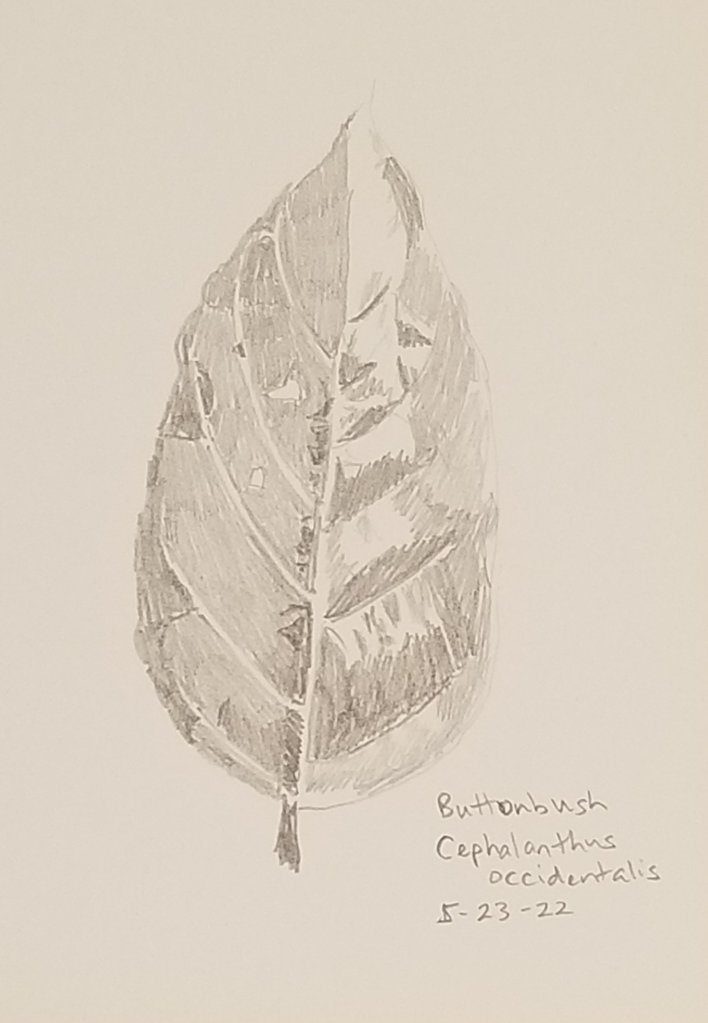
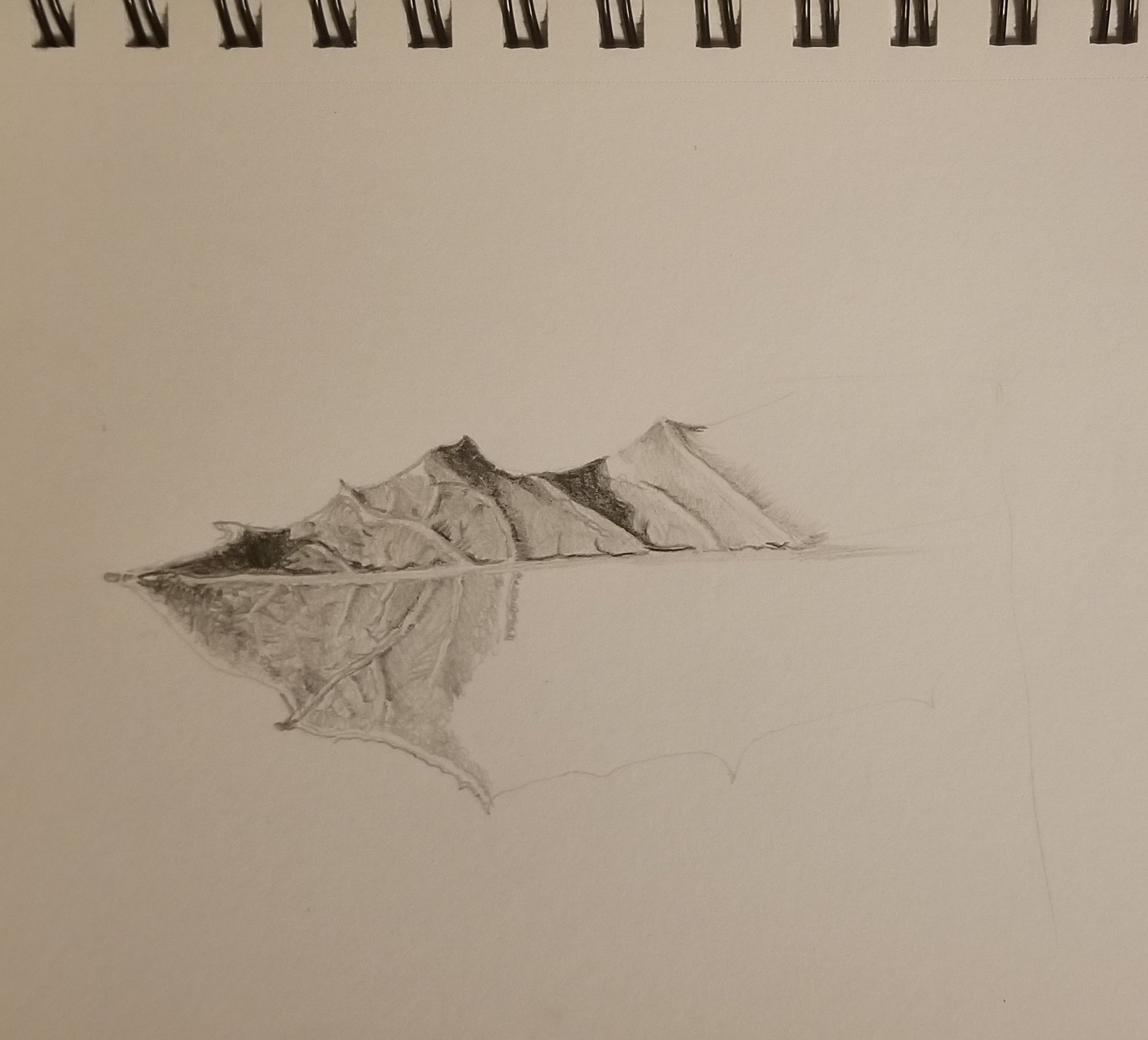
I don’t want to stop spending time with this leaf, so I’ll continue tomorrow.
May 22: Here’s today’s progress. It’s pretty much done, but I want to get some distance–literally and figuratively–and tomorrow I’ll change any areas that show they need it.


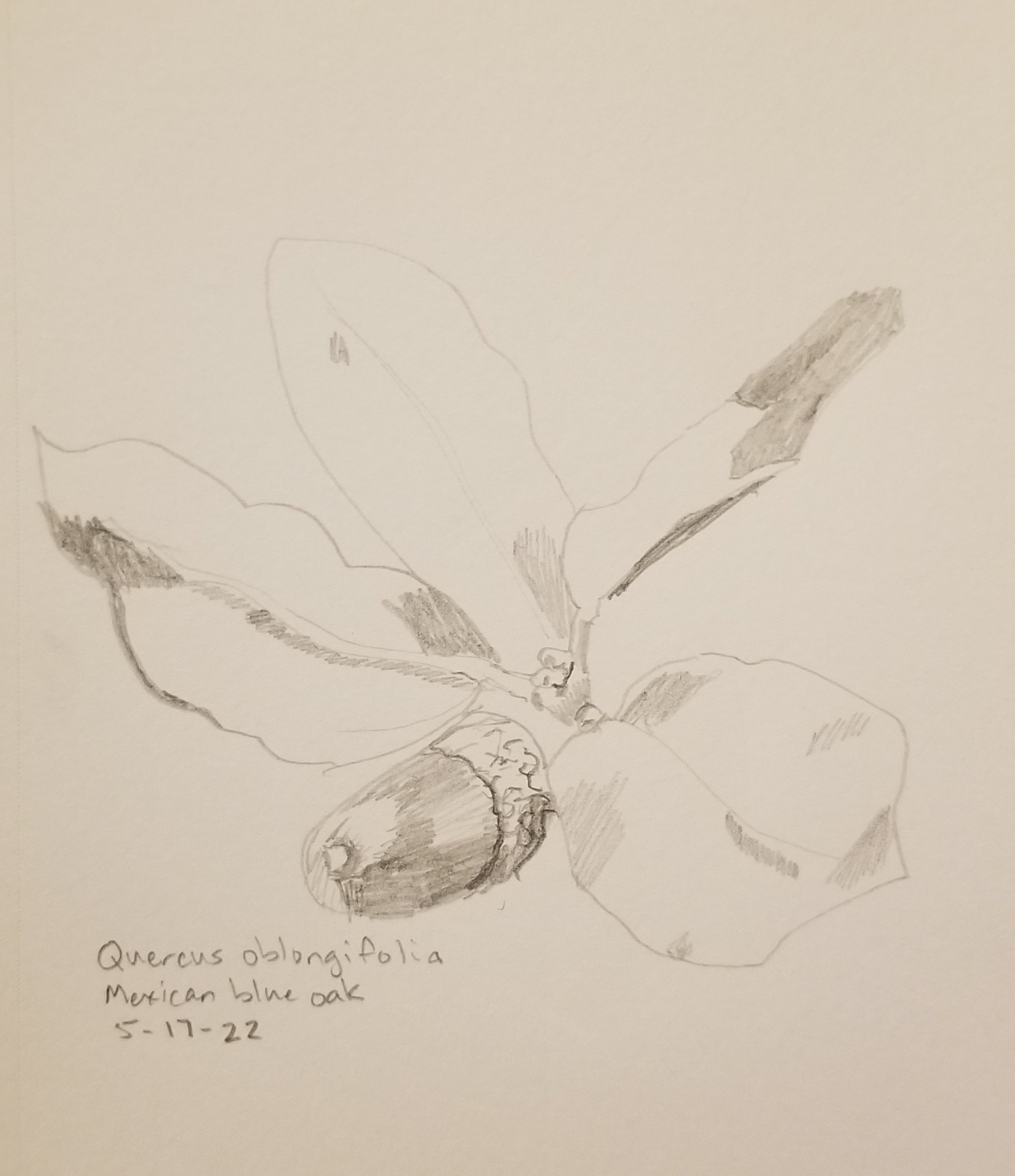
Trees don’t pay any mind to human boundaries, and this species of oak lives along either side of the border in Arizona and New Mexico, USA, and Sonora and Chihuahua, México.
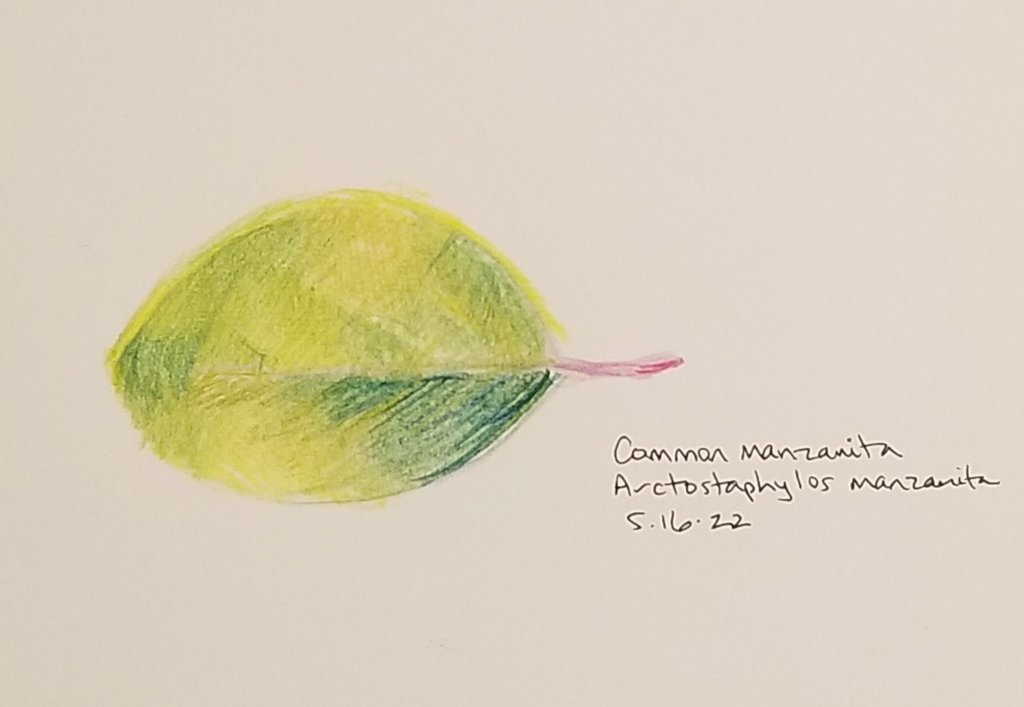
Manzanita doesn’t grow on the East Coast, where I grew up. Now when I see it during a hike–which is more often than not–I am delighted. I love the dark red bark, whose traces you can see here in the pink stem of the leaf.
Arctostaphylos manzanita has two common names: “common manzanita” and “whiteleaf manzanita.” I have no idea where the latter one might come from, as the leaves are not at all white even on the underside.

 Sermons in Stones
Recent comments