
You are currently browsing the category archive for the ‘a leaf a day’ category.
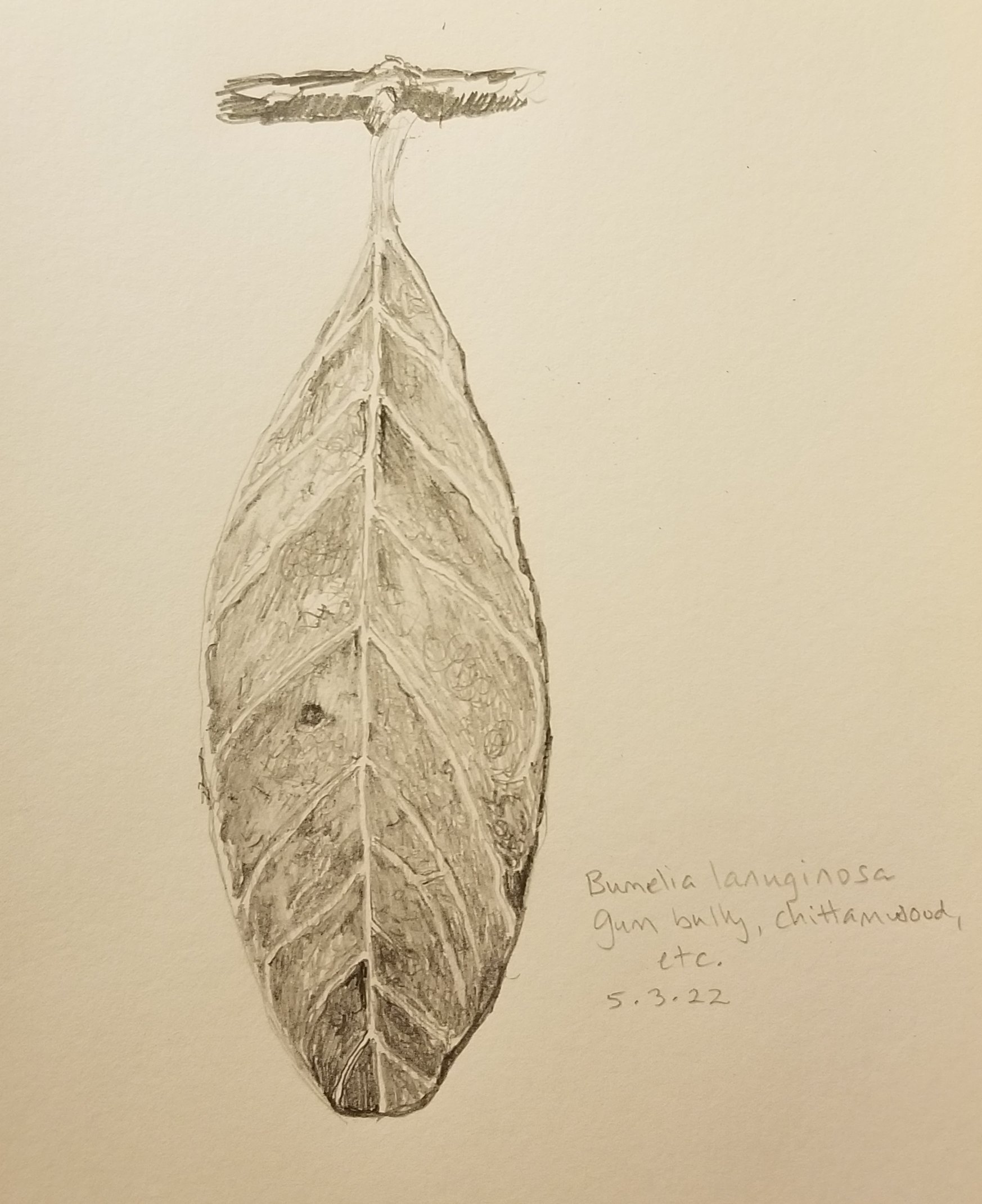

Also known as California bay, Oregon myrtle, or pepperwood. Broadleaved trees tend to be deciduous, but the laurel is evergreen.
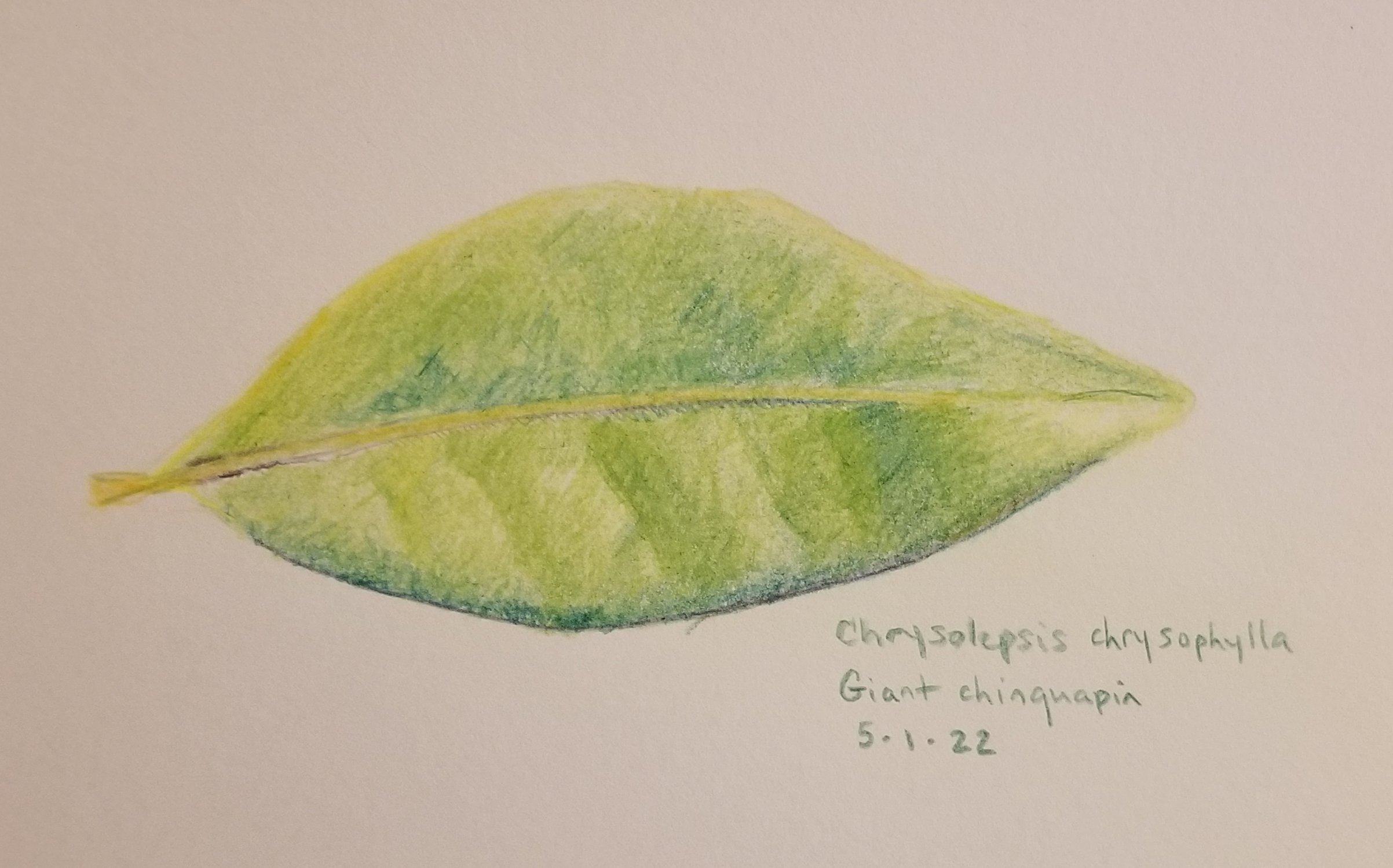
“As I grew older, I realized that it was much better to insist on the genuine forms of nature, for simplicity is the greatest adornment of art.” — Albrecht Dürer

I came upon this quote courtesy of the acrostic puzzles I frequently solve online. I shy away from any absolutes such as “the greatest,” but Dürer’s thought is a good companion for this particular project of drawing a different leaf every day. Immersion in natural beauty is definitely good for my spirit as well as my relationship with other living things. Whether it is simplicity that I’m encountering, I’m not sure. Leaves are stunningly complex, and the complexity is one source of their beauty. But one could also say truly that there is something very simple about them, and there is definitely a simplicity to an art practice that seeks only to reflect what is in nature.
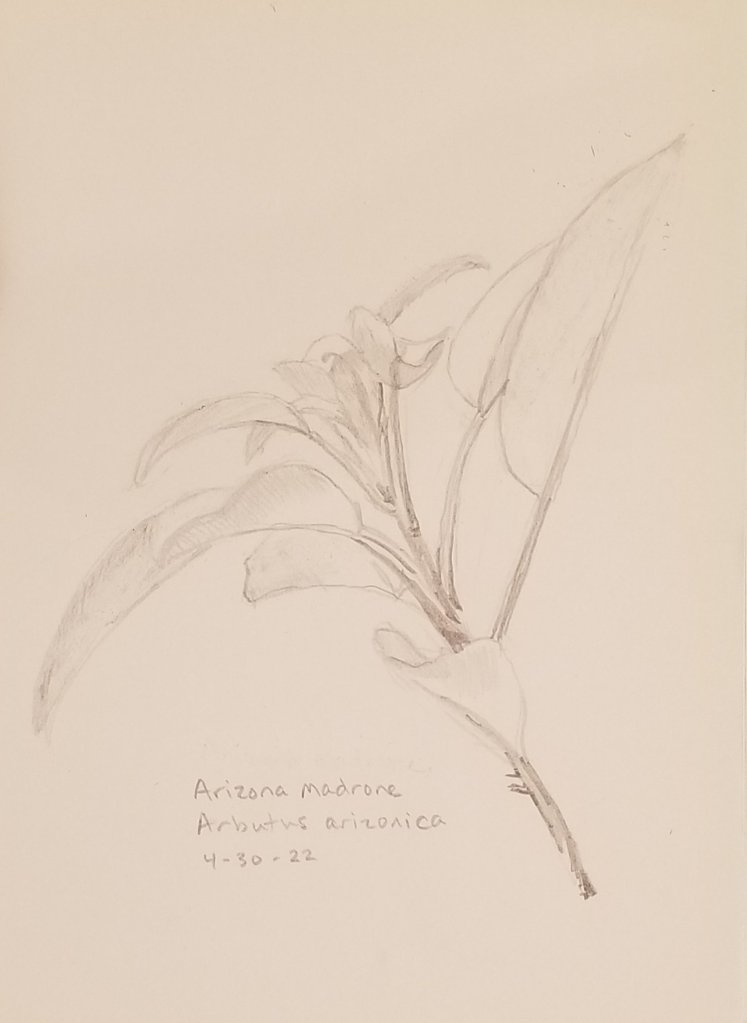
Arizona madrone, to be precise: Arbutus arizonica. The colors, which ranged through magenta, orange, and green, were tempting, but I’ll have many other days for drawing leaves with this coloration.

I’ll be drawing numerous members of the genus Quercus, I think, and this is the first. It looks more like a willow leaf to my layperson’s eye: untoothed, long and ovoid and slender. But it’s an oak. This is the underside, and that’s what the name refers to; the tops of the leaves are a rich green.
I fell right into bed without drawing yesterday, distracted by the happy, rare event of having friends stay in the house. But it is a quiet day with a work-free Sunday to follow, so I can do a second drawing today.
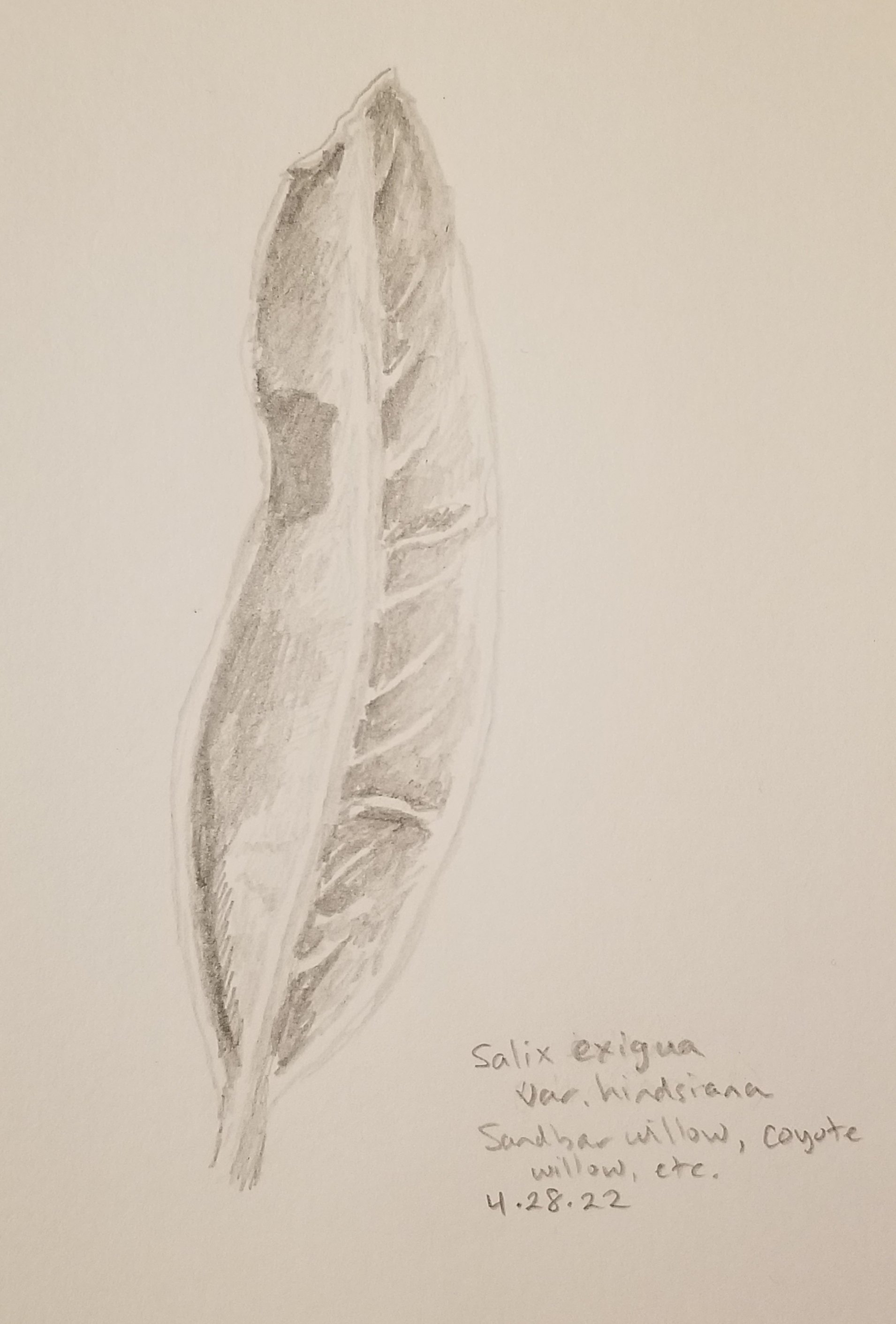

The leaves are so varied on this tree. At one stage, it has long, untoothed, simple leaves like the ones we’ve seen the last couple of days, but then there are these compound leaves.
As Erp pointed out in her recent comment, common names are often misnomers. But this tree really does grow on Catalina Island.
I started drawing these beautiful leaves and got really annoyed by how fussy I was getting. Deeply lost in the weeds of tiny variations in color. Was any of the light coming through?

So I started again, determined to use just a few colors and keep the shapes and shades simple. Actually, now I think each drawing was successful in its own way.
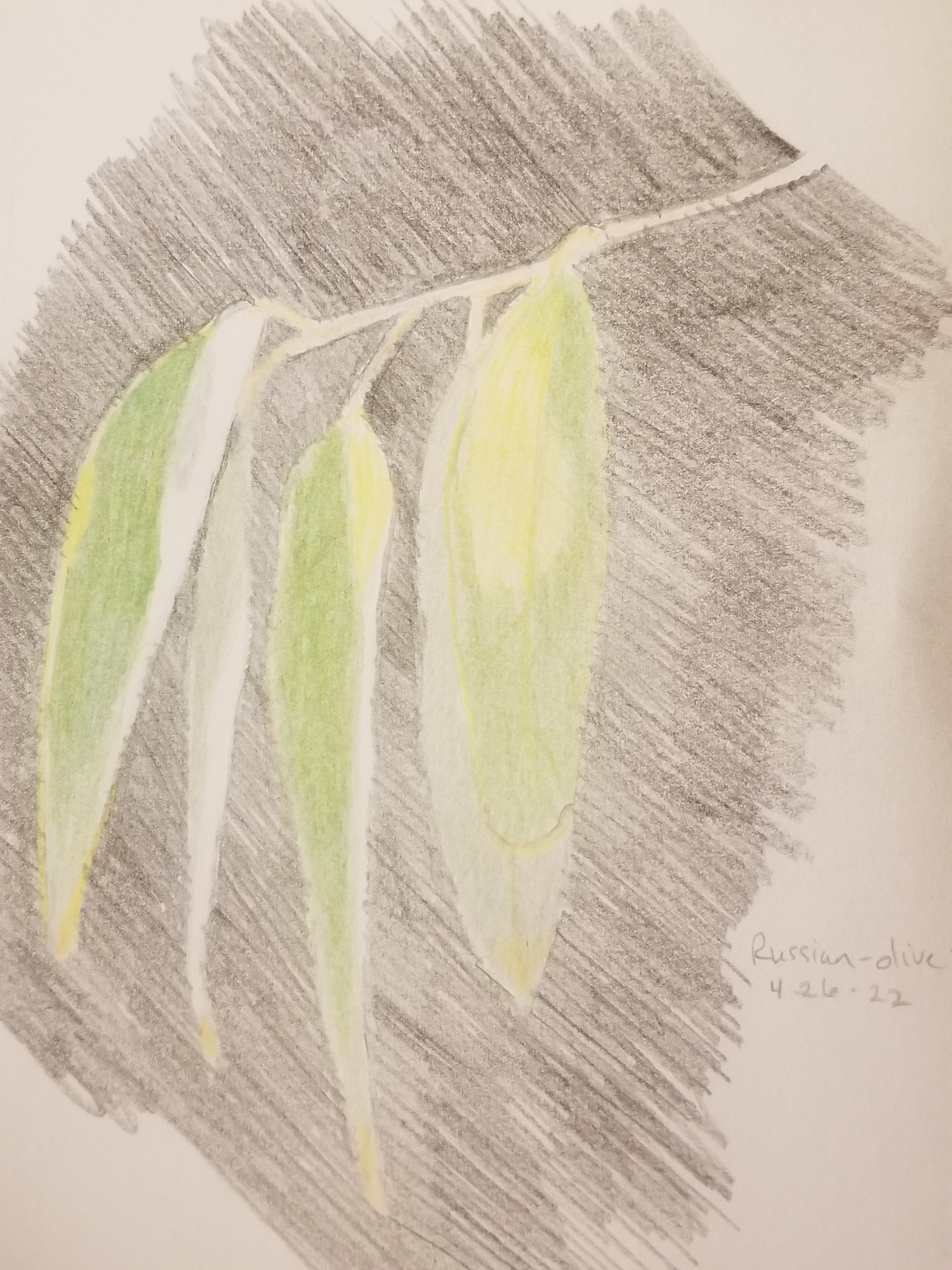
Also, I somehow accidentally included a very old photo that must have been in my WordPress media library. It’s an internal window in the funky apartment we rented in Mexico in 2010. I figured if it wanted to be in this post, it could be.


Ah, the introduced tree Californians love to hate. It grows fast, but aside from that, the plan of introducing it as a lumber tree can’t be said to have been very carefully thought out. It sheds long strips of bark that make terrific tinder in our fire-prone region, the very speed with which it grows can make it something of a weed, and according to some noses (for example, my sweetie’s), it fills the surrounding air with the aroma of cat pee. But eucalyptus has its lovely qualities too, one of which is the graceful drape of the adult leaves.

 Sermons in Stones
Recent comments