You are currently browsing the category archive for the ‘a leaf a day’ category.
Fun with fall colors
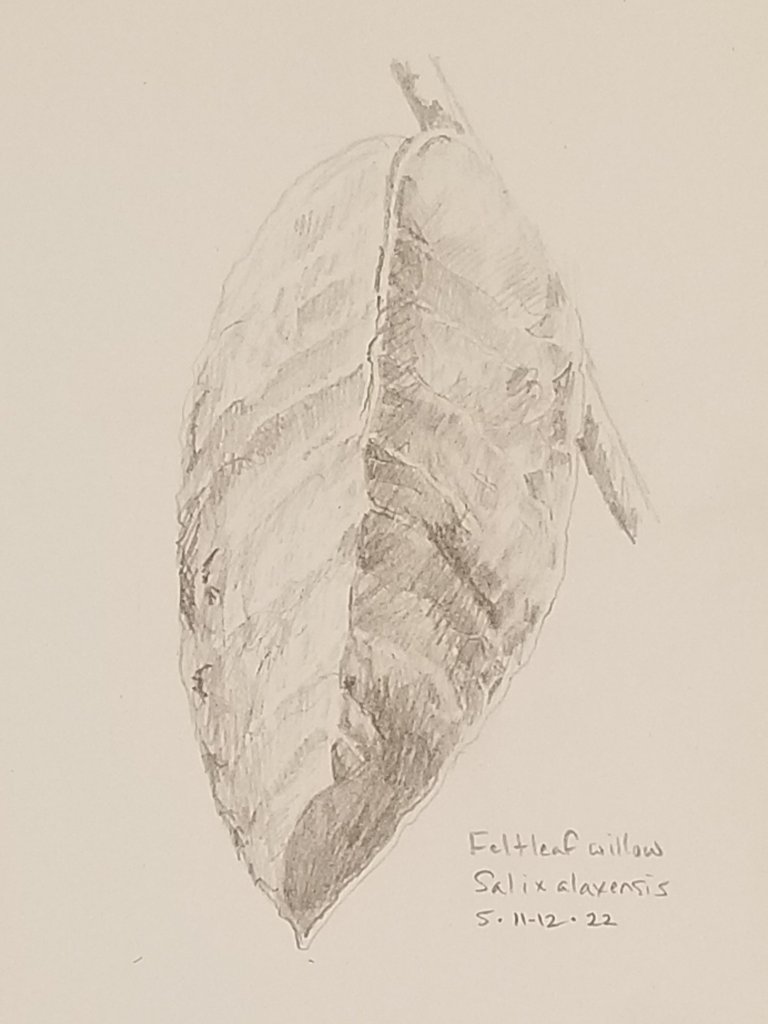
I’ve spent a lot of time on today’s leaf, and want to continue tomorrow before considering it done. So I’ll update then with the actual drawing.

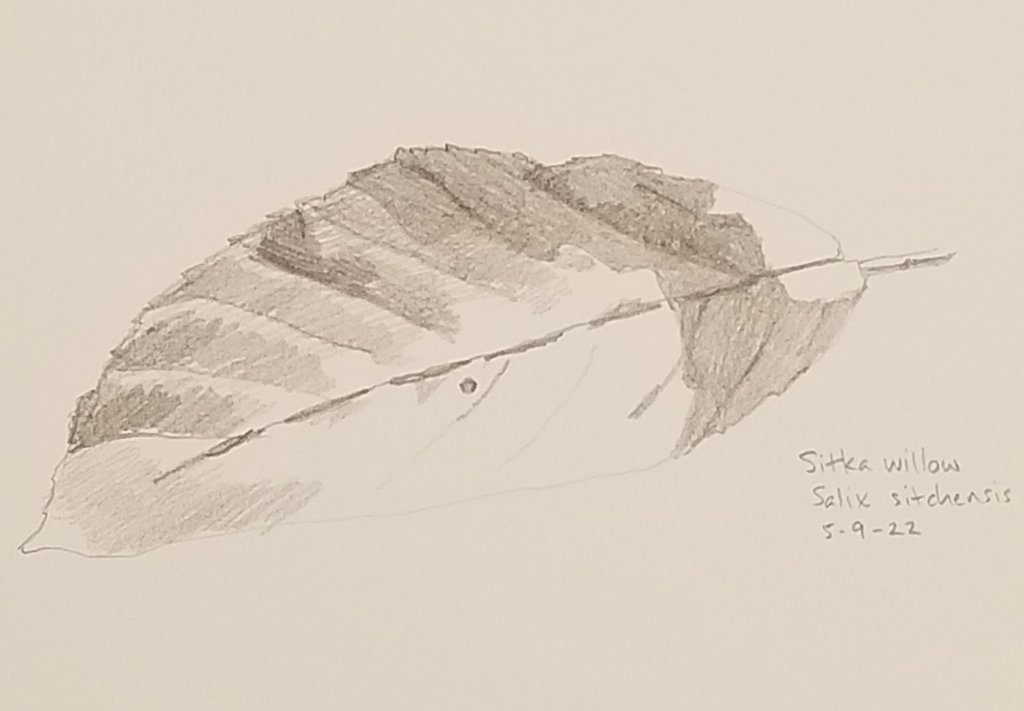
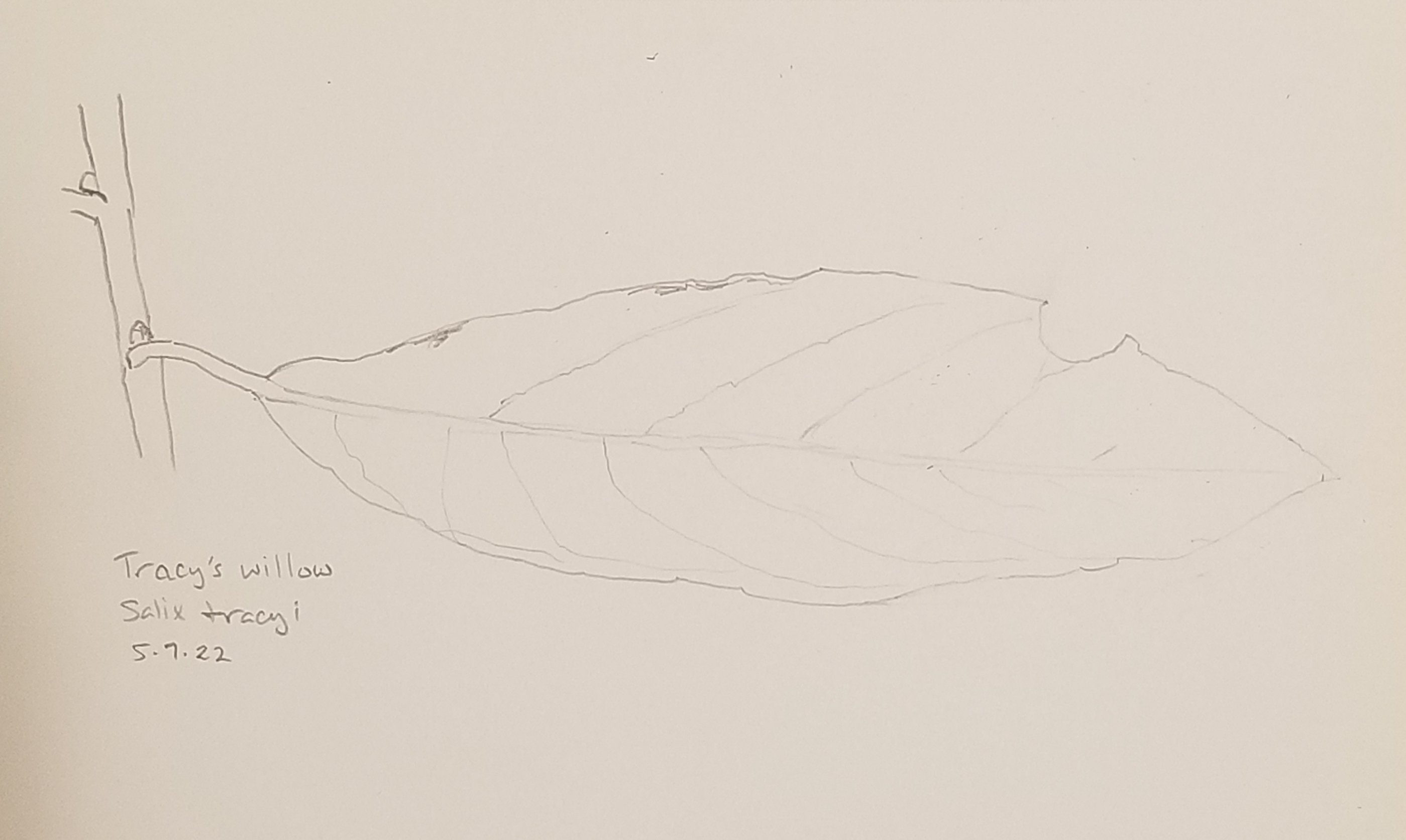
This drawing is notable for being the only one in for months of this practice for which I used the photo in the field guide as my model. When I got on this plan, I imagined I would use the field guide most of the time, but once I got it I realized the photos are too small most of the time. I can’t draw a lot of detail because I can’t see a lot of detail. With this tree, though, I just loved the silhouette. That was enough.
The common name of Salix sitchensis made me wonder whether there are really willows as far north as Alaska. Yes, they are. The native territory of S. sitchensis runs along the coast from central California to Kodiak Island, AK.
When I’m tired already when I sit down to drawing, I have been trying to take it as a nudge to draw fast. Being looser and less fussy, less focused on tiny details, is a frequent challenge for me. I’m liking the way it is working lately.


I was just on retreat at Villa Maria del Mar for two days. It is in Santa Cruz, on a cliff right on the beach. When I texted my daughter to say that I had gone tidepooling that morning before breakfast, she asked if I had drawn any critters from the tidepools for her. I hadn’t brought either my sketchbook or my camera down to the pools, but this morning I took a photo of some of the seaweed that I love on this beach, and decided to draw it as my “leaf” today.

I looked up seaweed to see if it actually has leaves, and no, the part that looks rather like a leaf is called the blade, or lamina, and its function isn’t photosynthesis, as in vascular plants. Its functions make it just as important to the seaweed as leaves are to a tree on land, though: buoyancy and reproduction.
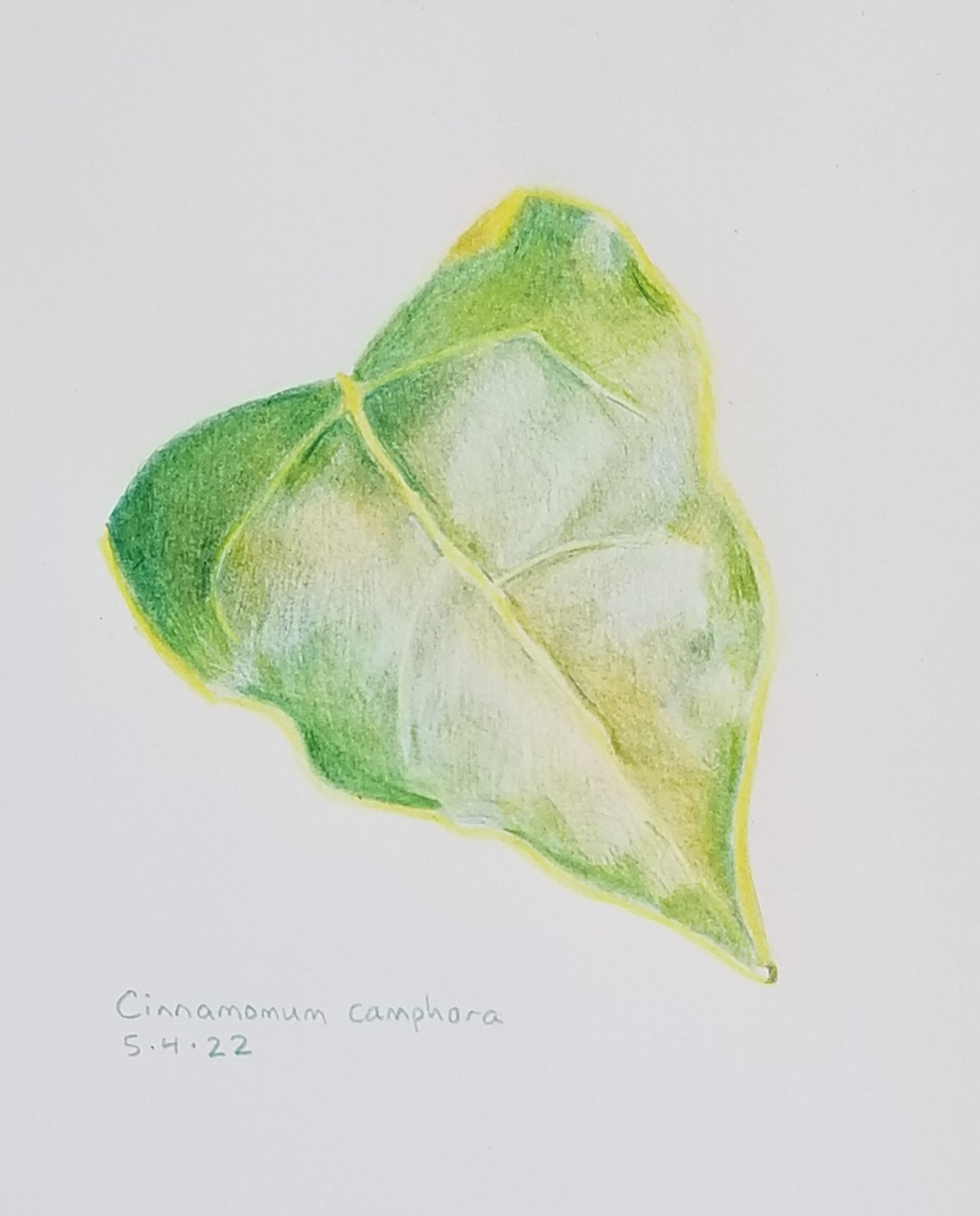
The camphor tree was introduced to California (and numerous other states) from East Asia, where some of us have encountered it in the movie My Neighbor Totoro by Hayao Miyazaki. Satsuki and Mei’s father says he decided to buy the house when he saw the enormous camphor tree close by, and when Mei investigates the tree more closely, it leads to the clearing where she meets Totoro. Miyazaki’s portrayal of the tree, like the family’s bows to it, is reverential.
Camphor trees can grow to be hundreds of years old and are massive, and when one 700-year-old individual was to be cut down to make room to expand a train station near Osaka, people protested and the expansion was redesigned to be built around it. One would hope humans would treat all 700-year-old or even 200-year-old trees this way, but alas, it is newsworthy when we do.
As you can tell by the genus name, C. camphora is closely related to the trees from which cinnamon is harvested. It is a different species, but both have intensely aromatic oils. The next time I smell camphor, I’m going to consider whether it has any similarity to cinnamon.

 Sermons in Stones
Recent comments