You are currently browsing the monthly archive for May 2022.
If fortune favors me, I am about midway along the journey of my ministry, and this awareness, plus a growing preoccupation with my own mortality and the dangers facing our planet, has caused me to reflect on what I want to do and be during the second half of my career. I’ve found the answer over the past couple of years: I want to be more bold in making the religious community into a prophetic force for justice.
Aside from ministry itself, art is my main spiritual practice, and re-incorporating art into my life over the past dozen years has made me a more effective minister. I am quite sure that my path to my goal of turbocharging my social and environmental justice work leads through art. So I was delighted to learn that there is a D.Min. program in Theology and the Arts at United Theological Seminary of the Twin Cities, that it is conducted entirely online, and that United is a progressive seminary with a strong focus on social transformation. The school also gives a lot of attention to public theology, which appeals to me and is likely to be part of the mix.
I investigated via a few video calls with admissions staff, a professor, and a current student; leapt into applying; and have just gotten the word: I’ll be starting my doctoral program with United in September! I’m so excited.
Although the dissertation for the Theology and the Arts degree has to be solidly grounded in scholarship, it can be a work of art (or a body of work), and it is expected to be deliberately geared toward honing one’s professional abilities. That’s the purpose of a D.Min.
My ideas for my dissertation will undoubtedly keep shifting over the next few years as I take courses and learn from my cohort and professors. But if I had to choose my topic today, it would be to map out a practical path to using art to “reenchant” Unitarian Universalist congregational life “without supernaturalism” (to quote a title by a theologian who’s been important to me). Our movement is frequently beset by a tension between head-wisdom and heart-wisdom, with body-wisdom taking a distant third place, and I believe that this knot of tension has often kept our worship flat, and our action for transformation timid.
For me personally, making art can untie the knot and let the power flow, so I’m excited to figure out how to channel what I learn through that process (which is essentially solitary, and often private) into congregational ministry. Is it September yet?

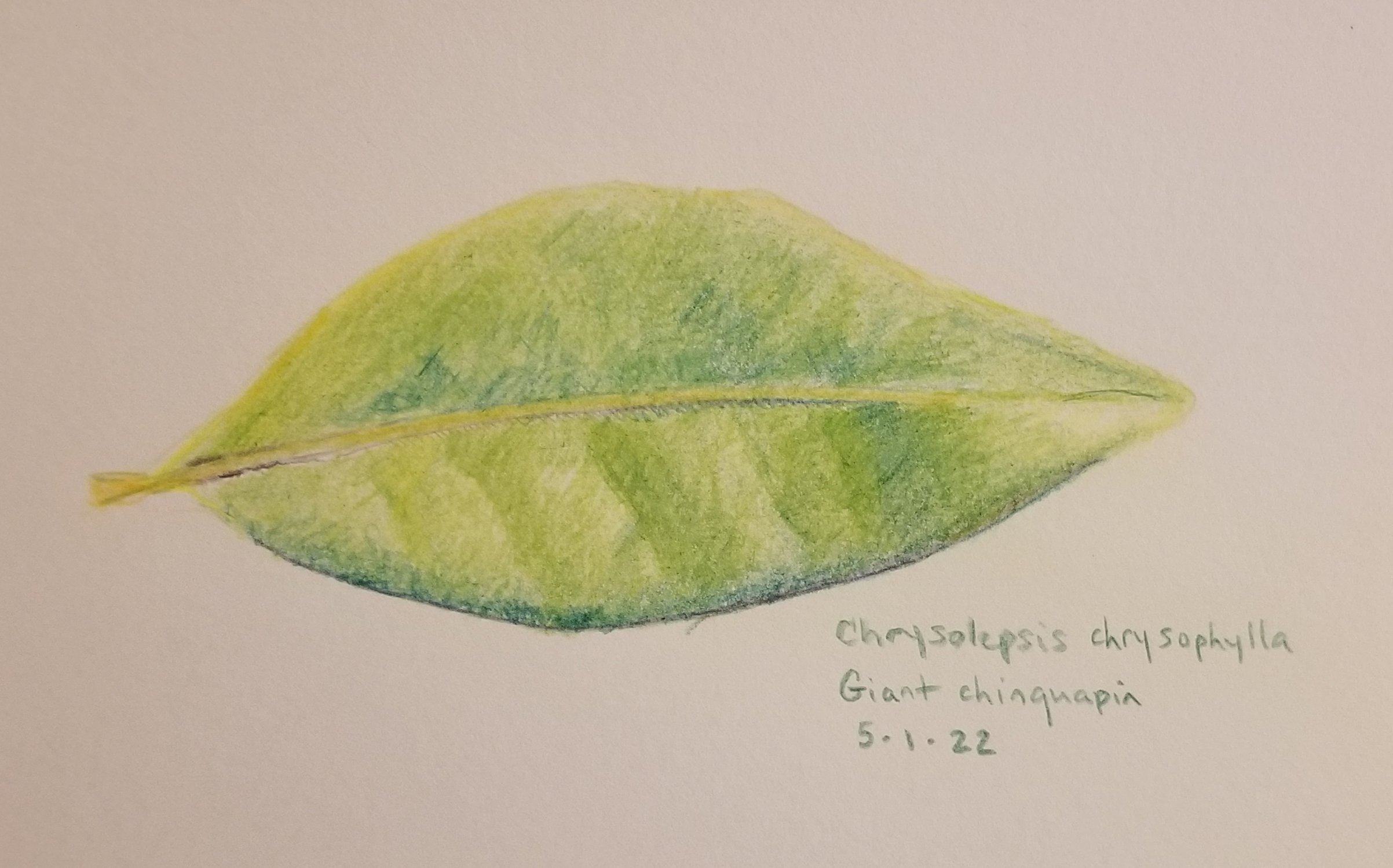
I was just on retreat at Villa Maria del Mar for two days. It is in Santa Cruz, on a cliff right on the beach. When I texted my daughter to say that I had gone tidepooling that morning before breakfast, she asked if I had drawn any critters from the tidepools for her. I hadn’t brought either my sketchbook or my camera down to the pools, but this morning I took a photo of some of the seaweed that I love on this beach, and decided to draw it as my “leaf” today.

I looked up seaweed to see if it actually has leaves, and no, the part that looks rather like a leaf is called the blade, or lamina, and its function isn’t photosynthesis, as in vascular plants. Its functions make it just as important to the seaweed as leaves are to a tree on land, though: buoyancy and reproduction.
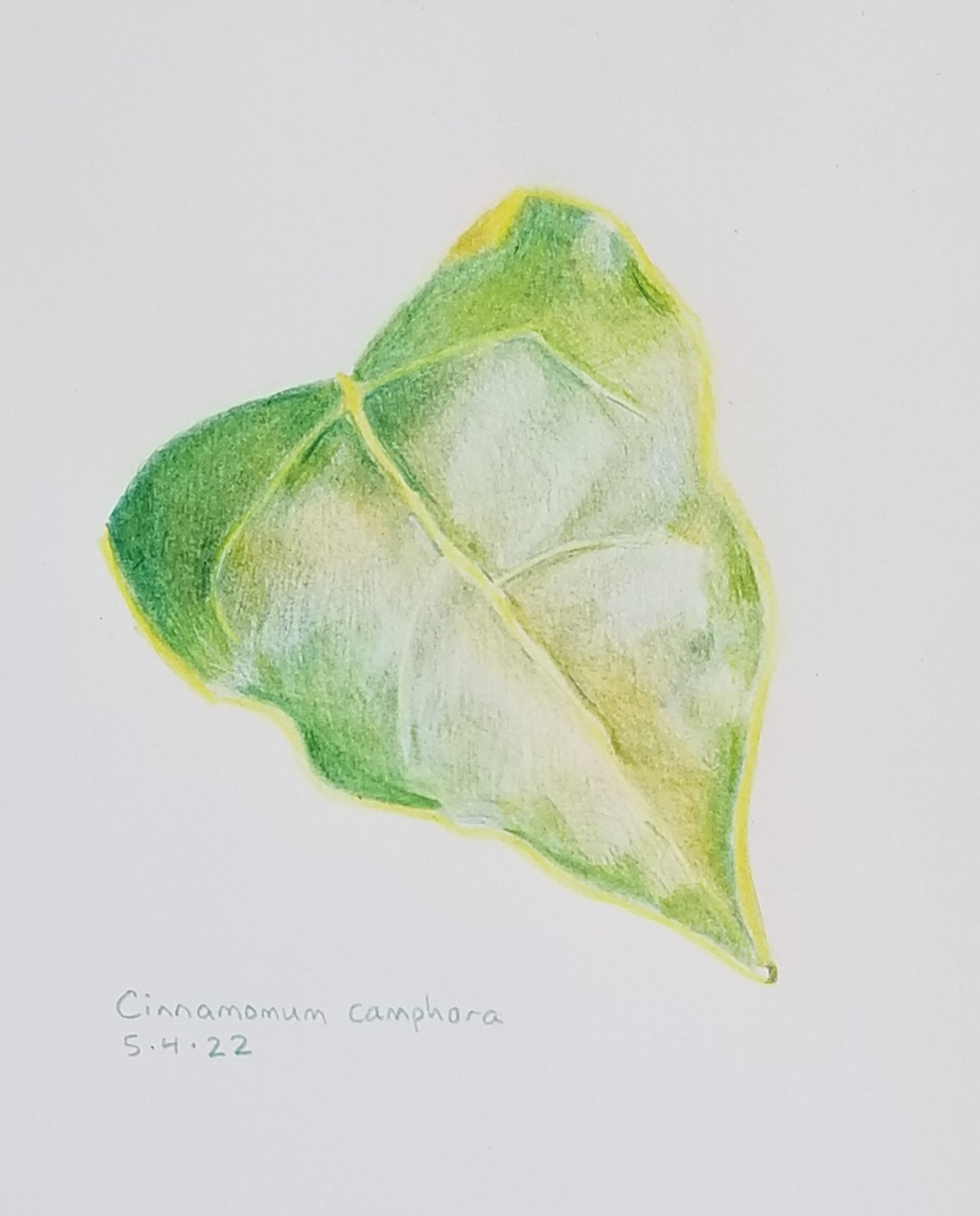
The camphor tree was introduced to California (and numerous other states) from East Asia, where some of us have encountered it in the movie My Neighbor Totoro by Hayao Miyazaki. Satsuki and Mei’s father says he decided to buy the house when he saw the enormous camphor tree close by, and when Mei investigates the tree more closely, it leads to the clearing where she meets Totoro. Miyazaki’s portrayal of the tree, like the family’s bows to it, is reverential.
Camphor trees can grow to be hundreds of years old and are massive, and when one 700-year-old individual was to be cut down to make room to expand a train station near Osaka, people protested and the expansion was redesigned to be built around it. One would hope humans would treat all 700-year-old or even 200-year-old trees this way, but alas, it is newsworthy when we do.
As you can tell by the genus name, C. camphora is closely related to the trees from which cinnamon is harvested. It is a different species, but both have intensely aromatic oils. The next time I smell camphor, I’m going to consider whether it has any similarity to cinnamon.
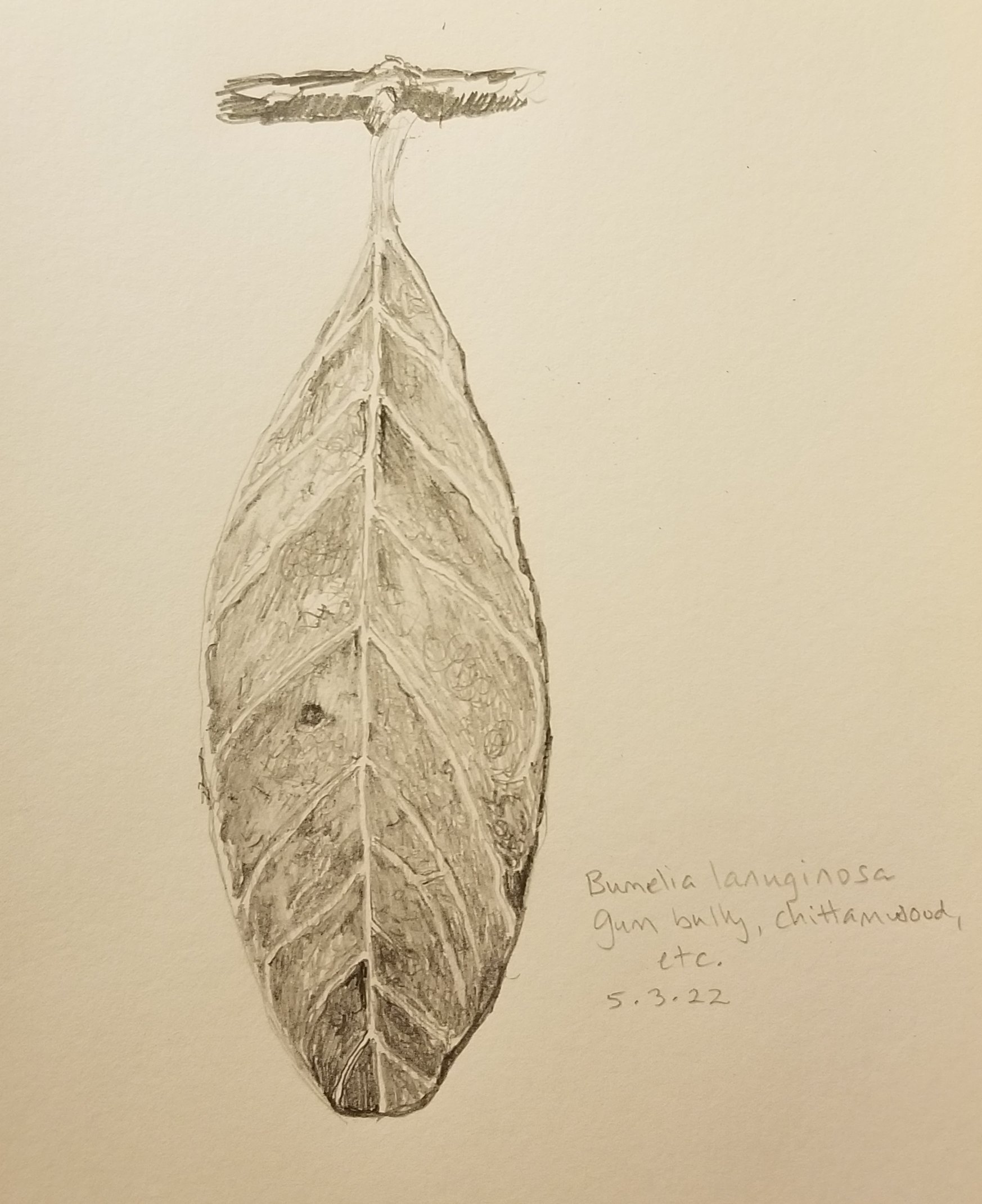

Also known as California bay, Oregon myrtle, or pepperwood. Broadleaved trees tend to be deciduous, but the laurel is evergreen.
“As I grew older, I realized that it was much better to insist on the genuine forms of nature, for simplicity is the greatest adornment of art.” — Albrecht Dürer
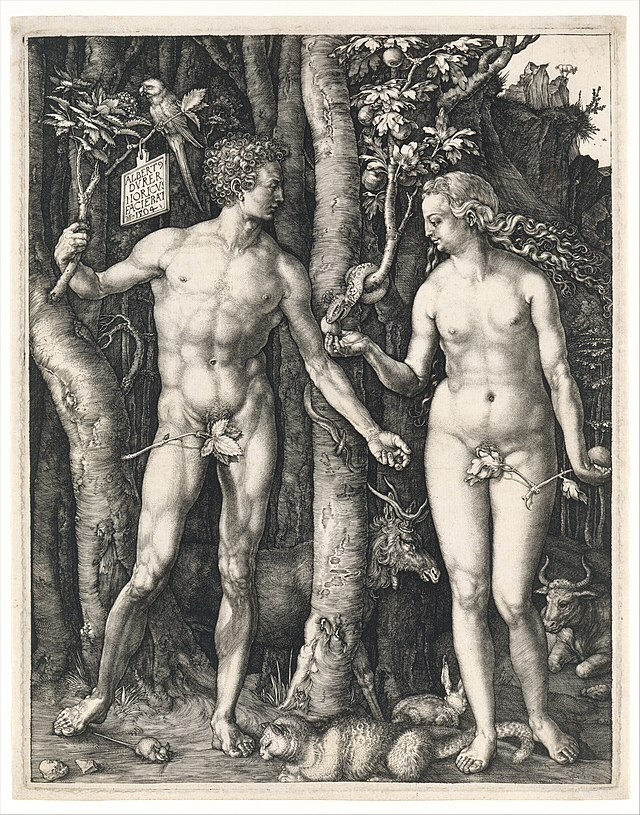
I came upon this quote courtesy of the acrostic puzzles I frequently solve online. I shy away from any absolutes such as “the greatest,” but Dürer’s thought is a good companion for this particular project of drawing a different leaf every day. Immersion in natural beauty is definitely good for my spirit as well as my relationship with other living things. Whether it is simplicity that I’m encountering, I’m not sure. Leaves are stunningly complex, and the complexity is one source of their beauty. But one could also say truly that there is something very simple about them, and there is definitely a simplicity to an art practice that seeks only to reflect what is in nature.
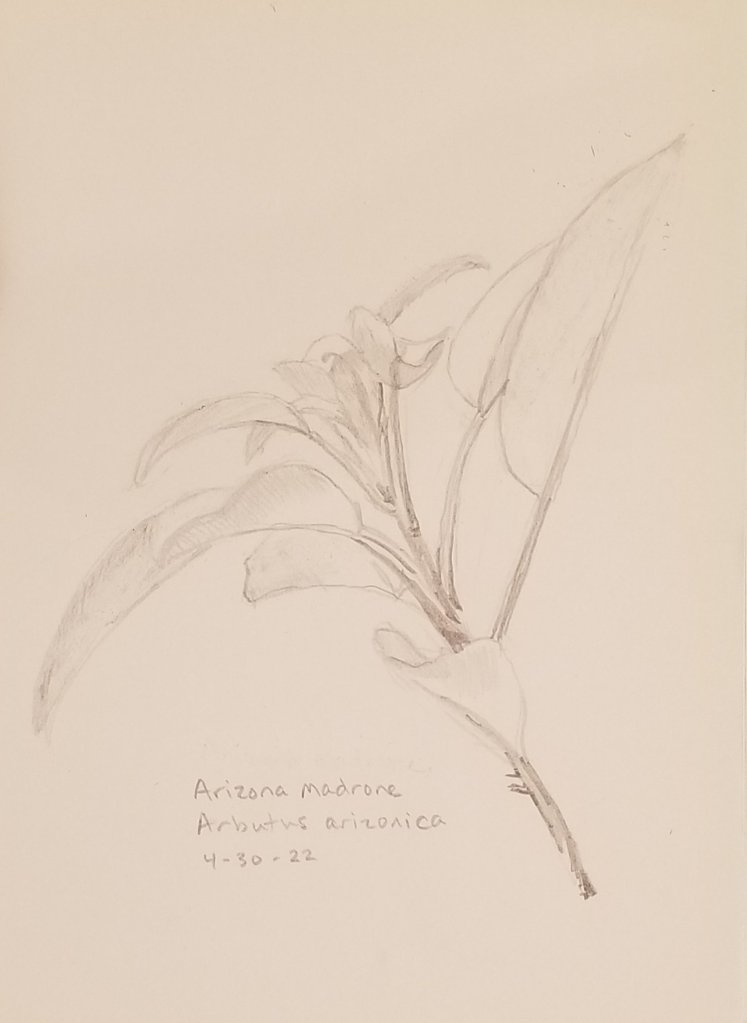
Arizona madrone, to be precise: Arbutus arizonica. The colors, which ranged through magenta, orange, and green, were tempting, but I’ll have many other days for drawing leaves with this coloration.

 Sermons in Stones
Recent comments