
You are currently browsing the monthly archive for February 2022.
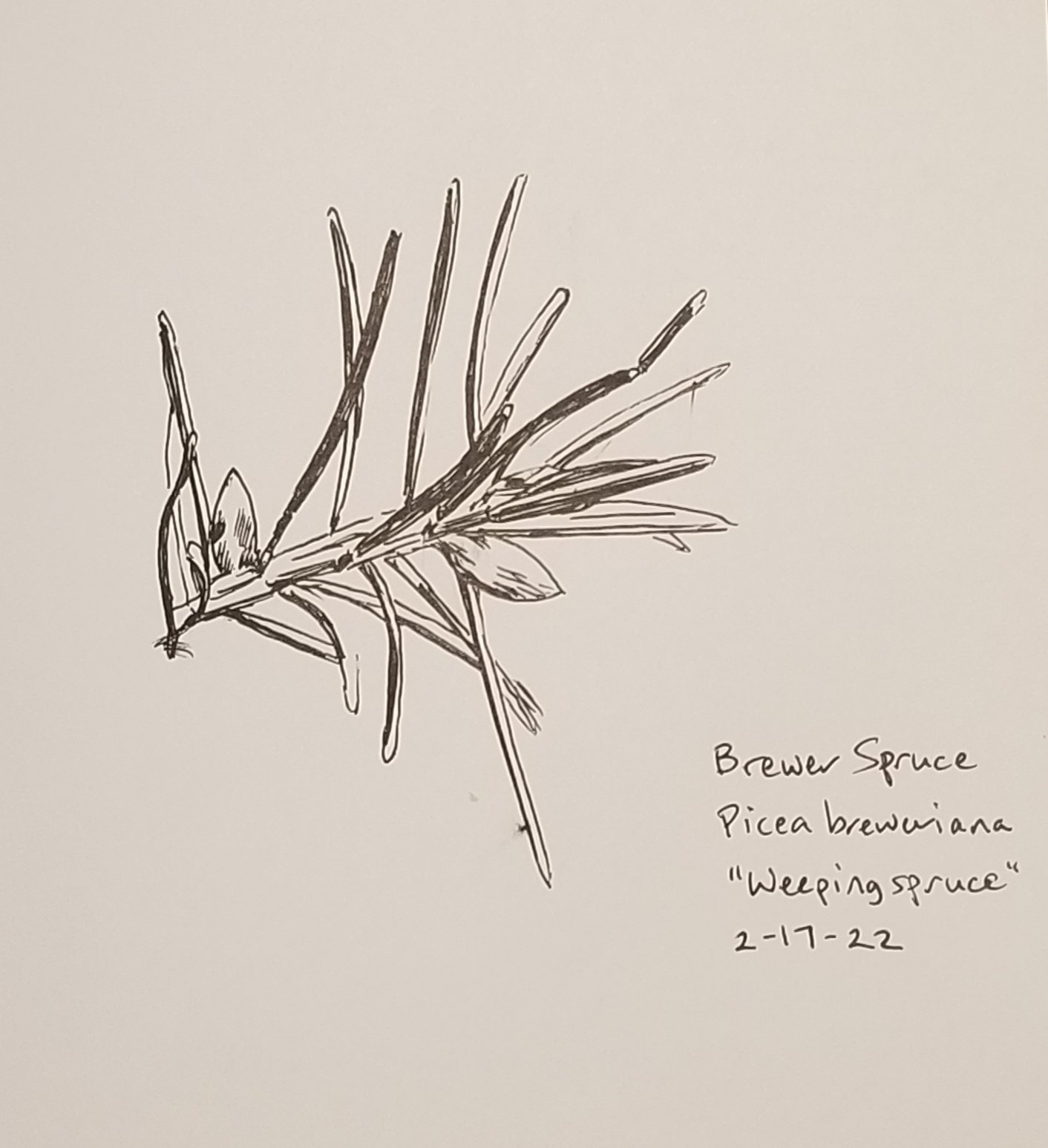
Native but rare. The “weeping spruce” grows near the treeline in the Siskiyou Mountains, and the droop of its branches protects them from breaking under the heavy snows of these high elevations (3300-7500′).
As the name suggests, this species is not native to California or anywhere in the United States. It is commonly cultivated here, but doesn’t live nearly as long as it does in Europe, where it can live to be 300 years old. These trees thrive at higher altitudes, and one variety that grows in the Alps was used by Stradivarius.
Also, it was really fun to draw. I didn’t sit down to it until after 9:30, and I was dragging. Then I didn’t want to stop. But that is so often the way.

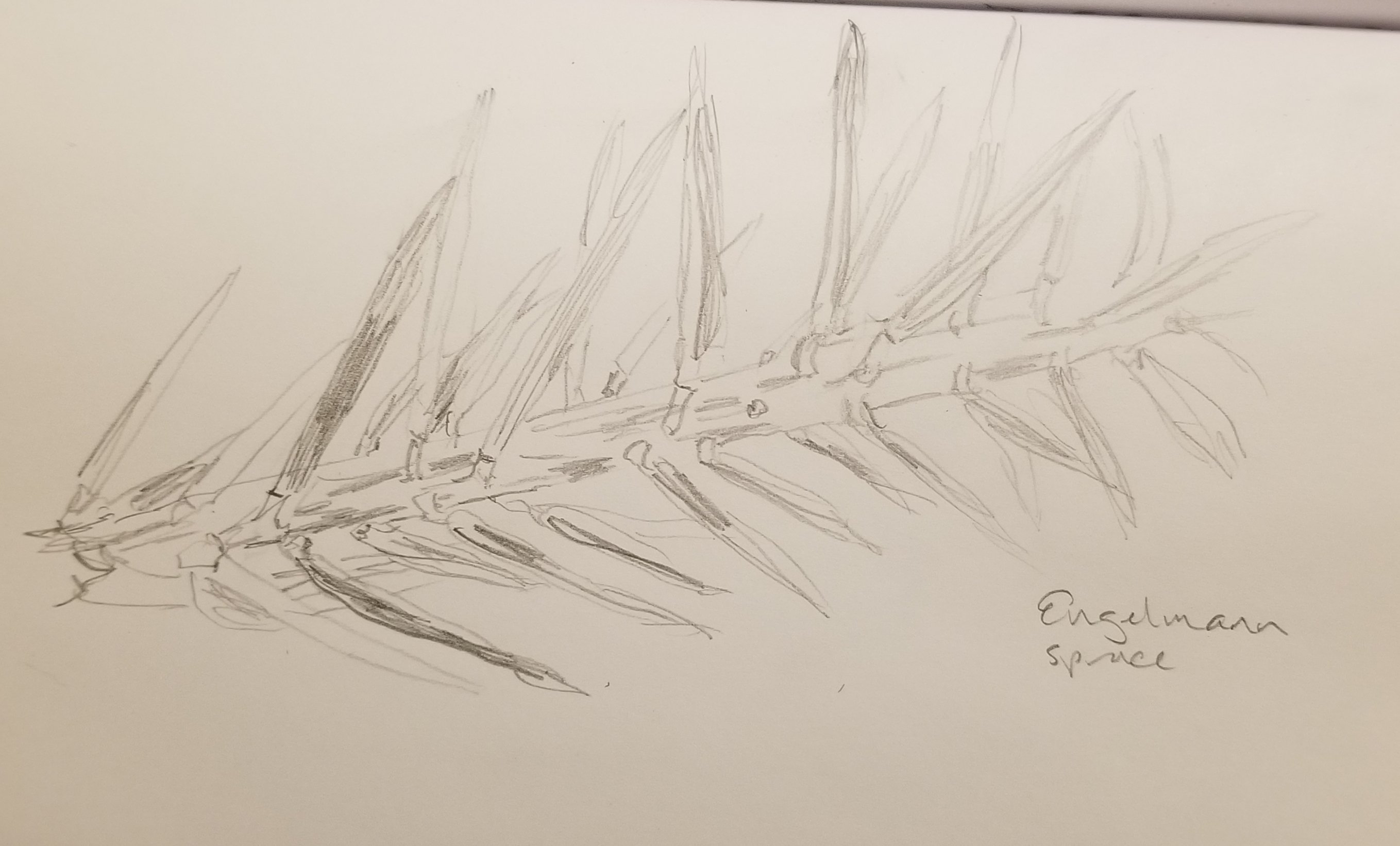
Trying to draw fast but not messily. One out of two . . .
[Carpenter Shih said of the enormous oak in the village of Crooked Shaft]: “It’s a worthless tree! Make boats out of it and they’d sink; make coffins and they’d rot in no time; make vessels and they’d break at once. Use it for doors and it would sweat sap like pine; use it for posts and the worms would eat them up. It’s not a timber tree—there’s nothing it can be used for. That’s how it got to be that old!” — Chuang Tzu (in Burton Watson translation, Chuang Tzu: Basic Writings)
“Black Spruce is one of the most widely distributed conifers in North America. Uses are similar to those of White Spruce; however, the small size limits lumber production.” –The Audobon Society Field Guide to North American Trees, Western Region

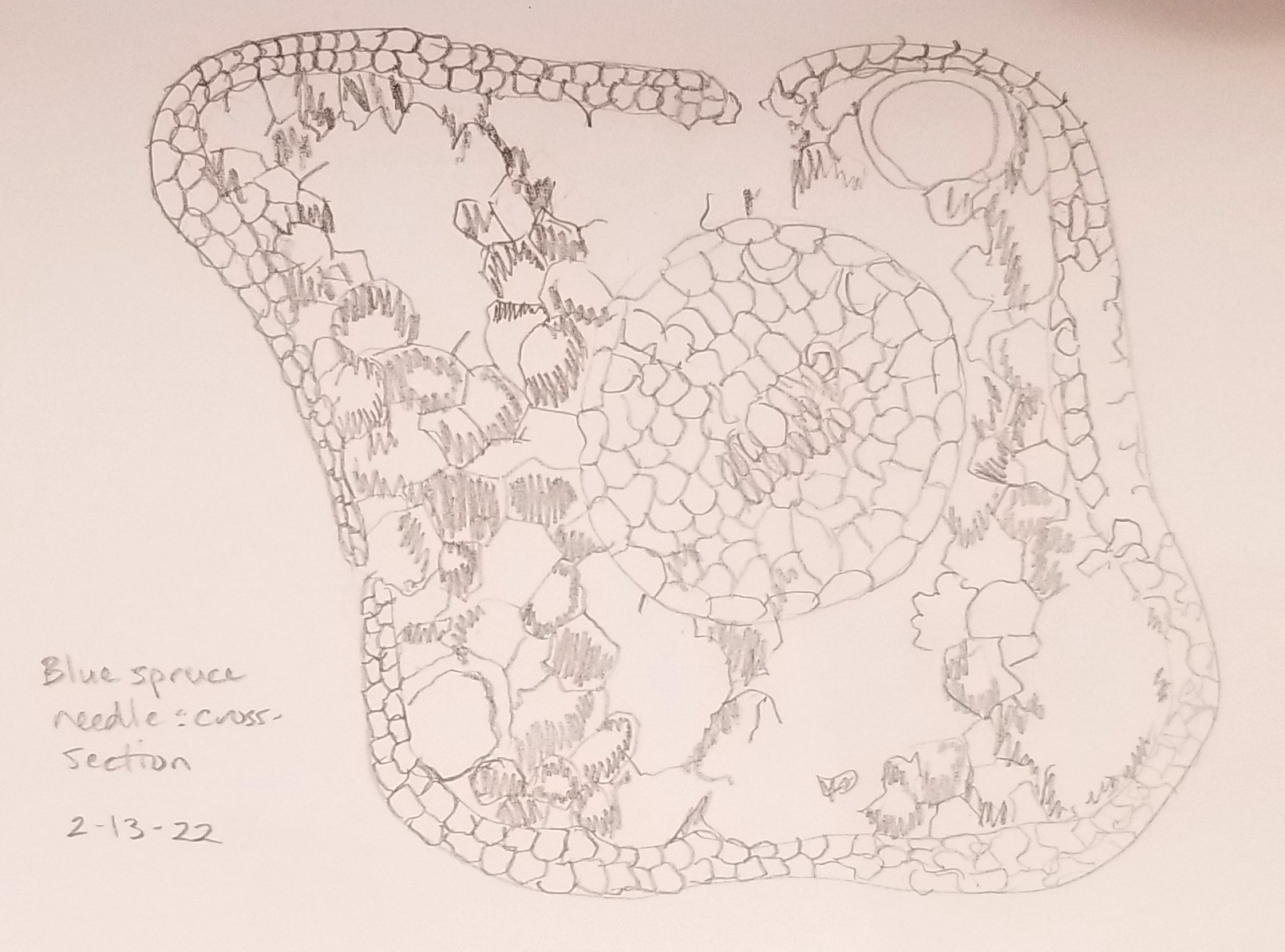
Another greatly magnified cross-section caught my eye, so I promised myself I would draw it fast and finish it tonight. Skipping over detail and still capturing the feel of a thing can be a tough challenge for me.

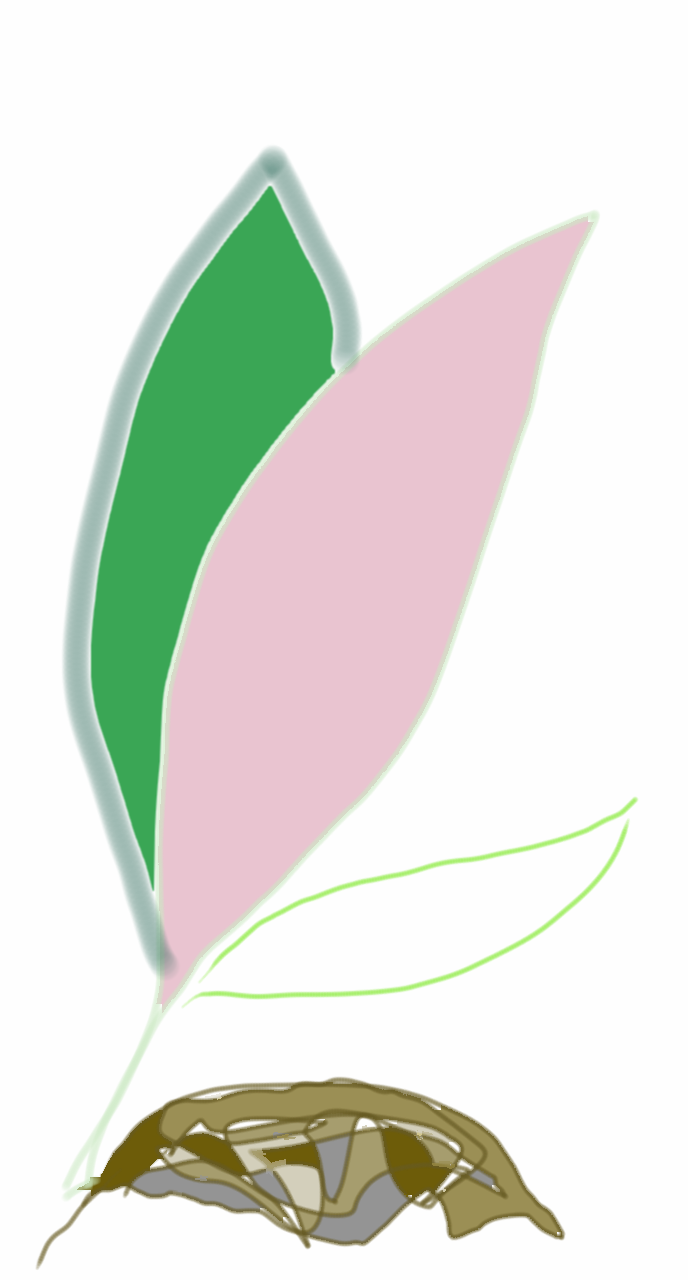
Playing with SketchbookX. One leaf, four lives.
We have moved along to the spruces. Their needles grow as singletons, instead of in bunches of 2-5 the way the needles on most pines grow, and each needle emerges from a small, long-lasting bump on the twig. See how much I’m learning already? I could not have said what distinguishes spruce from pine until this evening.
Sitka, Picea sitchensis, are the tallest spruce of the approximately 35 species in the genus, and one of the tallest trees overall. In old spruces, the branch nearest to the ground might be 40 meters up. Their native range is mostly north of California (Sitka, as in Alaska, is an accurate common name). And their needles are fun to draw. I felt like I imagine one does when making an architectural drawing.

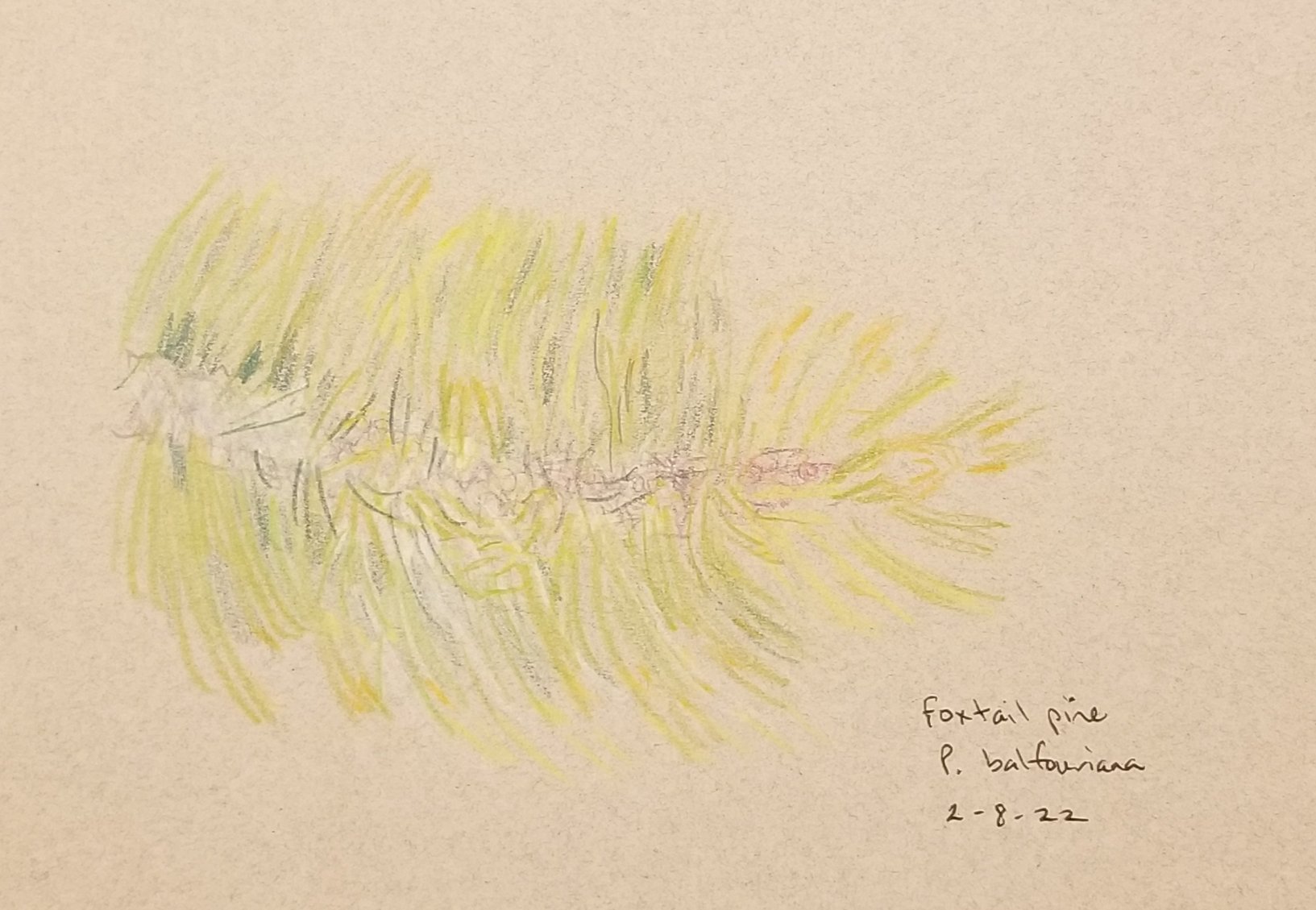
The needles of this tree are only 2-4 cm long. Like its close relative Pinus balfouriana, from yesterday, they grow in a “foxtail” of closely bunched needles.
“The oldest known dated living trees are Bristlecone Pines more than 4600 years old . . . . Although these trees are classed among the oldest known living things, some shrubs and trees that spread in colonies or clumps from the same root system may be older.”

Going for something a bit more impressionistic. Didn’t capture the feel of rippling waves that the original gave me, but I try, try again.

 Sermons in Stones
Recent comments