
You are currently browsing the category archive for the ‘Mexico’ category.
(#6 of 20 things I’ll miss about San Miguel)
In mid-June, San Miguel celebrates El Día de los Locos. I haven’t been able to sort out exactly how it originated, just that it is rooted in two religious celebrations and has turned into something like Carnaval. So many people participate in the parade that I was surprised that any remained available to be an audience–it probably helps that people come into town from all over the area just to watch. We walked half a mile along the route before finding a tiny spot to squeeze into.
The traditional costume, apparently, is men in drag, but there is a tremendous variety beyond that. This year’s official theme was the bicentennial of independence and the centennial of the Revolution; the unofficial theme seemed to be the World Cup; Mexico’s first game, vs. South Africa, was a couple of days off.
This man combined drag with support for Mexico’s team. His old-woman-with-the-generous-posterior costume seemed typical, though we saw some very pretty young men as very pretty young women, too.
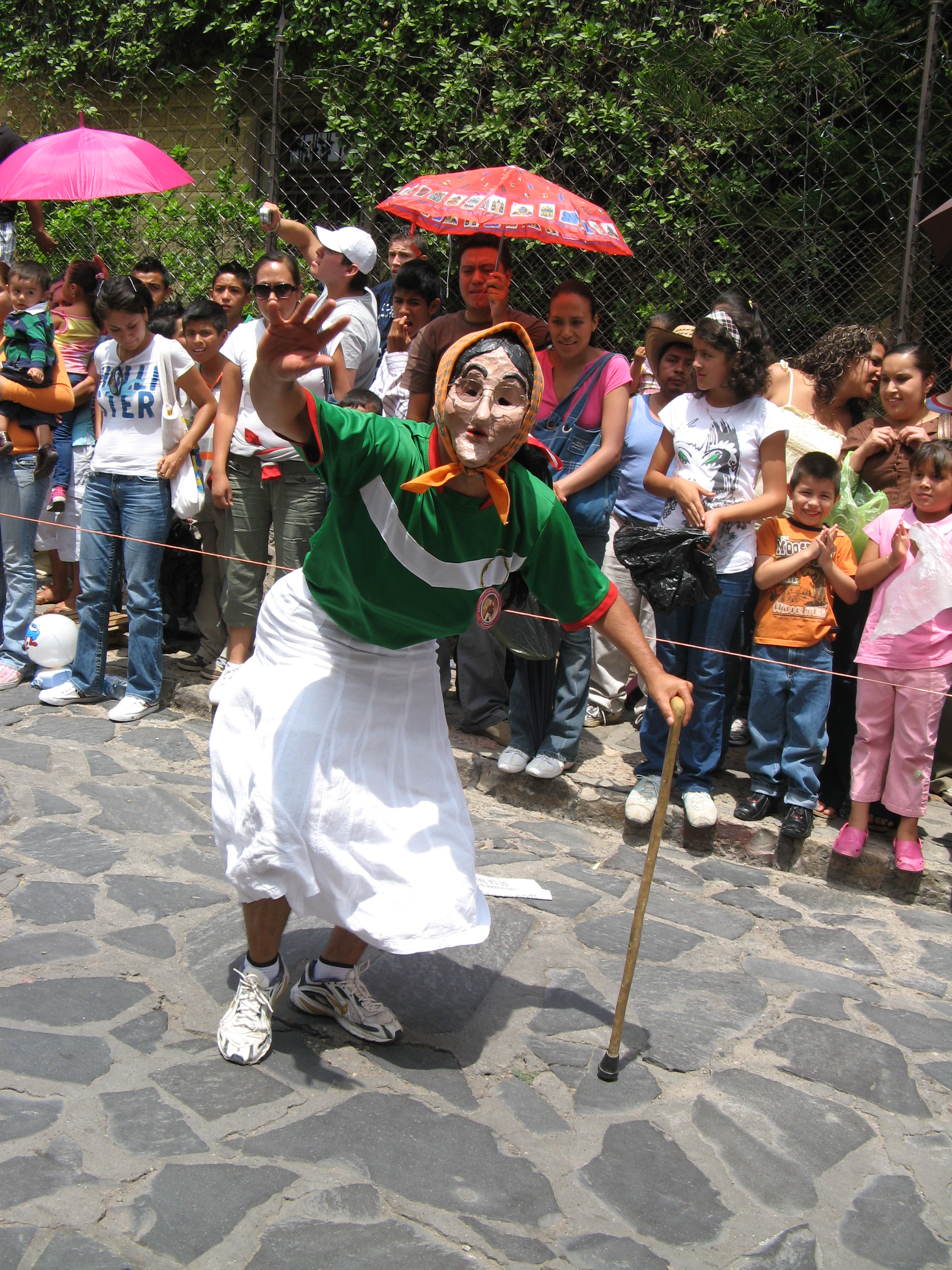
Now this would intimidate the South African team:

Joy took, I am not exaggerating, almost 300 photos (almost all of these are hers). Here’s a tiny sample.

A couple of scary monsters on their way to the parade starting point.

Catrina, perennially popular
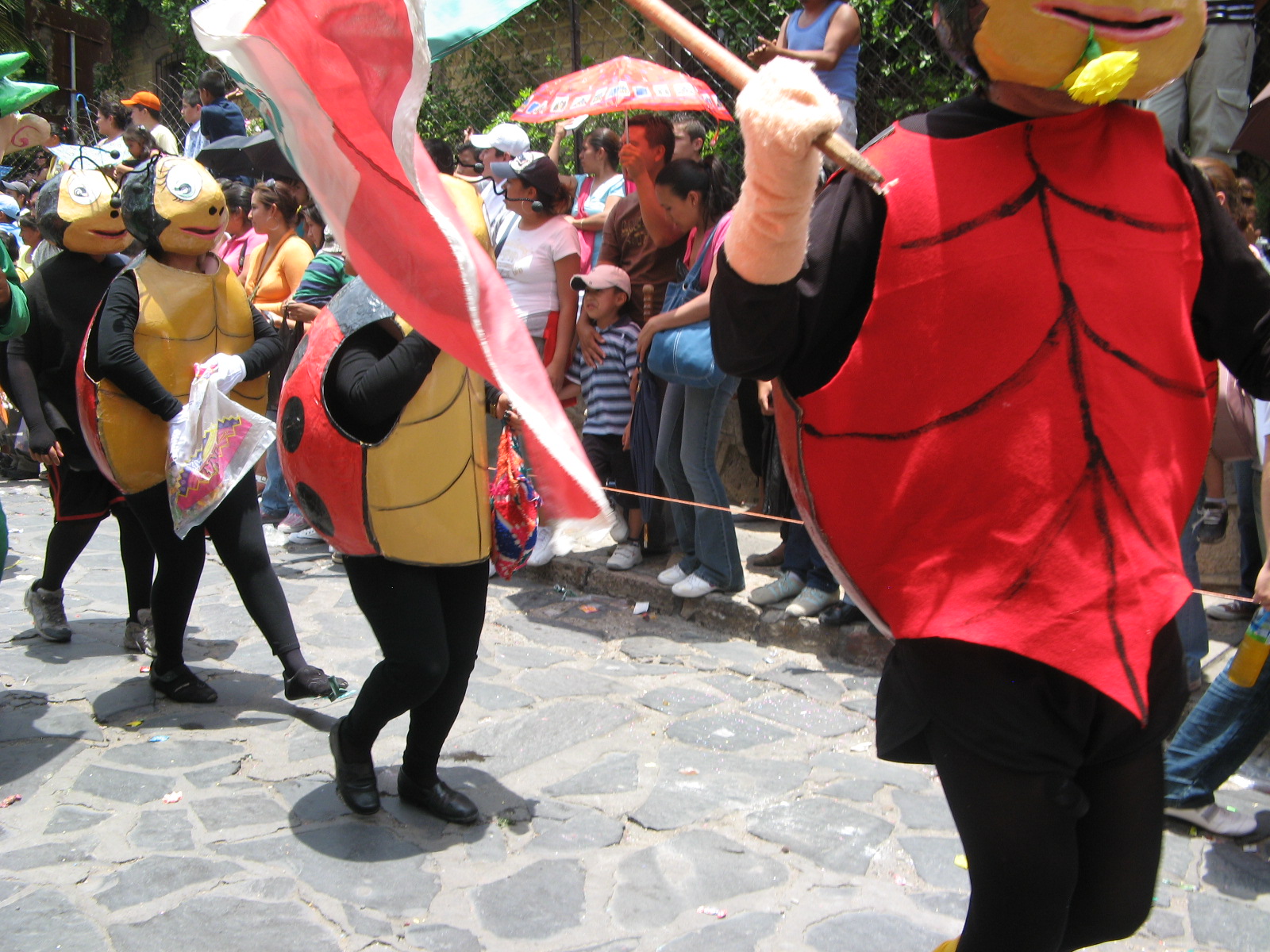
The contingent from Via Organica, the organic market, dressed as beneficial bugs.

I liked the decorations on this truck.


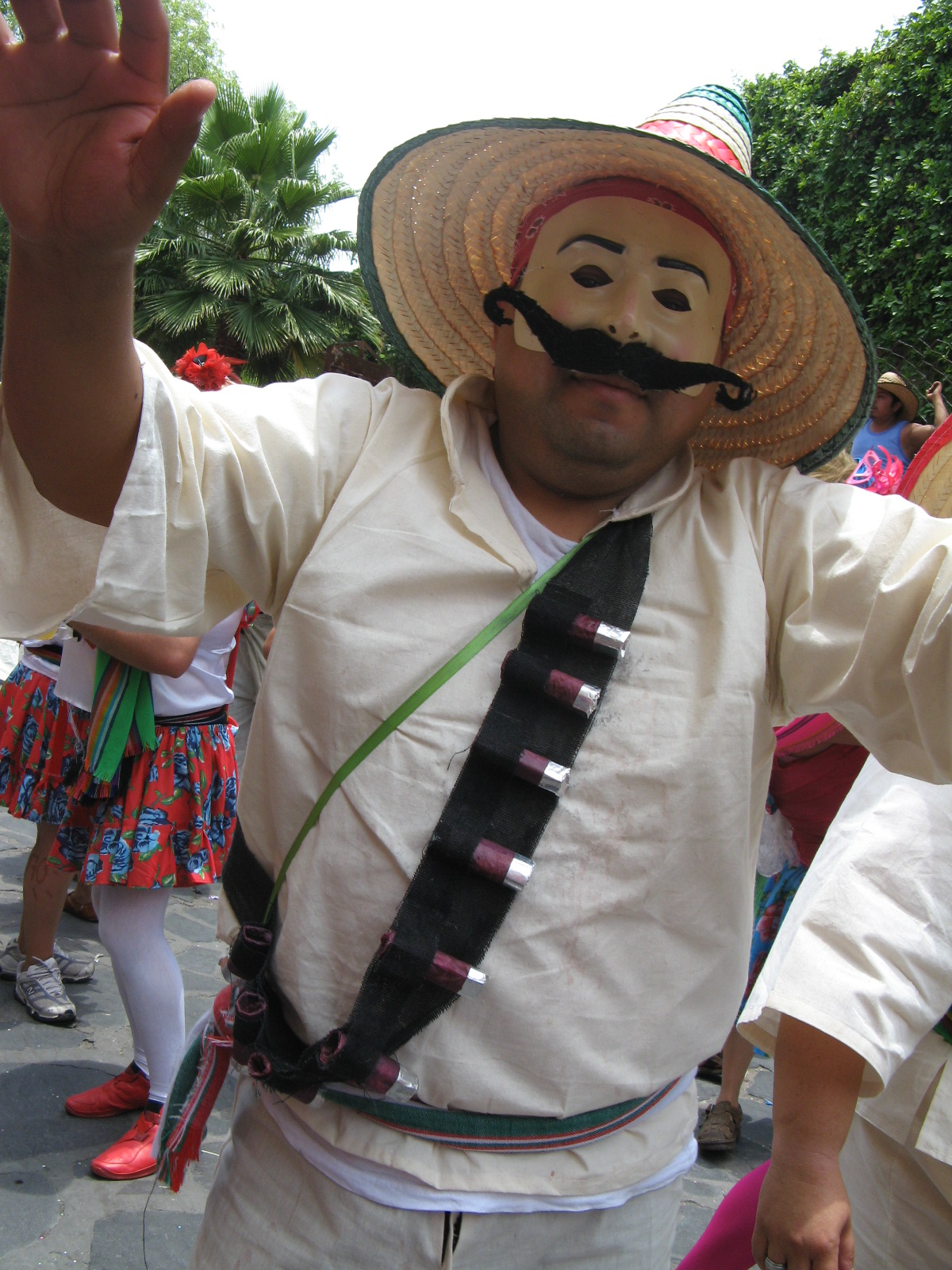
Oh, right, the theme! There were a lot of Pancho Villas...
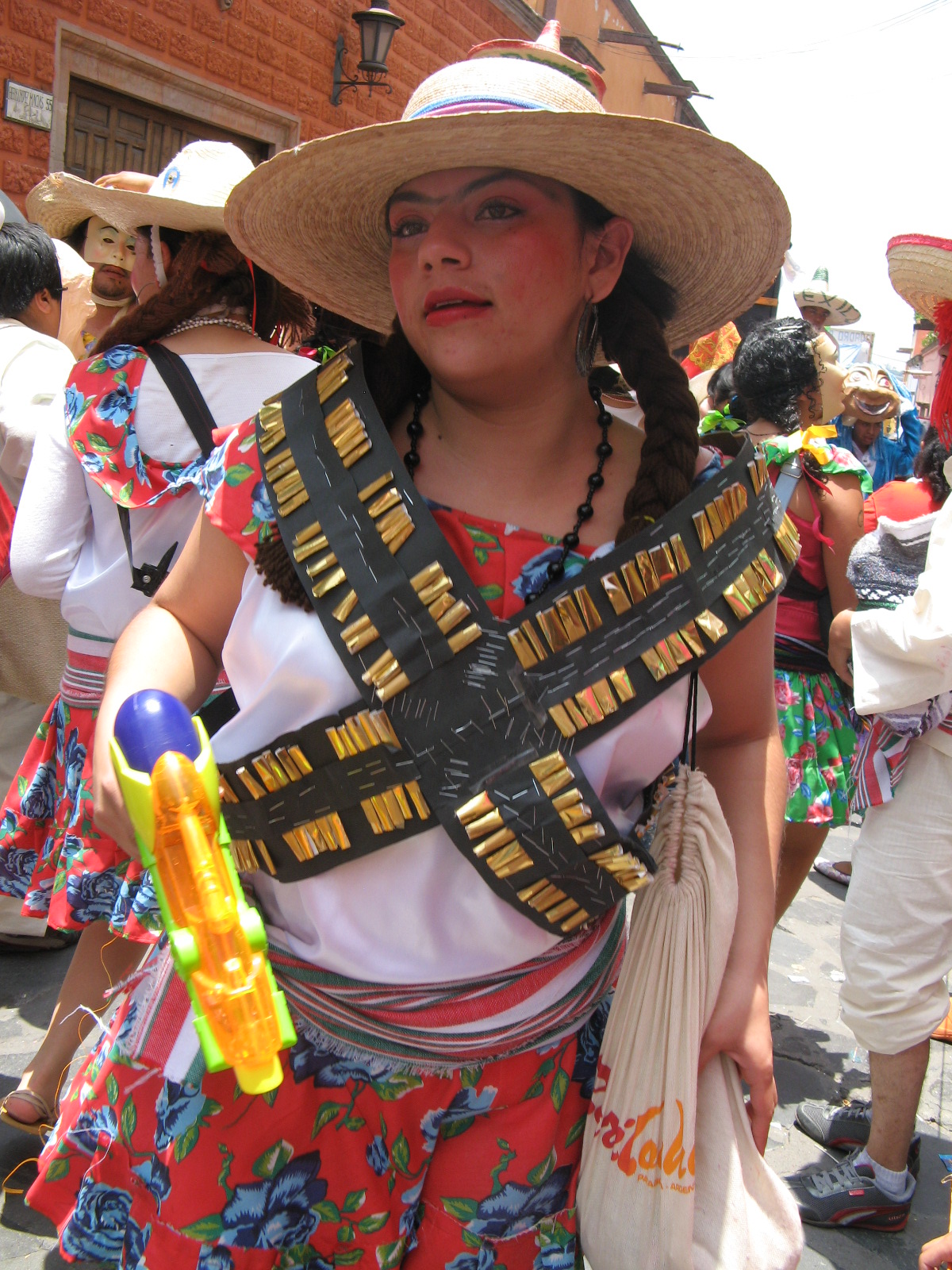
...and other revolutionaries. Was the Revolución won with squirt guns, do you suppose? She also has the bag of candy that many participants carried. They threw what must have amounted to a ton of dulces into the crowd.
The parade went about an hour too long and at about 20 decibels beyond my comfort level; I was in the early stages of a flulike thing that ended up being a very persistent sore throat and earache. (I had terrible tinnitus for a few days, which was probably caused by a combination of my congestion and the unbelievably loud music from the floats and, the previous evening, the dance music at the related church festivities. Judging from San Miguel, Mexicans must all go deaf at an early age, because they don’t seem to believe in setting the volume at anything below earsplitting.) But just the same, it was an event to remember. If we manage to be in San Miguel for another Día de los Locos someday, we’re going to find a friend (or a stranger who wants to make a few pesos) with a rooftop along the parade route, and I’m going to bring earplugs, and I’m sure we’ll take another 300 photos and have a great time.
#5 of 20 things I’ll miss about San Miguel:
I love how entrepreneurial people are in Mexico. An old woman will spread out a sheet on the side of a road and sell jewelry; a house in our neighborhood seems to have a perennial yard sale going. Lots of people who most likely have other jobs will earn a little extra by putting a table in their doorway in the morning to sell bread, pastries, jello, and juice to people on their way to work and school. (Once I saw a guy drinking a raw egg & Tres Coronas sherry. *shudder*) One place right around the corner from us has been a great place to pick up a muffin on our morning walk to the munchkin’s school. A couple of hours later, the table is gone, to reappear the next morning.

photo by Joy Morgenstern
One thing that makes this possible is the marked lack of permit requirements. On balance, the lack of regulation in Mexico is a bad thing. I’m sure lots of children die here every year from riding on their parents’ laps in the front seat of the car (there is a seatbelt law for kids, but clearly the cops don’t enforce it). For that matter, I’m sure lots fall out windows, going by how flimsy our screens are, and in the US a house would not be legally put on the rental market, thank goodness, with the 18-inch gaps in the stairway railings ours here has (we filled them in with rope). I’m sure Mexicans get very badly hurt from situations like the uncovered manhole I walked by (not, fortunately, into) that didn’t even acquire any warning cones until it had been that way for several hours. In California, no one without a commercial, inspected kitchen can produce food for sale, while here, eating a paleta (popsicle) the vendor made with his tap water is a good way to get amoebic dysentery, even if you’re a native and accustomed to the germs. But the silver lining of Mexico’s laxness is pictured above. I’m watching my weight, but I’m going to have to have one more of those chocolate-chocolate-chip muffins before I leave.
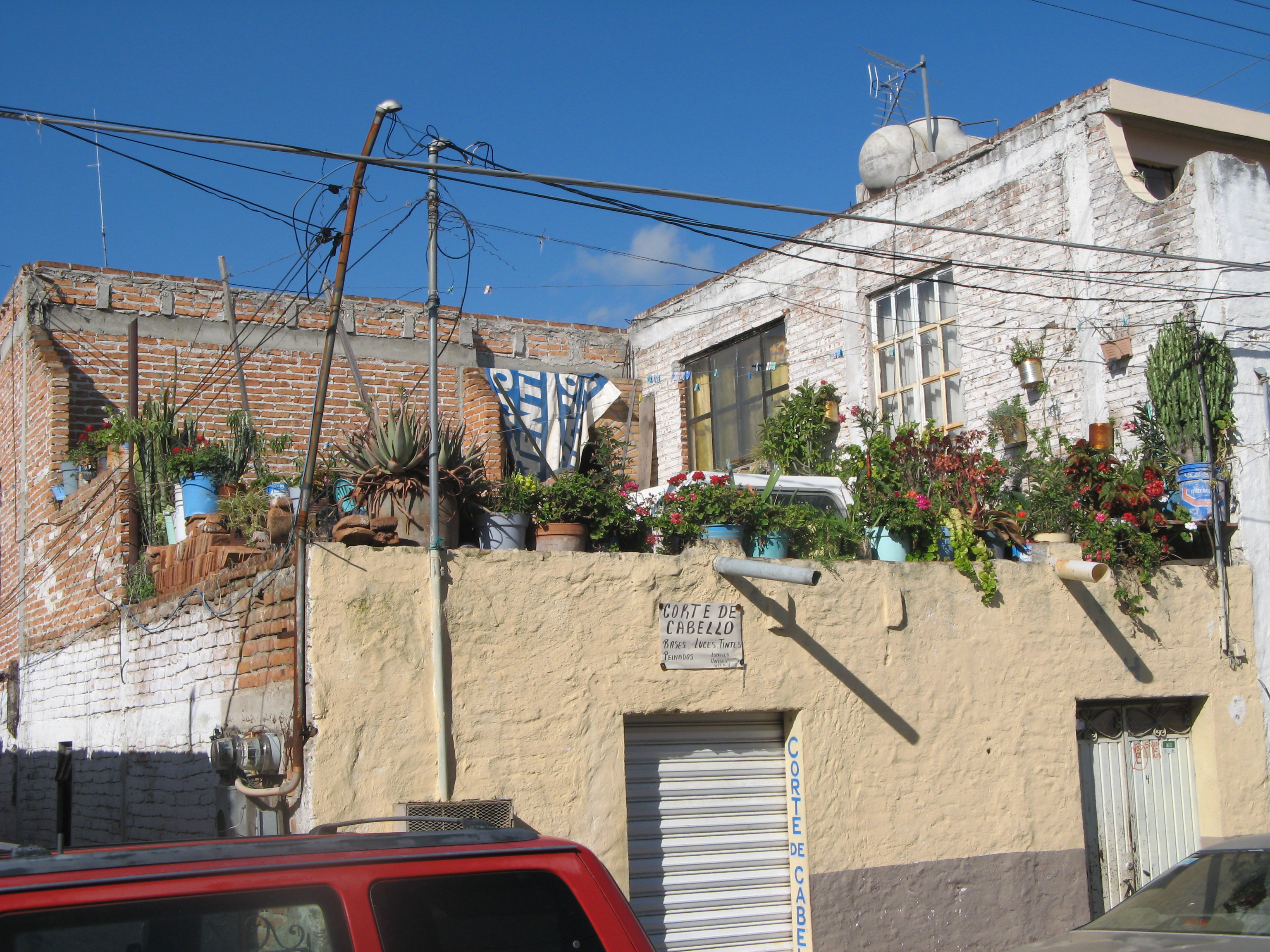
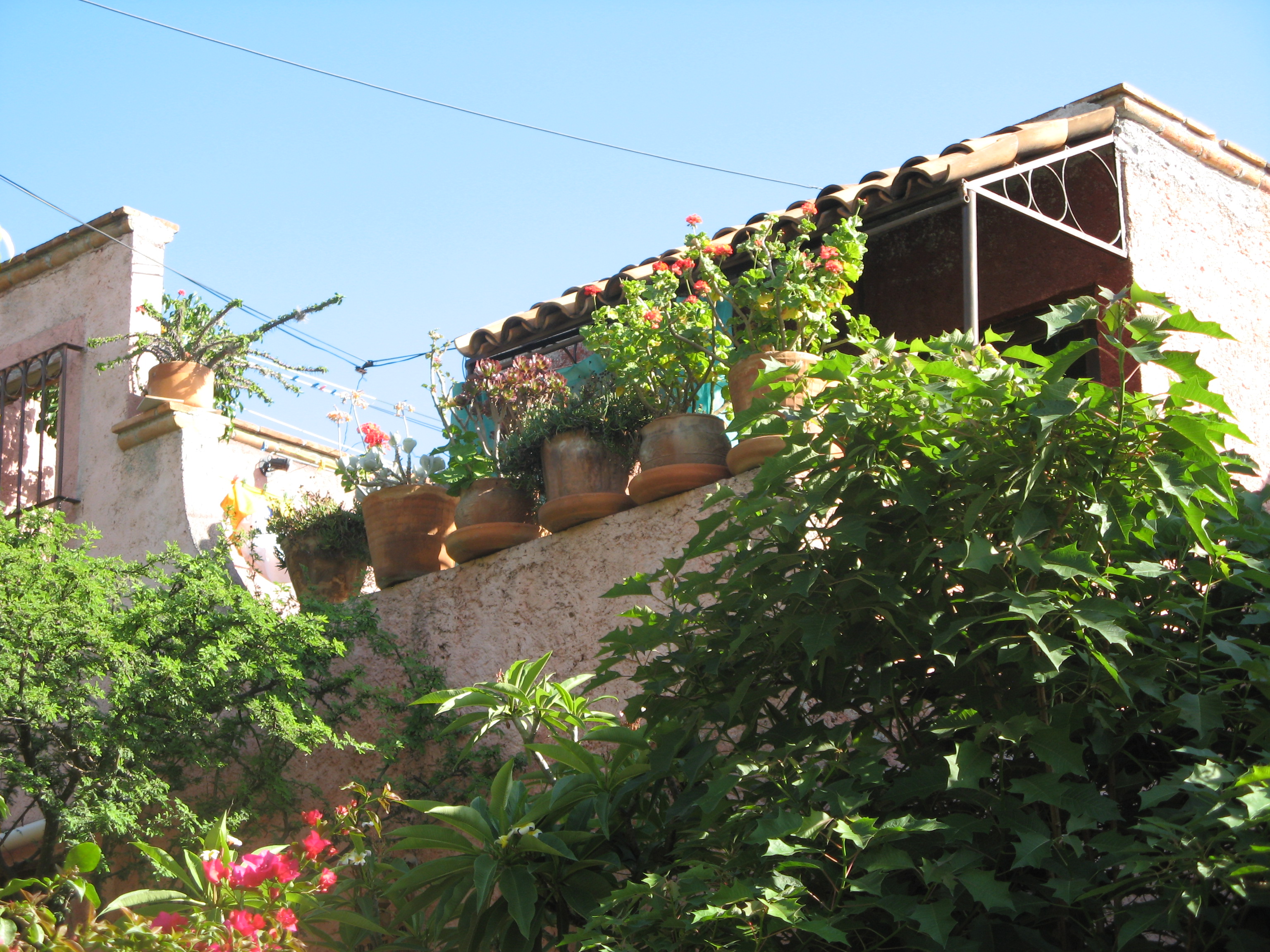
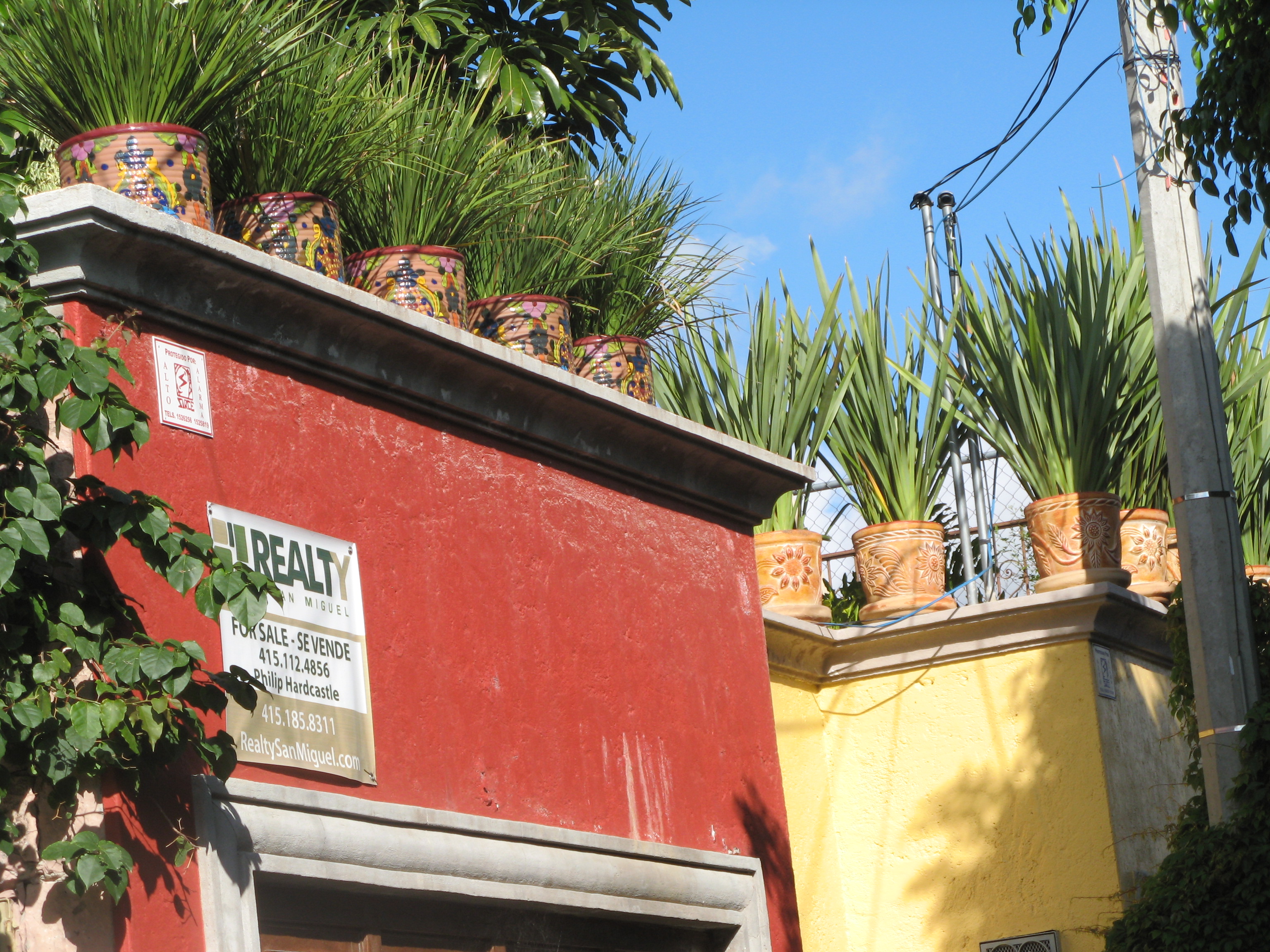
People here make full use of rooftop space. They eat, play, do the laundry, and plant whole gardens up there. Some gardens are quite formal:

This one has cypresses, for crying out loud! And looks lovely, if the building is a little rich for my blood:

One of my favorites is this cram-something-into-every-can, let-it-all-hang-out demonstration of abundance right across the street from our house. The shop downstairs is where Munchkin gets her hair cut, and is owned by the same people who live here–actually, they don´t just live above but more or less in the shop, since whenever we go there the kids are hanging out watching movies in the same room where their mom cuts hair. She needs another trimming of the bangs; when we go, I’ll have to summon up my Spanish and ask about the garden:
(Things I’ll miss about San Miguel, #4 of 20)
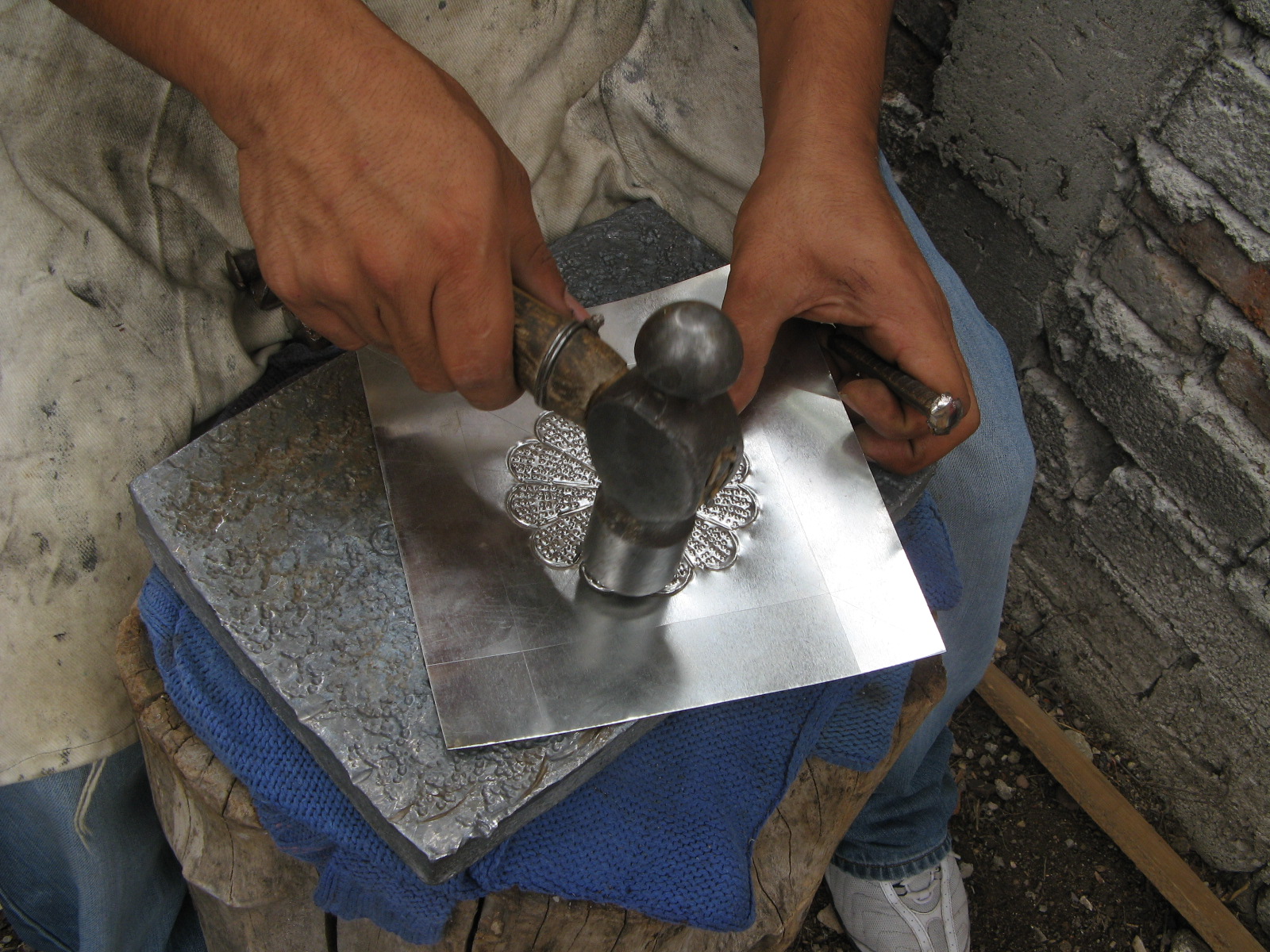
photo by Joy Morgenstern
Our neighborhood, Colonia San Antonio, is pretty working-class, and residences and businesses are all mixed together. (Actually, this mix is typical throughout the city; only some new, built-for-gringos neighborhoods follow the pattern of US suburbs, with tracts of housing uninterrupted by anything as useful as a grocery store.) Add to these factors a relaxed attitude toward time and a welcoming attitude toward children, and you get a walk home from school that is utterly fascinating to a three-year-old who loves to watch people making things.
Her favorite stop is a carpentry/cabinetmaking shop two blocks from school, where the whine of machinery tells us we’re getting close, and then the smell of pine tells us we’re there. Munchkin wants to know everything: What are they making? What is he doing? What are these curly things on the floor? The man who seems to be the chief carpenter always stops his saw when he sees her and squats down to talk to her, and to give her some of the wood shavings.
A few doors up from the wood shop is some kind of metalworking shop; we haven’t seen it open that often, but one time someone was welding inside, throwing exciting sparks, and we always hope to see it again.
If we take a different route home from school, we pass a mechanic who is just as willing as the cabinetmaker to stop and explain what he’s doing, and whose work is just as fascinating to the munchkin. She thinks it’s very cool that he can put cars together. I tell her maybe one day she’ll be able to do it herself, and she’s pleased by that idea. It will probably still be a useful skill in 20 years–or, if we dare to hope that private cars will be rarer than today, there will still be some kind of engines to repair.
On the street just by the San Antonio church, another mechanic shop seems to be right out in the street. It first caught our notice when there was a taxi out front in a sad state. We walked by it a few times, not realizing it was there to be repaired (I thought it looked like a car by the side of a New York City highway after the chop shop has gotten to it), and then one day a man was working on it and we realized that the whole street is the extension of a mechanic’s yard on the same block. Munchkin wanted to watch him work on the taxi, so we sat up on a wall next to the sidewalk for a long time and talked about what he was doing, which was soldering new parts onto the inside of the hood. He didn’t mind at all. The munchkin was very interested in all the things wrong with the taxi; I was impressed that with broken windows, no wheels, and a devastated front end, it was still going to be fixed up and put on the road again. It has long since left the mechanic street, so who knows, maybe we’ve ridden in it since.
We pass two tortillerias on the way home, one of which is right around the corner from our house. There are plenty of places where you can see women making tortillas by hand, or more often, gorditas (thick tortillas that are cooked, cut in half, and filled like a pita), but the tortilleria has a machine. If it’s running, we’ll stop and watch the tortillas come out of the machine onto a neat stack, just like the kids in a book the munchkin loves from the San Miguel Biblioteca, Sip, Slurp, Soup, Soup – Caldo, Caldo, Caldo. I think it looks like a big improvement over making each one by hand, but still a really hot place to work on a June day. The lady at the counter always gives the munchkin a warm rolled-up tortilla, even though we’re no one’s dream customers, the way we buy tortillas by the paltry quarter-kilo.
Munchkin loves to watch people work. So do I. Usually I’m shy about it except in the few situations where the workers expect an audience, such as at a crafts fair where someone is throwing pots on the wheel, or a factory tour. When I was a little girl, a big attraction of going to Pepe’s Pizza was how I’d spend the time waiting for the pizza to come: I’d watch the guys in the big open kitchen ladling sauce onto the dough, slapping down the mozzarella like they were dealing cards, and then sliding the pizzas in and out of the brick oven on their enormous wooden spatulas. When I went back as an adult and stood there watching, the nearest cook kept looking up in a disgruntled way. I hope he isn’t like that with kids, just with adults. Maybe the people in our colonia wouldn’t be so comfortable with my standing there if I didn’t have a three-year-old holding my hand, but all I know is they always seem happy to see Munchkin and to take a moment to chat.
Most of the places we’ve lived, this kind of work takes place behind closed doors and we don’t get to see it in action. Walking through this colonia makes me feel a little like Shevek, in one of my favorite chapters in one of my favorite books, The Dispossessed, when he first comes to Abbenay, and walks through the courtyards where people are building, dyeing, and doing all the other work of a city: “nothing is hidden.”
(#3 of 20 things I’ll miss about San Miguel)
Things I’ll miss when I leave San Miguel:
The fruits and vegetables. They’re just better here. We speculate that the produce isn’t bred for its ability to endure long trips or a perfect appearance, and so flavor can take precedence. The carrots are so sweet. Their ends soften quickly if you store them in plastic bags (paper bags are not a thing here, and we don’t have a crisper in our fridge), but oh, the taste. Also, their shape often has interesting bumps and turns; Munchkin was so amused by one curvy carrot last week that she asked me to put it into her lonchera (lunch bag) unsliced.
We had to take a photo of this grapefruit before we ate it.

They're not always this beautiful, but they're almost always delicious
You can buy fresh cut-up fruit on the street all over the center of town. The prices vary wildly from 30 pesos on the Jardin, the town square (40 on Good Friday–we were a captive market, not wanting to budge from the place where the procession was about to begin) to 15 a few blocks away, but always include a good three cups of cut-up mango, coconut, watermelon, honeydew, cantaloupe, and/or pineapple, in whatever combination you like. There are also veggies: jicamas, carrots, cucumbers, beets, garbanzo beans boiled in their shells. Some norteamericanos think street food is risky, but I figure if it’s just been peeled, it’s as safe as anything that comes out of a can, and a lot yummier. When I was taking classes in the morning, I’d often stop by one of the carts to pick up a fruit cup, eat half of it on the walk to get the munchkin, and share the rest with her as her after-school snack. Locals often like the fruit sprinkled with chili, salt, and/or the juice of the limes they call limones (they don’t use the big yellow lemons we grow in the US), but I ask for it “sin nada” and go happily down the street eating huge chunks of mango with a plastic fork.
Mexicans do love their junk food. The little abarrotes (groceries) that are on every block have a full assortment of chips and candy, and you see kids on their way home from school munching on deep-fried snacks, also sprinkled with chili. The little bags from these snacks, stained red from chili powder, litter doorways, windowsills, and the boxes holding utility meters (despite the trash cans right on the same block–the litter here is not something I’ll miss). But, unlike in the US where “fast” is pretty much synonymous with “junk” and the convenience stores don’t even carry snack-size milk cartons, here the fresh-fruit pushcarts mean there’s always one source of nutritious fast food, at least in the center of town.
What’s hard is finding organic produce. There is one small organic store in town, and if we lived in that neighborhood we’d buy all our produce there, but the little produce tienda around the corner from our house has no organics. I’ll be happy to get back to our farmers’ markets and our habit of buying mostly organic, local produce. But even when it’s locally grown, as we are lucky to be able to buy in California, we’re eating fruits and veggies that are meant to be shipped to the East Coast and around the world, and it shows in their (lack of) flavor. I wish I could bring some of these Mexican carrots back with me.
We leave for home in twenty days. Let’s see if I can post one thing per day I’ll miss about San Miguel.
Today: its walls.


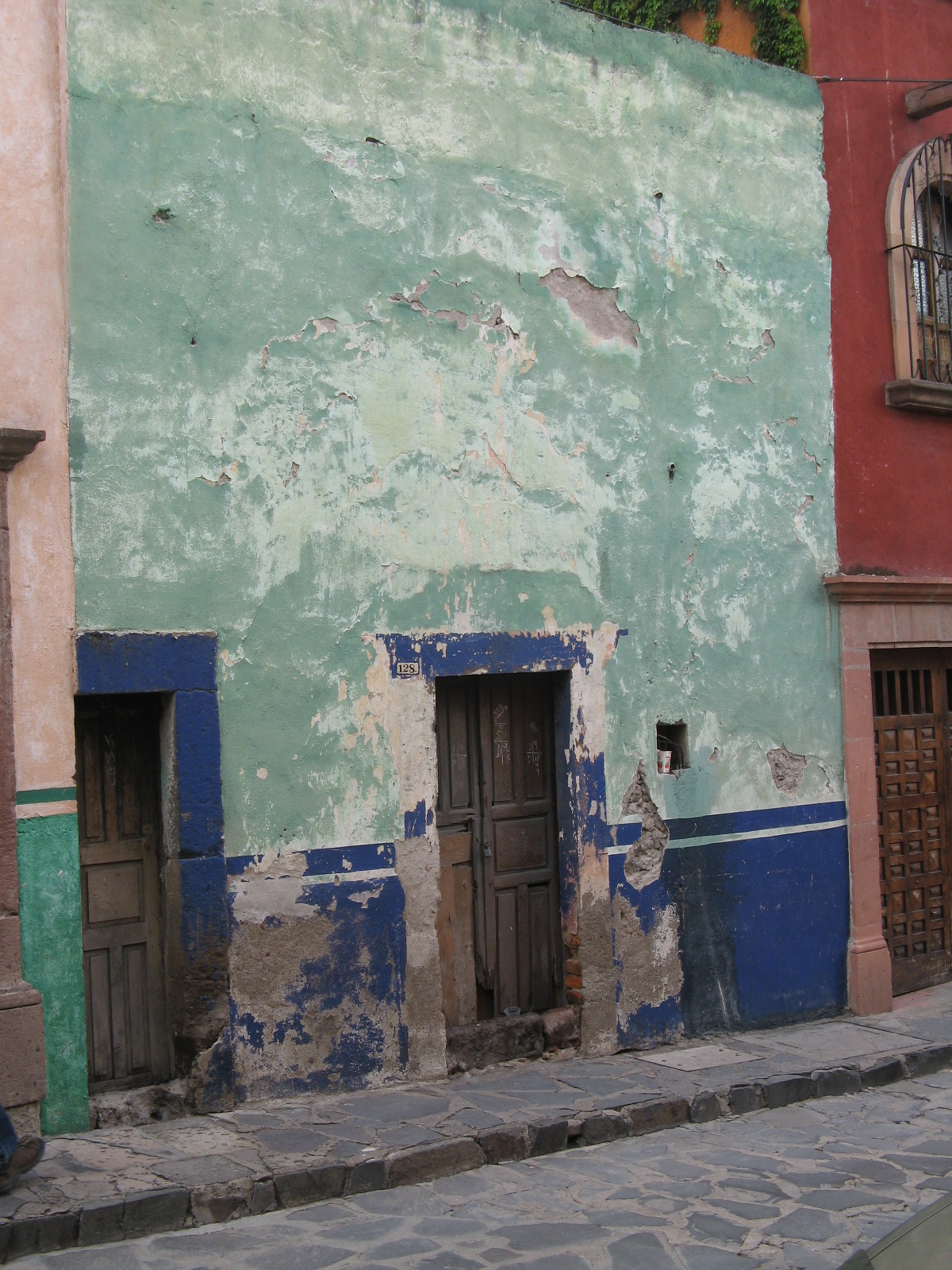

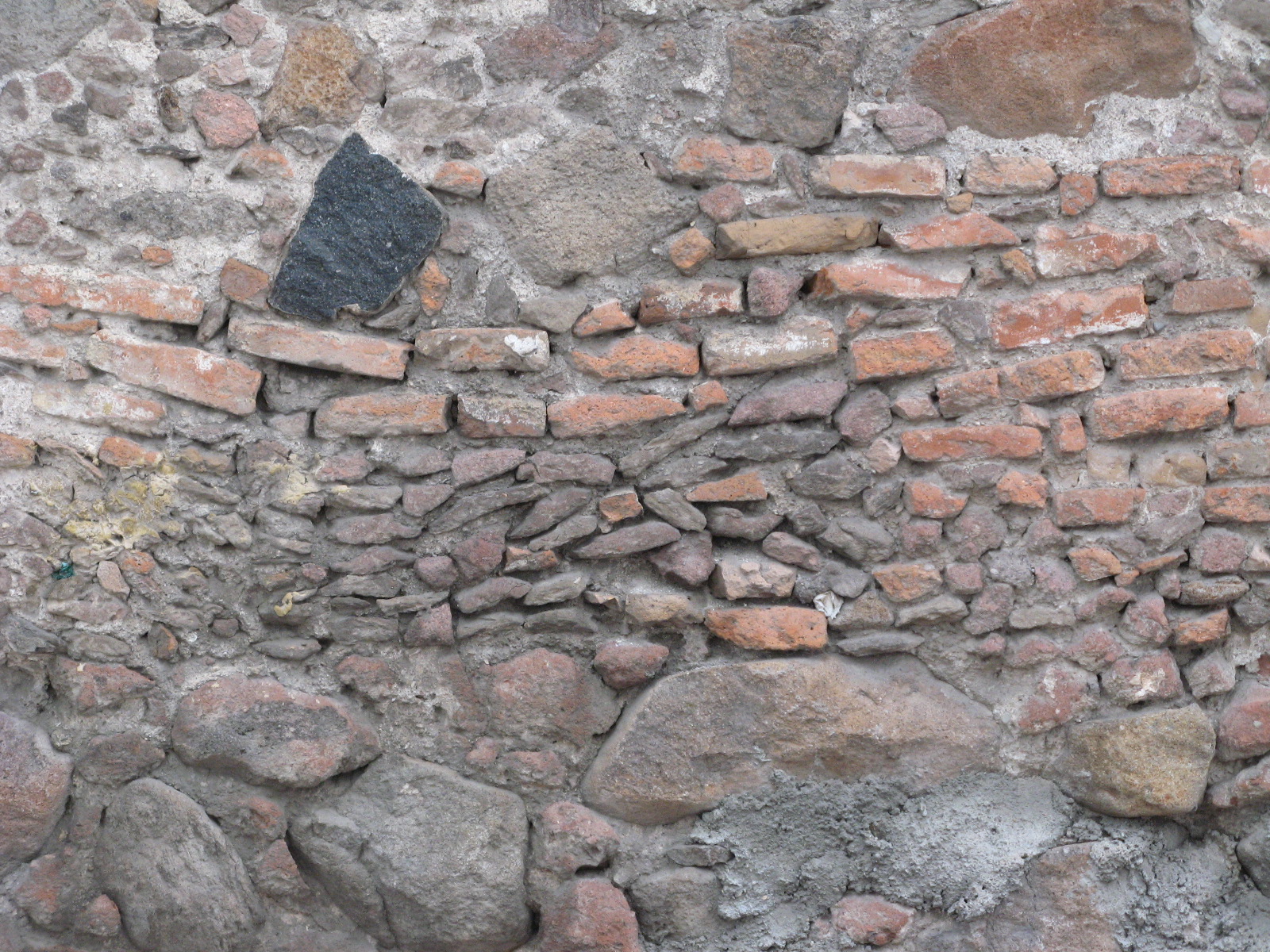
When Joy picked the munchkin up from school yesterday, she was informed that today would be a rare “don’t wear your uniform” day. Instead, the children are supposed to wear green. In fact, Joy told me, she and I should wear green too. “Why?” I said, trying to recall if there’s some kind of holiday on Friday, June 11. (In San Miguel, it’s about a 50-50 chance that any given day is a holiday.) “What’s happening at 9 o’clock in the morning tomorrow?” she hinted.
Oh! Right! Definitely wear green. Definitely do not wear yellow, if you don’t want to be pelted with rotten tomatoes. Mexico plays South Africa in its first game of the World Cup today and the whole country will be watching.
Except . . . we’ll be in Spanish class from 8:30 to 11:20. I was really ticked off when I learned the time of the match. It’s not that I’m a fanatical fútbol fan. I like it a lot–I used to go to Revolution games when I lived in Vermont, and enjoyed them even though it was way too cold because my then-husband was fanatical enough to go to an outdoor sporting match in Boston in October (the only event for which I would have suffered that kind of weather, left on my own, would have been a Red Sox playoff game). And the World Cup is of course even better. But to be in a football-mad country during the World Cup when that country’s team is playing–that’s excitement. I planned to be gathered around a TV, in a bar, in someone’s store, whatever, with Mexicans, for the first matchup. And then I asked when the game would be on and learned that during that time, I’d be diligently learning the subjunctive.
Fortunately, half the teachers in the school are football-mad, and there will be TVs set up at the breaks and probably right through some of the classes. I’ll get to catch at least a few minutes, and I hope the second Mexico match is better-timed.
And I’ll be wearing green. I don’t have any clothes here in bandera green (the green of the Mexican flag), but I do have a shirt with “Mexico” printed in light green and black. It’ll do. And I can practice my subjunctive: Vaya vaya México!
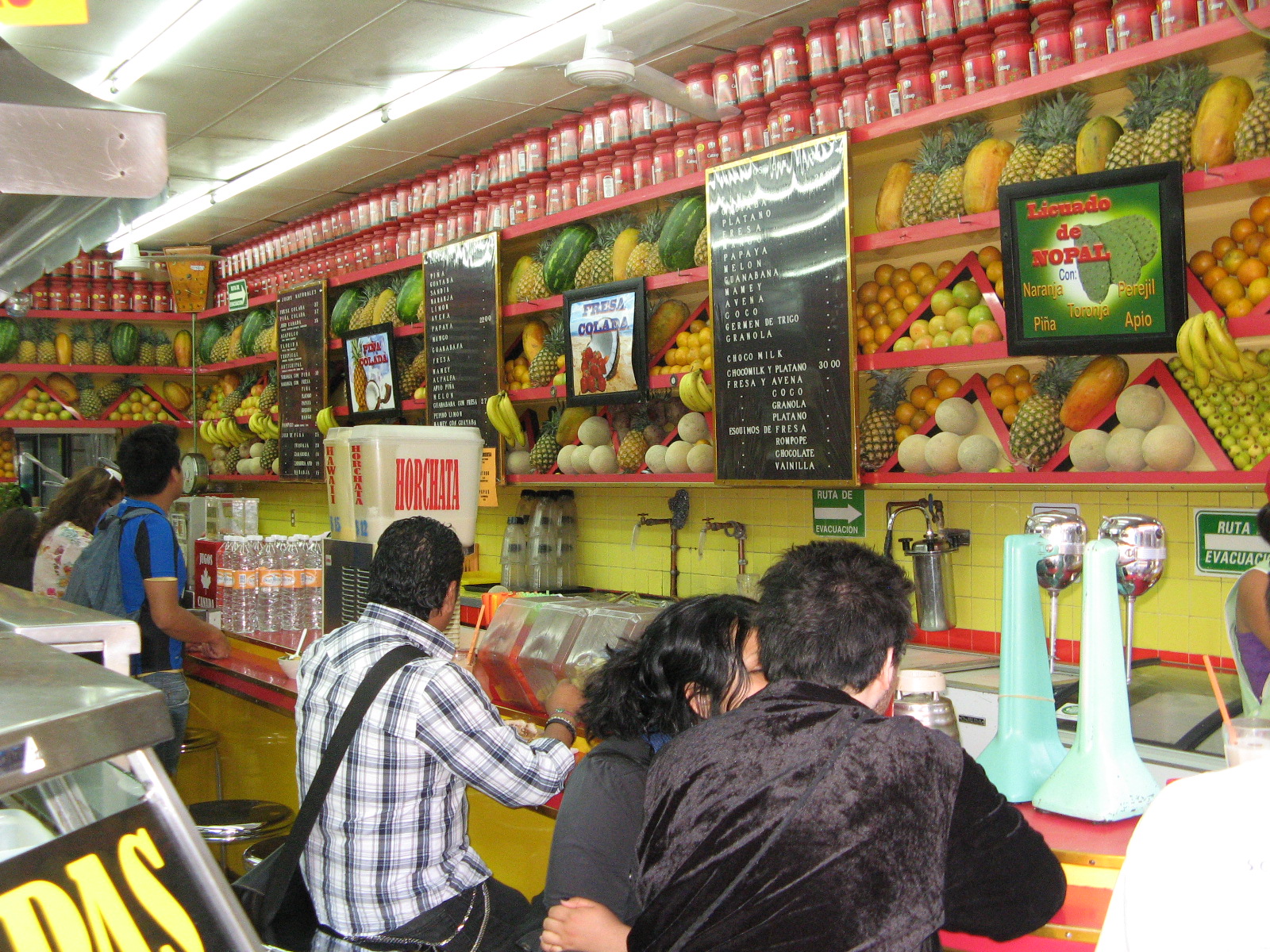
I’ve traveled in ten countries, including my own, and based on my three and a half months in San Miguel (and, five years ago, two weeks honeymooning in the Yucatán), Mexico wins the Warmest People Award. It shows in the little courtesies, like people ending even trivial interactions with “Que le vaya bien” (no exact translation, but it’s basically “go well” or “may it go well with you”), and saying hello when they come into a store or even onto a bus. It shows in the trouble they take to make even a juice stand beautiful.
Traffic in San Miguel makes way for pedestrians. No one seems to be in a hurry or to try to rush others along. The legendary easygoing nature of the people makes a dramatic contrast with the US at times, as in an incident we witnessed when we were coming along a busy street in a taxi. A driver ahead of us had been cut off, almost hit, by another car making a turn, and both men were shouting and gesturing out their windows. We couldn’t make out what they were saying, but they were obviously angry. And then, just when we were thinking they’d be jumping out of their cars and having a fistfight in the middle of the intersection, one said something that made the other laugh. In a few seconds they were both joking and laughing, and then they drove on. Joy and I grew up in the Northeast and live on the West Coast, and expected threats of lawsuits, if not gunfire. Northern Californians pride themselves on being relaxed, but Sanmiguelenses have forgotten more about mellow than Marin County ever knew.
While I also loved Mexico City, and found that as citydwellers go, its people were friendly and welcoming, there’s no question but that the Big City is different. Read the rest of this entry »
It wasn’t hard to decide what to see and do in one week in Mexico City, because everyone we spoke to, foreigners, Mexicans, and Chilangos (=Mexico City-ans) alike, gave us the same short list: Chapultepec, Xochimilco, various places to see murals, Bellas Artes and the Modern Art Museum, the Children’s Museum, and, always, always, the Museo Nacional de Antropología. Anthropology it was, on Thursday morning.

Joy had been to the Anthropology Museum on previous trips, and was prepared to take the munchkin to a nearby playground for a couple of hours so that I could get there. It wasn’t necessary. Munchkin had a great time there. So did we. It’s beautiful and so jam-packed of fascinating stuff that you’d have to go back every day for a week to do it justice.
The museum, and Mexico City itself, added some food for thought to something I’d been chewing on for weeks: the relationship of Mexicans to their indigenous roots. They almost all have them, and so this museum, organized by culture (Oaxacan, Toltec, Mayan, Tlaxcalan, Pueblo, etc.), covers the background of almost everyone in the country. We don’t have a comparable museum in the US; we couldn’t; it would have to be an anthropology of the whole world. The National Museum of the American Indian is fantastic, I’ve been told (haven’t gotten there yet), but like the vast majority of estadounidenses,* what I would be learning about there wouldn’t be the heritage of my own family. (Now, I might be in the minority in that sometimes it seems like everyone else claims a Cherokee ancestor, but going by what people report on the census, only about 1 in 100 of us is Native American/Alaskan/Hawaiian/Pacific Islander.)
In short, the categories of one culture don’t always apply to another, and it’s hard to know where the tender spots are. It definitely takes more than a few months’ acquaintance to understand another culture’s complexities of race, class, and ethnicity. So I have no conclusions, but some observations:
– The pride Mexicans in general take in their country’s pre-Hispanic heritage is evident, and not just in their flag, which alludes to the legend of the founding of Tenochtitlán by the Aztecs. To give just one other example, the most universally admired past president of the country seems to be Benito Juárez, the first of an entirely indigenous background.
– Juárez, who left office 138 years ago, is also the country’s last indigenous president.
-Even mestizos who are sympathetic to indigenous people, are concerned about their exploitation, have strongly Indian features, and give their children names from that heritage, may think of themselves as a separate group, speaking of “indigenous people” as “they,” not “we.”
-Everyone eating at a restaurant in a ritzy neighborhood of Mexico City (Polanco) was very light-skinned and European-featured. Everyone working there was dark-skinned and Indian-featured.
-Skin color per se doesn’t seem to be a sensitive issue. Friendly nicknames such as “moreno” and “negro” (“dark one,” “black one”) are as unremarkable here as they would be unthinkable in the US.
-The beggars in San Miguel all appear to be indigenous (possibly mestizo; definitely not European). Joy said she’s observed the same everywhere. Indians in Mexico are generally extremely poor.
– The museum itself evaded a lot of the political issues that are inevitably tangled up in anthropology and ethnology. The section on modern Chiapas, for example, gave no hint that the people being described there so widely despise the federal government, both for its neglect of their region and for the programs it proposed after the Zapatista movement started.
A complicated picture, no question. At least as complicated as race, class, and ethnicity in the US, and a lot more mysterious to me.
After the museum, we went out for about our third Asian meal. We wondered if other people who visit Mexico City take it as an opportunity to eat as much Chinese, Japanese, and Thai food as possible. Probably if they’re Asian-food addicts who’ve been living in a small Mexican town, they do. And then we went to the Children’s Museum, the first truly expensive such place we’ve been to, but totally worth it. The munchkin got inside a giant hamster wheel (twice), went fishing with magnets, saw a just-hatched baby chick, helped Joy play a computer game, etc., etc. Thursday is their late night–open until 11–and we stayed until 10:40. The munchkin looked set to go all night, but her parents were dead on their feet.
___
*Thank you, Spanish language, for providing a demonym that neither implies that we’re the only residents of the entire American continent(s), nor sounds dumb, like “USans” does. We could use one in English, and would no doubt come up with one if we took seriously the problem with “American.” I usually settle for “US American.”
Our fifth full day in Mexico City, Wednesday, was May 5. For whatever reason, Cinco de Mayo has become the day to celebrate Mexican culture in California. In most of Mexico, while it’s significant enough to be a federal holiday and have a downtown street named after it, May 5 is not a big deal. There was a parade on Saturday morning, we didn’t know why, so maybe the occasion was “closest Saturday to May 5th”? Quien sabe.
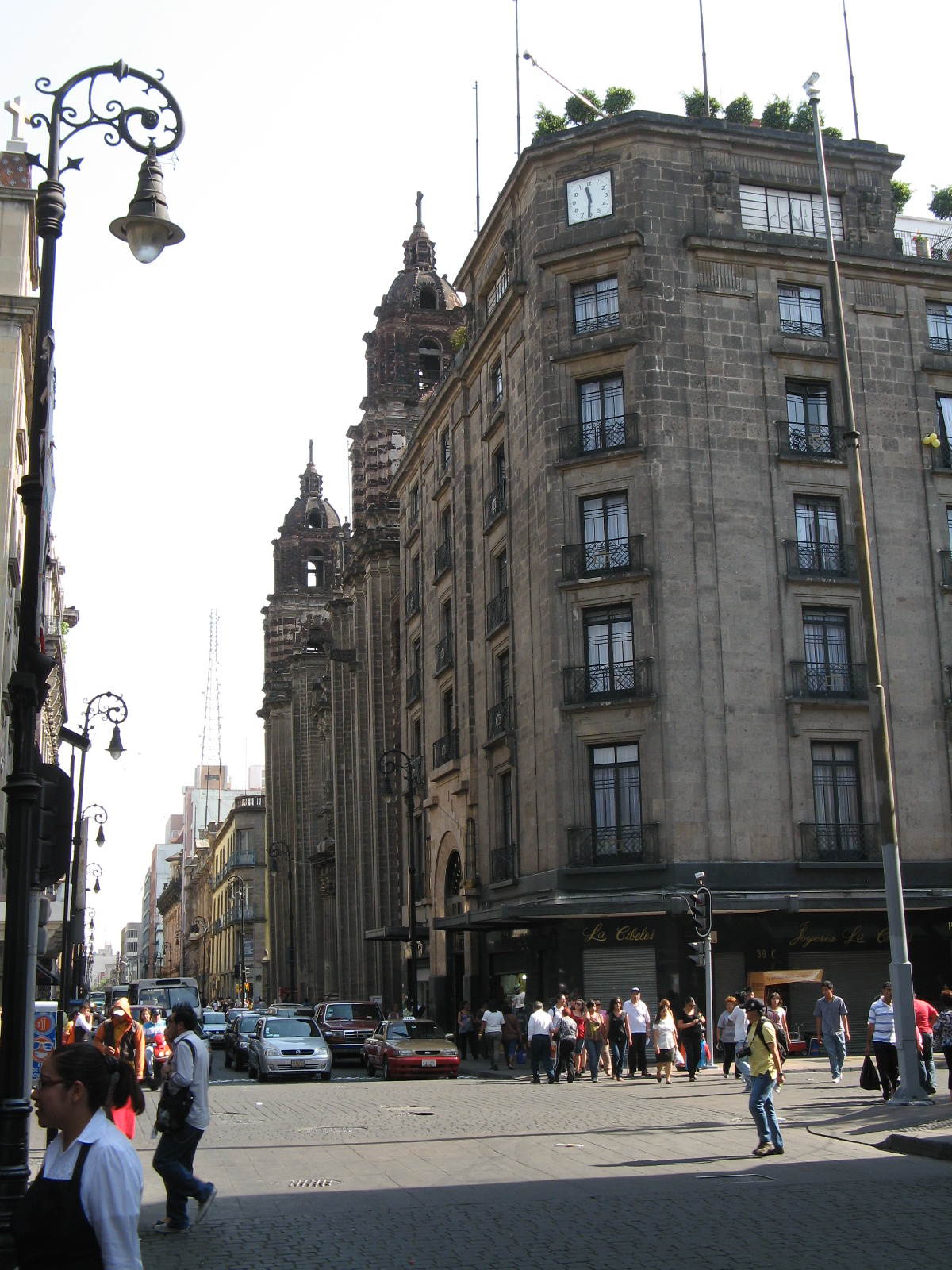
In any case, we were glad that Cinco de Mayo isn’t considered an occasion for 2 a.m. fireworks*, because we’d switched hotels and were now right downtown, two blocks from the Zócalo.
The Spanish conquered the Aztecs in 1521, destroyed their capital of Tenochtitlán, and rebuilt right on top of it, putting their cathedral on its main temple, of course. Tenochtitlán was built on an island in the middle of the lake, and just like many US cities, was expanded right onto the water, though we use garbage as landfill and I don’t know what the Aztecs used. All I know is that after knocking down Tenochtitlán, Cortés maybe should have considered a different location for his capital of New Spain, because parts of Mexico City are sinking. The church next to our hotel has a discernible tilt—away from the hotel, I was relieved to see:
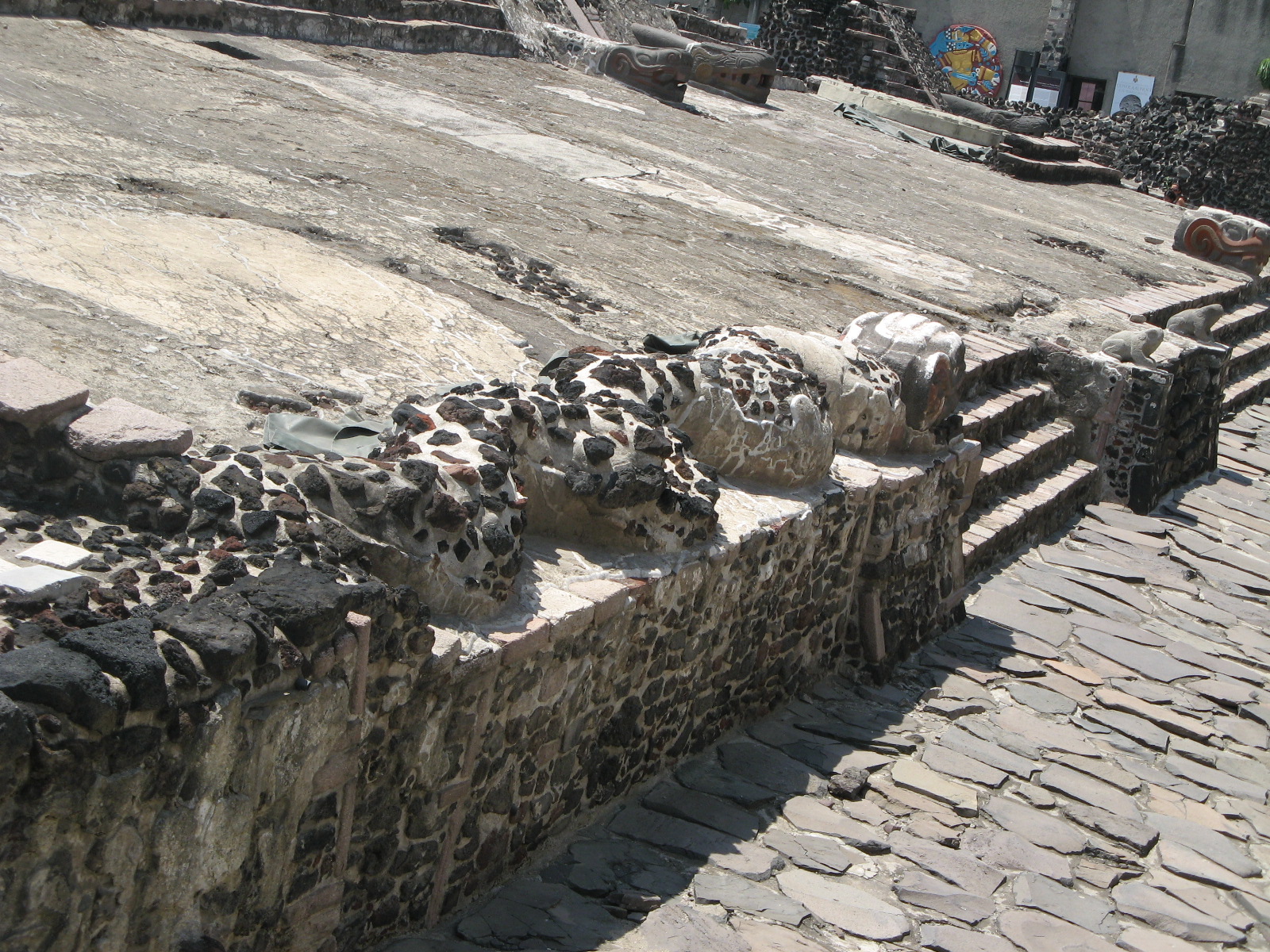
The Aztec temple, known as Templo Mayor, was uncovered by a 20th century work crew. As I wrote the other day, I was moved by this remnant within the modern city. However, I was also hot and worn out from dealing with a very grumpy child. I think she was letting us know in the only way she knew how that she’d been away from her routine for too many days and dragged to altogether too many adult-type activities, such as Looking at Things. Sorry, sweetie. We’ll make the next trip shorter.
So my attention span was also not very long, but I really liked these frogs and the way they look like they’re about to be eaten by the giant snakes (the counterpart to the giant snake in the foreground being out of the frame, on the far side of the frogs).
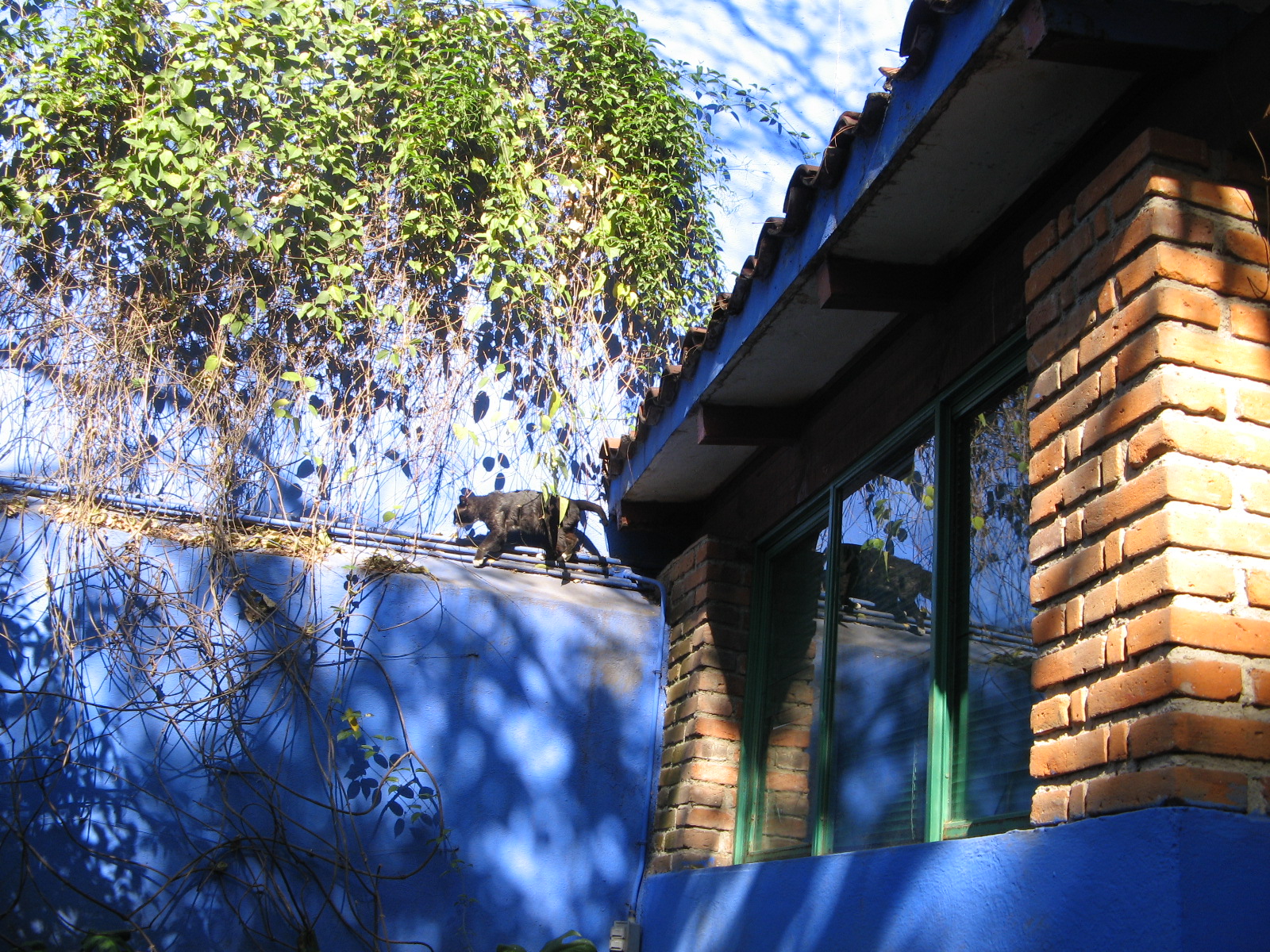
Then we had lunch and went to the Blue House. I should’ve known there would be cats there (photo by the munchkin!).
Rivera and Kahlo are two interesting artists even without the soap-opera excitements of their lives to spice up the work. But being there, where they lived, the drama within the work is particularly hard to separate from the drama swirling around it. Kahlo’s studio is a testimony to a life of pain (wheelchair and the easel made to be reachable from it), loss (medical poster of the stages of fetal development, which she presumably used in the paintings about her miscarriages and trauma-induced infertility), controversy (a box on her bookshelf is labeled “Protest Rockefeller Vandalism”), and love (another box bears the lotería symbol of a heart, and contains letters from Diego). And I admit that the piece that most captured my attention was a little drawing called “Ruin” that sure looked like a “screw you” letter, addressed “para Diego.” It showed a bust of Frida as a crumbling ruin, and was accompanied by a kind of poem: “Casa para aves, nida para amor, toda para nada” (“House for birds, nest for love, all for nothing”). Ouch. Whatever was going on in February 1947, several years into their second marriage to each other, it wasn’t making her happy.
A calmer space is their gorgeous kitchen, bedecked with “Frida y Diego” spelled out in tiny ceramic coffee cups. We agreed we’d like one just like it, provided we could bring in a gas stove and a fridge. (Later curators must’ve taken out the icebox to show off the gorgeous blue and yellow tiles, because I can’t believe they didn’t have one.)
The grounds are beautiful, with a pyramid (?), ponds and fountains, lots of sculptures, and of course those cats, altogether making it a great place for a little one to hang out. We spent a long time there.
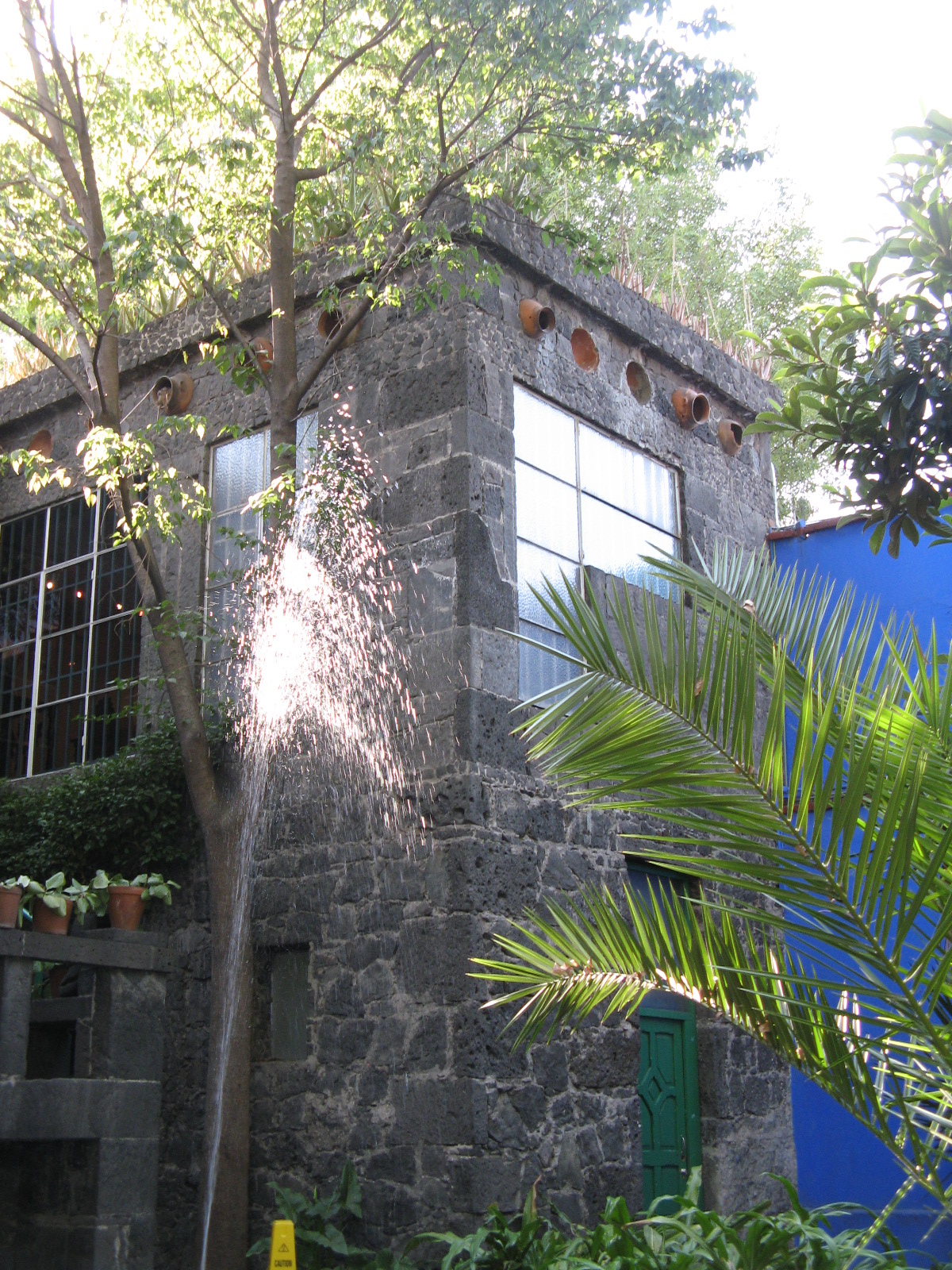
I liked the frog mosaic in the fountain. Maybe it was an in-joke of Rivera’s, who was fully aware that he looked like a frog (and was irresistible to women anyway).

Kahlo and Rivera weren’t the only artists in the neighborhood. The roof across the street was lined with bottles:

And here’s a Coyoacán example of the wrought-iron artistry seen all over Mexico:

*At least, not in Mexico City. San Miguel, which never passes up an excuse to make a great deal of mess and noise,** probably partied all night.
**Fifty points to your house if you know whom I’m quoting.

 Sermons in Stones
Recent comments